Democratic Party to Propose 'Complete Prosecution Reform Bill' Today... Movements for Prosecutor Meetings and Unrest
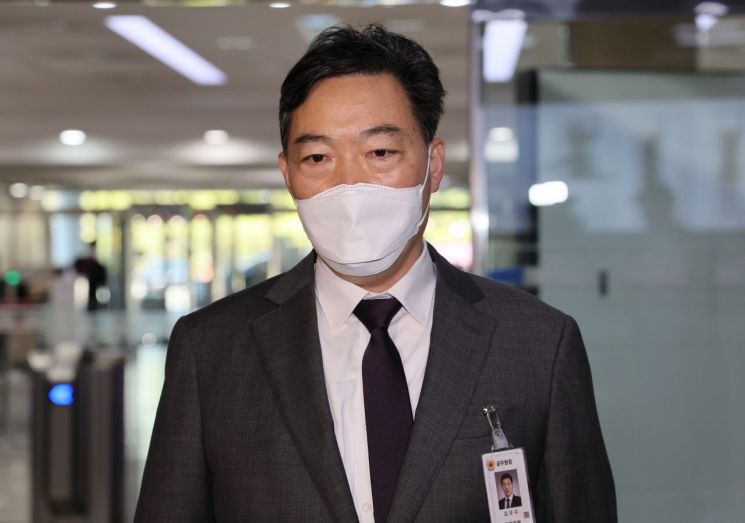 Prosecutor General Kim Oh-soo is entering the National Assembly on the morning of the 15th to appeal to National Assembly Speaker Park Byeong-seok against the unfairness of the legislation to completely revoke the prosecution's investigative authority.
 [Image source=Yonhap News]
[Asia Economy Reporter Heo Kyung-jun] As the Democratic Party of Korea announced on the 15th that it would propose the so-called ‘Geomsu Wanbak (complete removal of prosecution’s investigative authority)’ bill, Prosecutor General Kim Oh-soo appealed to proceed with impeachment proceedings against him before the legislative process begins.
On the morning of the 15th, as Kim entered the National Assembly to meet with Speaker Park Byeong-seok and members of the Legislation and Judiciary Committee, he said, "If the prosecution has done wrong, please proceed with the impeachment process against me, the person responsible for the prosecution, before advancing the legislative process." He added, "The Prosecutor General bears all responsibility, and I am willing to take that responsibility." Kim had requested a meeting with Speaker Park during his visit to the National Assembly the previous day, but it did not materialize.
He continued, "Instead, I earnestly appeal that the legislative process for the bill be carried out after sufficient discussion following that."
The Democratic Party plans to propose amendments to the Criminal Procedure Act and the Prosecutors’ Office Act under the name of Floor Leader Park Hong-geun on the same day. The party intends to handle this bill during the April extraordinary session of the National Assembly.
In response, Kim stated, "This bill is the most important law directly related to the lives and safety of the people, their bodily freedom and property, and the nation’s development and future." He emphasized, "Just because the prosecution is disliked, they say they will complete the legislative process in the National Assembly within only fifteen days, not even a month. The National Assembly should establish a special committee for criminal justice reform involving the Ministry of Justice, prosecution, courts, and police to conduct thorough discussions."
As the Democratic Party launched a strong push to advance the Geomsu Wanbak bill, signs of unrest (檢亂) have appeared within the prosecution. Despite Prosecutor General Kim and the leadership consistently opposing Geomsu Wanbak, the Democratic Party’s move to forcibly pass the bill has led the prosecution to emphasize the unfairness of the bill and engage in a ‘public opinion campaign.’
In this situation, ordinary prosecutors have decided to hold a nationwide meeting on the 19th to discuss response measures. It will be the first nationwide meeting of ordinary prosecutors in 19 years, with prosecutors from 60 prosecution offices nationwide, including 18 district prosecutor’s offices and 42 branch offices, attending simultaneously. The meeting is expected to include 4 to 5 prosecutors from each district office and 1 to 3 heads of branch offices, though the exact number of participants has not been finalized. The venue has not yet been decided but is reportedly being considered at the Supreme Prosecutors’ Office, Seoul High Prosecutors’ Office, Central District Prosecutors’ Office, or the Judicial Research and Training Institute.
The meeting will tentatively agree to discuss the ‘Geomsu Wanbak issue and response measures,’ but the final agenda will be decided after analyzing the bill proposed by the Democratic Party on that day.
Within the prosecution, there are reports of opinions suggesting that nationwide meetings of ordinary prosecutors be held regularly, similar to the National Council of Judges. The National Council of Judges was established in 2017 amid allegations of abuse of judicial administrative power and launched as a permanent body in 2018. It expresses opinions on judicial administration and judicial independence and has the authority to request explanations from those responsible for judicial administration.
© The Asia Business Daily(www.asiae.co.kr). All rights reserved.

















