"Possibility of Joint Membership Announcement at June NATO Summit"
Russia's Complete Blockade of Military and Economic Maritime Activities in the Baltic Sea Raises Concerns
US: "Cannot Take Lightly the Threat of Russian Tactical and Low-Yield Nuclear Deployment"
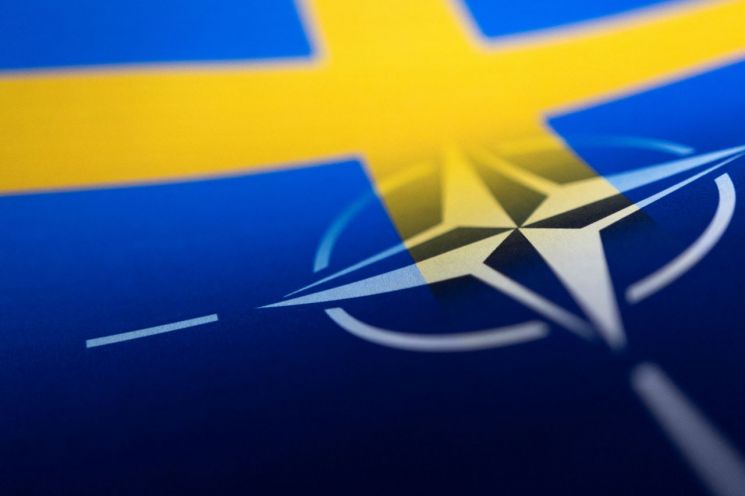
[Asia Economy Reporter Hyunwoo Lee] Russia is shaking the entire security landscape of Europe by threatening to deploy nuclear weapons in the Baltic Sea region if Finland and Sweden join the North Atlantic Treaty Organization (NATO).
If Finland and Sweden join NATO, Russia will face a complete blockade of its military and economic maritime activities in Europe. This is why there are concerns that Russia might not only threaten but actually proceed with nuclear deployment. In such a case, tensions in the Baltic Sea region would escalate, potentially triggering another geopolitical crisis.
On the 14th (local time), Dmitry Medvedev, Deputy Chairman of Russia's Security Council and a close aide to President Vladimir Putin, warned through his Telegram account that "if Sweden and Finland join NATO, we will strengthen our defense measures by deploying nuclear weapons or hypersonic missiles in Kaliningrad, Russian territory in the Baltic Sea," adding, "Once this is completed, discussions on denuclearization along the Baltic coast will become impossible."
This is the first time a senior Russian official has hinted at the direct possibility of nuclear deployment in the Baltic Sea region. Russia's tough stance is interpreted as a move to prevent the already inevitable NATO membership of Finland and Sweden.
 On the 13th (local time) in Stockholm, Sweden, Magdalena Andersson, Prime Minister of Sweden (second from left), and Sanna Marin, Prime Minister of Finland (third from left), were seen together. The two leaders held a meeting that day to discuss the possibility of joining the North Atlantic Treaty Organization (NATO). Stockholm (Sweden) = Photo by EPA and Yonhap News Agency
Germany's Deutsche Welle (DW) reported that the NATO summit to be held in Madrid, Spain, at the end of June may officially announce the accession of the two countries to NATO. DW stated that among the existing 30 NATO member countries, there is not a single country opposing the accession of these two nations. If the procedures proceed, rapid accession is expected.
Since 2014, following Russia's annexation of Crimea, Finland and Sweden have continued joint exercises with NATO forces, so they are expected to be capable of participating in joint operations immediately in case of an emergency.
On the other hand, Russia is expected to face a blockade of all maritime activities in the Baltic Sea if Finland and Sweden join NATO. According to the BBC, Russia's only ice-free port usable even in winter is located in Kaliningrad, an exclave territory north of Poland. Until now, Finland and Sweden maintained neutrality, allowing free passage of Russian warships, but if the two countries join NATO and participate in a Baltic Sea blockade alongside other member states, navigation itself will become impossible.
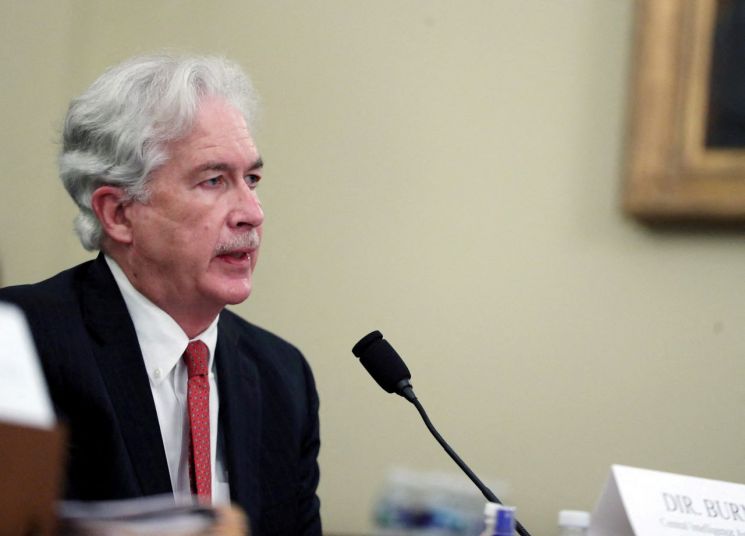
The United States immediately expressed concern over the possibility of Russia's nuclear deployment threat becoming a reality. William Burns, Director of the U.S. Central Intelligence Agency (CIA), said in a speech at the Georgia Institute of Technology that "Considering the military setbacks Russia's President Vladimir Putin and leadership have experienced in the war so far, the possibility that Russia might deploy tactical nuclear weapons or low-yield nuclear weapons as a threat cannot be taken lightly," but added, "However, there is currently no concrete evidence to support such concerns."
According to CNN, Russia is estimated to possess more than 2,000 tactical and low-yield nuclear weapons. If these forces are actually deployed in border areas such as the Baltic Sea, there are concerns that the entire Baltic region could see an intensification of nuclear standoff between the West and Russia, reminiscent of the Cold War era, escalating the geopolitical crisis.
Director Burns also emphasized that the U.S. government is concerned about escalation into nuclear war and drew a line by stating that there will be no U.S. military intervention. He said, "President Joe Biden is very worried about World War III breaking out in Europe," adding, "This is why plans such as establishing a no-fly zone over Ukraine or sending former Soviet fighter jets to Ukraine, proposed by Poland, were not accepted."
© The Asia Business Daily(www.asiae.co.kr). All rights reserved.



















