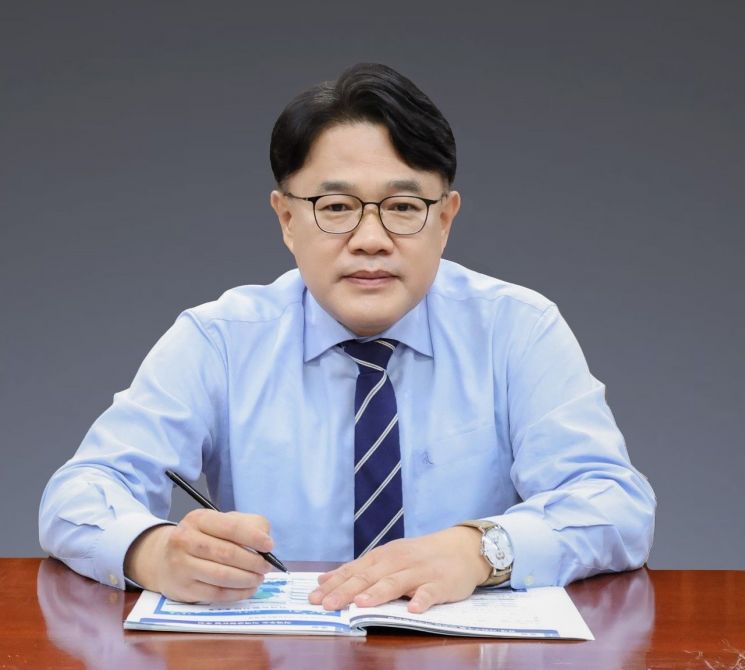
[Asia Economy Honam Reporting Headquarters Reporter Park Jin-hyung] Kim Bohyun, a preliminary candidate for mayor of Seo-gu, Gwangju, announced the 'Safe Plus, Worry Minus' safety policy for Seo-gu on the 8th anniversary of the Sewol ferry disaster.
The Seo-gu safety policies proposed by candidate Kim include ▲ installation of 'drop zones' for school vehicle parking and stopping spaces, ▲ a model city for Crime Prevention Through Environmental Design (CPTED) architecture, and ▲ training of urban safety managers and 24-hour one-stop safety complaint handling.
According to the '2022 Korea Security Index - Livable Areas,' Seo-gu, Gwangju, was rated 51st nationwide with a social safety index score of 53.98 points.
In particular, Seo-gu's traffic safety index was very low at 28.32 points, ranking 132nd.
Additionally, an analysis of the '2020 National Local Government Traffic Safety Index' showed that Seo-gu scored 77.77 points, a C grade below the national average.
In response, candidate Kim pledged the installation of safe 'drop zones' near school zones as the first safety policy promise, emphasizing that traffic safety is directly linked to the daily safety of Seo-gu citizens.
Although the Min-sik Law has strengthened traffic safety near school zones, the culture of dropping off children in front of schools and then going to work is widespread in Seo-gu, Gwangju, making the installation of drop zones essential.
Drop zones involve installing signs in specific areas to guide vehicle boarding and alighting, and will be piloted at elementary schools where traffic safety is urgent. If proven effective, the plan is to expand installation throughout the district.
Another safety pledge is to establish Seo-gu as a model city for Crime Prevention Through Environmental Design (CPTED) architecture.
The crime prevention design pilot project revealed in the Salt Road Project in Yeomni-dong, Mapo-gu, Seoul, will be applied to areas including Yang-dong, Nongsung-dong, Hwajeong-dong, and Naebang-dong in Seo-gu, Gwangju.
Furthermore, moving away from unilateral installation of security facilities, the plan is to transform into a community policing model involving both public and private sectors, devising a participatory maintenance system beyond the existing physical environmental design.
Candidate Kim also promised to train urban safety managers and establish a 24-hour one-stop system for safety-related complaints.
To prevent major accidents like the Hwajeong-dong I-Park collapse, the district office will directly train and operate urban safety managers. In addition, a 24-hour online and offline one-stop system will be set up to receive citizen safety complaints.
Candidate Kim said, "We will implement safety-related policies considering the characteristics of each area in Seo-gu," adding, "Creating a safe and secure neighborhood is the first step toward a premium Seo-gu."
He emphasized, "Upon election, we will immediately form a task force for the safety of Seo-gu residents within the transition committee and begin consultations with related agencies such as the police and traffic authorities."
© The Asia Business Daily(www.asiae.co.kr). All rights reserved.

















