
[Asia Economy Reporter Park Byung-hee] The Bank of Canada (BOC) decided on the 13th to raise its key interest rate by 0.5 percentage points, a so-called 'big step,' for the first time in over 20 years.
The Wall Street Journal reported that the BOC raised the key interest rate from 0.5% to 1.0% at its monetary policy meeting that day. This is the first time since May 2000 that the BOC has raised the key interest rate by 0.5 percentage points at once. The BOC also announced that it will begin quantitative tightening (QT) to reduce the size of its asset holdings starting on the 25th.
Earlier that day, the Reserve Bank of New Zealand also raised its key interest rate by 0.5 percentage points from 1.0% to 1.5%. The Reserve Bank of New Zealand also decided on a 0.5 percentage point increase for the first time in 22 years since May 2000.
The Reserve Bank of New Zealand has raised the key interest rate at all four recent monetary policy meetings. Starting with a 0.25 percentage point increase in October last year, it also decided on 0.25 percentage point increases in November last year and February this year. There were no monetary policy meetings in December last year and January this year.
The reason why the Bank of Canada and the Reserve Bank of New Zealand have consecutively decided on big steps is because the inflation risk is that serious.
Canada's consumer price inflation rate in February was 5.7%, the highest in 30 years. The BOC raised its forecast for this year's consumer price inflation rate from 4.2% to 5.3% that day. The inflation rate is expected to slow to 2.5% next year and reach the target of 2% only in 2024.
New Zealand's consumer price inflation rate also recorded 5.9% in the fourth quarter of last year, far exceeding the central bank's monetary policy target range of 1-3%. ANZ Bank predicted that this year's peak consumer price inflation rate could exceed 7%.
Tiff Macklem, Governor of the BOC, said at a press conference that higher key interest rates are necessary to keep inflation expectations at the monetary policy target level of 2% and to cool domestic demand. He added that companies still find it difficult to find workers, wage growth has recovered to pre-COVID-19 pandemic levels, and the upward trend is steepening.
Governor Macklem said, "We took an important step today, but clearly there is more to do," suggesting further key interest rate hikes.
Douglas Porter, Chief Economist at BMO Capital Markets, said, "I expect two more big steps at the monetary policy meetings in June and July," adding, "The key interest rate will rise to 2.25% by the end of this year."
The U.S. central bank, the Federal Reserve (Fed), is also increasingly likely to decide on a 0.5 percentage point key interest rate hike at its monetary policy meeting next month.
This is because the U.S. Labor Department announced that the consumer price inflation rate for March reached 8.5%, the highest since 1981, followed by the producer price inflation rate soaring to 11.2%, the highest since 2010.
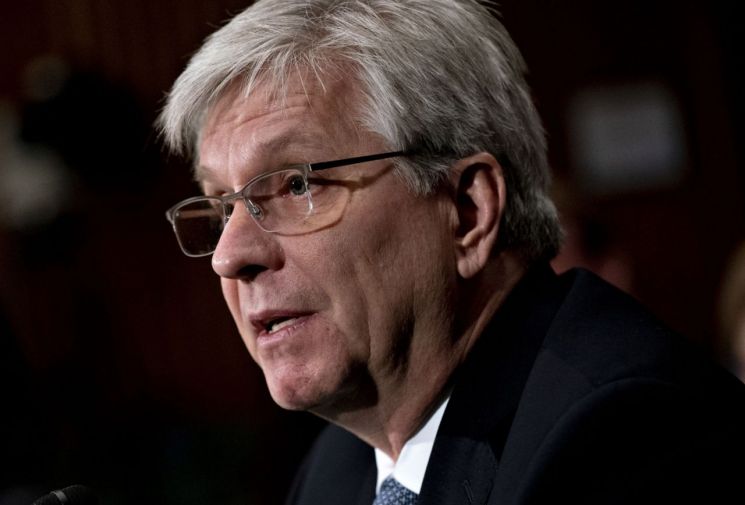
Fed Governor Christopher Waller said in an interview with CNBC that he expects a 0.5 percentage point key interest rate hike at the Federal Open Market Committee (FOMC) meeting in May. He emphasized that recent economic indicators support the need for a big step.
Governor Waller said, "I prefer a front-loading approach, and a 0.5 percentage point increase in May aligns with this view."
© The Asia Business Daily(www.asiae.co.kr). All rights reserved.


















