Establishment of Basic Plan for Public Land Utilization... Deriving Optimal Use Plans for Limited Public Land
Timely and Appropriate Supply of Various Public Facilities Reflecting Changes such as Senior Care and Companion Animals
Presentation of Utilization Models for Each Public Land as 'Guidelines' and Construction of Integrated Viewing System for Usable Public Land
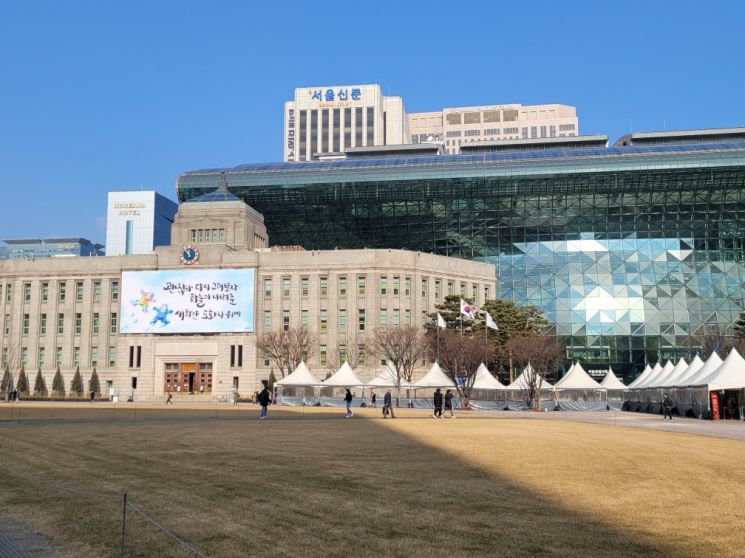
[Asia Economy Reporter Lim Cheol-young] The Seoul Metropolitan Government is preparing a foundation to increase the utilization of 6.84 million square meters of underused or idle city-owned land, enabling the timely and appropriate supply of various public facilities such as health centers, senior care facilities, and pet facilities.
On the 14th, Seoul announced that it has established and will implement the "Basic Plan for Public Land Utilization" to enhance the value of public land. This plan addresses the growing demand for new public facilities due to social changes such as aging and an increase in single-person households, while facing a shortage of available land, aiming to efficiently utilize the limited city-owned land.
Seoul’s city-owned land covers 106㎢, approximately 36.5 times the size of Yeouido. Excluding essential infrastructure such as roads, parks, and rivers (57.8%), low-utilization land such as fields and forests (22.7%), and land already in use or leftover parcels (19.5%), the actually usable city-owned land amounts to 6.84 million square meters (5.6%). However, even this land has been used without comprehensive or systematic guidelines until now.
The Basic Plan for Public Land Utilization consists of two main components: the ‘Utilization Guidelines,’ which suggest the best uses for each parcel of city-owned land, and the establishment of a ‘Utilization System’ that allows easy identification of where and how much usable city-owned land is available. Under the vision of ‘Strengthening city-level public land utilization consulting system,’ Seoul is pursuing three goals: ▲supporting rational decision-making ▲providing accurate land information access ▲enhancing project feasibility.
The ‘Utilization Guidelines’ help project department staff make rational decisions when planning projects using public land. Fourteen utilization models have been derived according to project stages (preparation → utilization → project method → future use), with guidelines provided for each model. Project departments refer to these models and guidelines as criteria to determine the best way to utilize the land when formulating plans. For example, the Seocho-gu Community Sports Center site (built in 1994), which is due for reconstruction, is a large site of about 30,000㎡ located in a densely residential area with high public demand. This area requires a strategic utilization approach that spatially arranges various public facilities to meet diverse needs.
Additionally, the ‘Utilization System’ is an online platform that allows users to accurately view property information on where and how much usable city-owned land exists. It integrates public land resource data into the existing internal administrative system, the ‘City-Owned Property Comprehensive Information System,’ enabling unified access. It includes data on ‘Usable City-Owned Land’ developed since 2014, ‘Priority Usable City-Owned Land’ available within 10 years, ‘Mixed Zones’ where national and public land adjoin, and ‘City-Owned Land Outside the City,’ allowing comprehensive review.
The Seoul Public Development Planning Team will conduct ‘Public Land Utilization Consulting’ based on the newly established basic plan. The plan is to comprehensively and systematically consult on the entire project process?from quickly finding land for required uses to architectural planning, project implementation methods, and maintenance stages?to increase project feasibility.
Hong Seon-gi, head of the Seoul Public Development Planning Team, said, “With the implementation of the Basic Plan for Public Land Utilization and the consulting system, we expect to increase the value of limited public land and establish optimal utilization methods. We will respond swiftly to the diversifying demand for public facilities due to societal changes and improve the quality of public services.”
© The Asia Business Daily(www.asiae.co.kr). All rights reserved.

















