Serious Equipment Supply Imbalance in Semiconductor Industry Development Worldwide
Component Shortages Compound, Making Short-Term Resolution Difficult
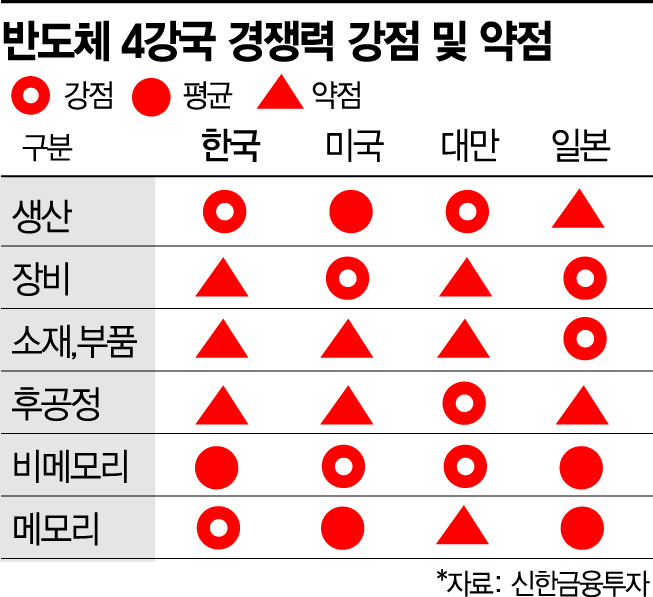
[Asia Economy Reporter Park Sun-mi] As Samsung Electronics and SK Hynix invest massive funds to enhance semiconductor production lines, the lead time (the time taken from order to delivery) of core semiconductor equipment has emerged as a major obstacle. The supply period for key semiconductor equipment, which averaged three months before the spread of COVID-19, has now lengthened to over 18 months. Depending on equipment supply, advanced semiconductor process development and mass production plans may face setbacks, prompting major companies to focus all efforts on securing equipment.
According to the semiconductor industry on the 11th, leading domestic semiconductor companies such as Samsung Electronics and SK Hynix are strengthening cooperation with equipment trading companies and placing advance orders considering the extended lead times to respond to the global shortage of semiconductor equipment. An industry insider said, "In the past, only a few companies like Samsung Electronics and TSMC could accommodate large volumes of essential semiconductor equipment, but recently, as countries worldwide are promoting the semiconductor industry, the shortage of equipment supply has become serious, and we are responding accordingly."
In fact, when the CEO of the Dutch semiconductor equipment company ASML recently visited Korea, it was reported that several domestic companies made separate contacts. They are keen on securing a stable supply of extreme ultraviolet (EUV) lithography equipment, which is essential for semiconductor processes, from ASML. The Japanese Nihon Keizai Shimbun also analyzed that semiconductor companies such as Samsung Electronics, TSMC, and UMC have been sending senior executives to the US and Europe recently despite the COVID-19 situation to ensure stable supply of semiconductor equipment.
Even Spain, which heavily depends on the tourism industry, announced plans to invest 11 billion euros (approximately 15 trillion won) in semiconductors, reflecting a global boom in semiconductor industry promotion. Companies are also increasing investments in semiconductor production lines with full government support, leading to a worldwide shortage of semiconductor equipment.
According to Nihon Keizai Shimbun, global semiconductor equipment monopolistic suppliers including ASML, KLA, Lam Research, and Applied Materials have notified semiconductor manufacturers that the supply period, which was an average of three months before the COVID-19 outbreak in 2019, has now extended to over 18 months. Some semiconductor testing equipment made by KLA is reported to take more than 20 months from order to delivery.
Peter Wennink, CEO of ASML, also stated in a media interview that the shortage of semiconductor manufacturing equipment such as EUV lithography machines is expected to continue for the next two years. He said, "We plan to ship more semiconductor manufacturing equipment this year than last year, and even more next year than this year, but the increase in production volume is insufficient, and it will take time to raise production capacity."
As the imbalance in semiconductor equipment supply and demand is expected to continue for some time, there are also predictions that major semiconductor manufacturers’ investment plans will inevitably change.
For equipment suppliers to smoothly produce equipment, the bottleneck in parts must be resolved, but there are no suitable alternatives to replace the items. Moreover, parts suppliers are reluctant to expand supply without bold investments. Han Jin-man, Vice Chairman of Samsung Electronics, and Noh Jong-won, President of SK Hynix, recently acknowledged during earnings announcements that equipment lead times are lengthening this year as well, and they are considering this factor in establishing and executing investment plans. Pat Gelsinger, CEO of Intel, which announced plans to build factories in the US and Europe this year, also mentioned that securing equipment is a factor hindering production capacity expansion and is focusing all efforts on equipment procurement.
© The Asia Business Daily(www.asiae.co.kr). All rights reserved.
![Clutching a Stolen Dior Bag, Saying "I Hate Being Poor but Real"... The Grotesque Con of a "Human Knockoff" [Slate]](https://cwcontent.asiae.co.kr/asiaresize/183/2026021902243444107_1771435474.jpg)











