"How I managed to go to work every day..." Fearful Employees After 'Work From Home Ends'
Survey Shows 4 out of 10 Prefer Office Due to 'Decreased Work Efficiency'
"Sudden Full Return to Office May Increase Resignation Rates"
"Future Corporate Culture Will Likely Combine Remote and Office Work"
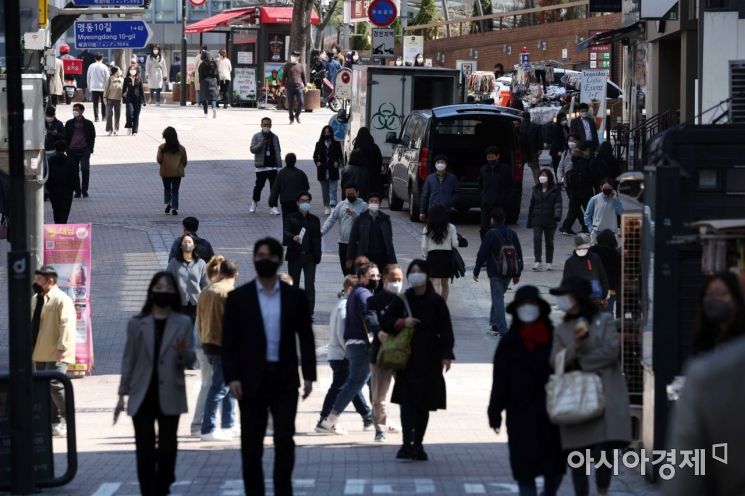
[Asia Economy Reporter Kang Juhee] As social distancing measures are eased, companies are gradually stopping remote work and considering a return to office attendance. However, among office workers, there is a growing demand to maintain remote work. They argue that having adapted to remote work for over two years and experiencing no disruption to their tasks, there seems to be no need to commute to the office.
Park, a man in his 30s working in advertising at an IT company, expressed concern after hearing that the company might soon announce the end of remote work. He said, "Having worked remotely for such a long time, I have become so accustomed to it that I barely remember how I used to commute daily." He added, "I have to wake up at least an hour and a half earlier than my usual remote work schedule to get ready, and just thinking about taking the crowded subway during rush hour makes me feel overwhelmed."
He continued, "The company said they will observe the situation for the next one to two months before deciding whether to switch back to office attendance. Remote work has given me more leisure time and sufficient rest, which has many advantages. Although there were some inconveniences in communication, holding meetings and communicating online now pose no problems at all."
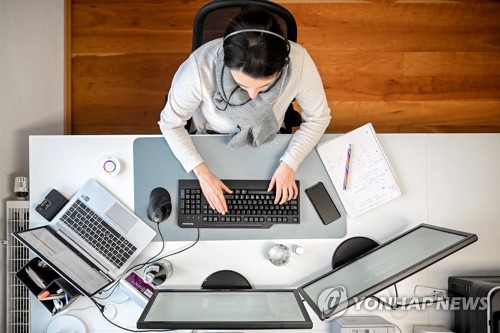
Recently, among major domestic corporations, POSCO Group was the first to announce the suspension of remote work. After about two years of implementing remote work, all employees returned to the office starting from the 4th of this month. However, remote work and flexible working hours for pregnant women, those with underlying health conditions, and to reduce the number of employees present at once have been maintained. POSCO’s decision to end remote work is understood to be in response to the government’s easing of social distancing measures.
Following this, other domestic companies are expected to gradually shift back to office attendance systems, but most are still maintaining remote work while monitoring the situation. Samsung Electronics continues its basic policy of allowing up to 50% of employees to work remotely, and LG, SK, Hyundai Motor, and others are also still maintaining remote work. E-commerce companies such as Coupang, 11st, and TMON are continuing their existing remote work policies. Although the spread of COVID-19 has slowed, it appears that companies consider it premature to fully switch back to office attendance.
However, even when the COVID-19 pandemic ends and a return to normal life is possible, many believe that the previous system of all employees commuting to the office will not return. Employee satisfaction with remote work is high, and an environment that facilitates meetings and communication remotely has already been established, so there is no hindrance to work.
That said, some argue that remote work alone has limitations because non-face-to-face methods inevitably reduce work efficiency. A recent survey showed that 4 out of 10 office workers prefer commuting to the office. In a 'Work Environment Perception' survey conducted by 'RSquare' and 'Saramin' targeting 2,625 office workers, 37.1% of respondents chose 'working at a designated seat in the office' as their preferred work style. Half of these respondents cited 'the necessity and efficiency of face-to-face work' as their reason.
Experts predict that future workplace models will combine face-to-face and remote work. Professor Seo Ijong of Seoul National University’s Department of Sociology said, "Even before COVID-19, companies tried remote work, but there were doubts and concerns about whether it could be managed, so they eventually gave up. Then, due to COVID-19, remote work became inevitable, and after more than two years, it has proven to be surprisingly useful. Companies have also become quite familiar with communication know-how in non-face-to-face situations."
He added, "Perceptions of organizational culture have changed significantly from the past. Especially for people who need to care for children and the younger generation who value work-life balance, satisfaction with remote work is high. If companies suddenly enforce full office attendance, job satisfaction may decline and turnover rates may increase. Although face-to-face work will increase compared to before once the pandemic ends, the use and supplementation of remote work are expected to continue."
© The Asia Business Daily(www.asiae.co.kr). All rights reserved.
![Clutching a Stolen Dior Bag, Saying "I Hate Being Poor but Real"... The Grotesque Con of a "Human Knockoff" [Slate]](https://cwcontent.asiae.co.kr/asiaresize/183/2026021902243444107_1771435474.jpg)

















