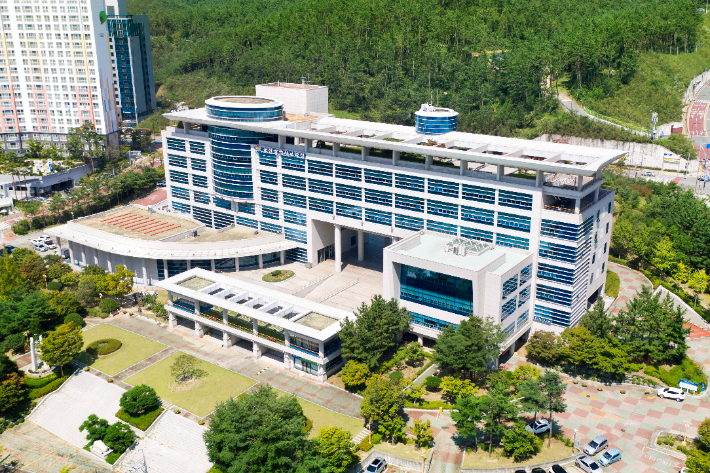
[Asia Economy Yeongnam Reporting Headquarters Reporter Hwang Du-yeol] Ulsan Metropolitan Office of Education is operating multicultural education policy schools to enhance the multicultural sensitivity of school members and create a healthy school culture where diversity is respected.
The policy schools, which are leading schools creating a mature educational environment where various cultures coexist, are divided by type into 8 kindergartens, 8 elementary and secondary schools, and 9 Korean language classes.
Multicultural kindergartens support the language development of multicultural young children through integrated education and provide multicultural education for all children and parents.
Elementary and secondary policy schools create a multicultural-friendly educational environment by providing multicultural understanding education to all students and tailored educational support for multicultural students.
Multicultural education and global citizenship education elements are reflected in general subject classes and conducted in the form of project-based learning. Korean language classes have also been established in schools with high demand for Korean language education.
For students who have entered mid-term or are foreigners, intensive education in Korean language and Korean culture is provided to help them enter and adapt to public education.
The Office of Education operates Korean language classes at Dong-gu Seobu Elementary School and 9 other schools. Korean language classes receive support for teaching materials and educational program operation costs tailored to multicultural students.
Ulsan Metropolitan Office of Education will conduct consultations from May for 25 multicultural education policy schools.
They aim to strengthen the substance of policy school operations through expert advice and seek efficient operation plans for multicultural education policy schools by gathering field opinions.
This year, Ulsan Metropolitan Office of Education supports multicultural education with tasks such as guaranteeing educational opportunities for equal starting points, supporting school adaptation and stable growth, creating a school environment where diversity coexists, and solidifying the multicultural education support system.
To prevent mid-term immigrant and foreign students from facing difficulties in learning or educational relationships due to language barriers, early adaptation is supported through Korean language classes and visiting Korean language education.
By operating the Learning and Filling program, they supplement learning deficits from the initial adaptation of multicultural students. One-on-one customized learning in Korean language and subject studies is also supported with participation from homeroom teachers or dedicated instructors.
Educational expenses for improving academic achievement of multicultural students have increased from 1.25 million KRW to 1.5 million KRW per student, prioritizing one-on-one customized learning for about 800 multicultural students from low-income families and those needing basic learning support.
Training for homeroom teachers of multicultural students and teachers at multicultural education policy schools is also provided to enhance multicultural education capabilities.
Customized support has been strengthened through the operation of the Multicultural and North Korean Defector Student Education Support Group composed of multicultural education experts and the Multicultural Education Support Center.
Since this month, the Multicultural Education Support Center has been conducting experiential multicultural understanding education such as multicultural awareness improvement education, traditional games, and food experiences for hopeful classes in elementary and middle schools.
With the increase of multicultural families and foreigners, the number of multicultural students is rising every year. The number of multicultural students in the Ulsan area was 3,264 (2.45% of total enrolled students) in 2020, 3,542 (2.72%) in 2021, and approximately 3,840 (3.05%) in 2022.
An official from Ulsan Metropolitan Office of Education said, “We will create a school culture where all students, including multicultural students, live together, recognize differences, and respect each other.”
© The Asia Business Daily(www.asiae.co.kr). All rights reserved.

















