"Infectious Disease Response Strategy, Research on Additional Vaccine Doses Must Continue"
"Herd Immunity Adequately Formed... Hope for Few Hospitalizations"
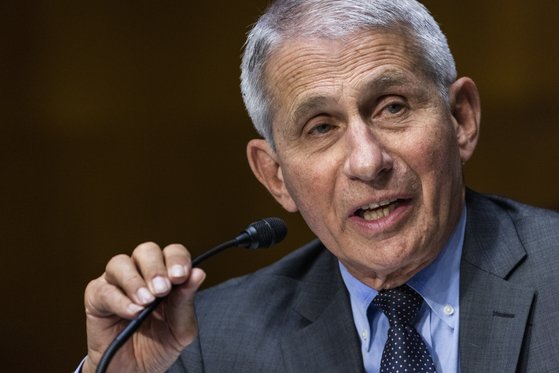 Anthony Fauci, Director of the U.S. National Institute of Allergy and Infectious Diseases (NIAID) / Photo by Yonhap News
[Asia Economy Reporter Lim Juhyung] As expectations rise that COVID-19 may soon transition to an endemic, Anthony Fauci, director of the U.S. National Institute of Allergy and Infectious Diseases (NIAID) and an authority on infectious diseases, has warned that another wave could return this fall.
On the 6th (local time), Fauci appeared on the U.S. financial media outlet Bloomberg TV and stated, "We should expect a slight increase in COVID-19 cases over the coming weeks." However, he added that the fatality rate is not expected to be as high as before, saying, "There is sufficient herd immunity, so I hope it will not lead to many hospitalizations."
Fauci predicted that the easing of quarantine policies and the waning immunity from vaccines could slightly increase the rate of infection. In particular, he noted that the relaxation of most preventive measures, such as mask mandates, has created favorable conditions for the spread of COVID-19.
When asked by the host whether this fall is expected to be similar to the past two falls, he replied, "I think we will see a spread in the fall."
Fauci explained, "As the weather gets colder, we should expect some increase in cases. That is why the U.S. Food and Drug Administration (FDA) and its advisory committee are meeting to strategize, and why our National Institutes of Health (NIH) continues research to determine the best booster shots."
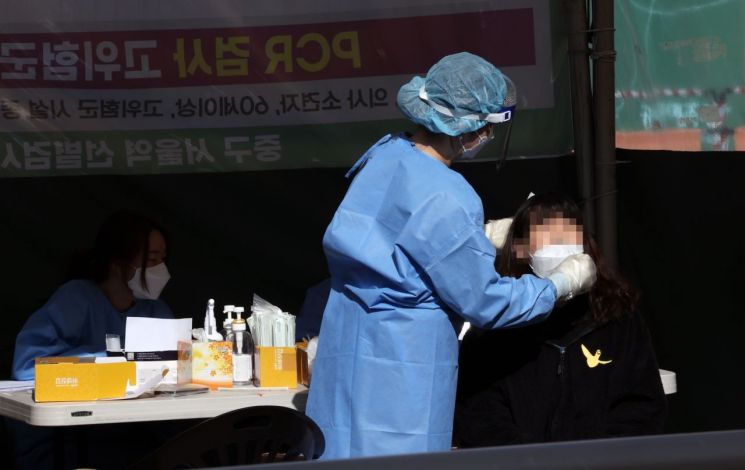 On the morning of the 7th, medical staff are conducting rapid antigen tests at a temporary COVID-19 screening clinic set up at Seoul Station Plaza. / Photo by Yonhap News
Earlier, as the global surge caused by the Omicron variant at the end of last year gradually subsided, optimism arose that COVID-19 could transition to an endemic.
On the 30th of last month, the U.S. media outlet The Wall Street Journal (WSJ) mentioned South Korea's low fatality rate and high vaccination rate, claiming that "it could become the world's first country to transition from a COVID-19 pandemic to an endemic."
On the 1st, Prime Minister Kim Boo-kyum also mentioned in a briefing, "We have hopes that our country could be the first in the world to transition to an endemic."
However, health authorities have warned that it is premature to determine whether the infectious disease has become endemic at this time.
Son Young-rae, head of the Social Strategy Division at the Central Disaster and Safety Countermeasures Headquarters, explained at a briefing on the 6th, "Endemic is an academic term with a broad conceptual definition. There are differing opinions or it may be inappropriate to evaluate the lifting of social distancing as endemic."
He added, "There are issues with other variants such as BA.2 (Stealth Omicron), and it is still risky to change the medical response system. Whether an endemic declaration can be made at a specific point in time is currently uncertain, and I think it will be difficult for the time being."
© The Asia Business Daily(www.asiae.co.kr). All rights reserved.


















