KOSPI Closes Lower Amid US Tightening Fears
Individuals Bought Over 1 Trillion Won but Could Not Overcome Tightening Burden
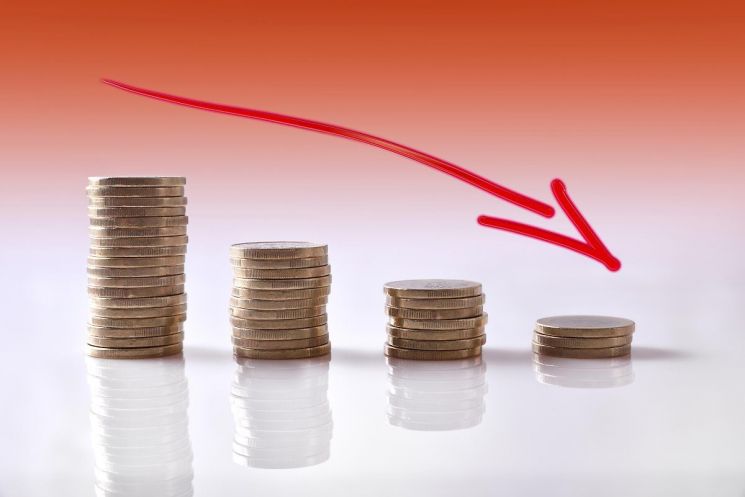
[Asia Economy Reporter Junho Hwang] On the 7th, the stock market closed lower amid simultaneous net selling by foreigners and institutions. It is analyzed that investor sentiment was dampened as the minutes of the March Federal Open Market Committee (FOMC), released on the 6th (local time), discussed the start of quantitative tightening by the U.S. and accelerating monetary policy by raising the benchmark interest rate by more than 50 basis points at the May FOMC meeting.
On that day, the KOSPI closed at 2,695.86, down 39.17 points (1.43%). Although individuals engaged in net buying worth 1.2829 trillion KRW to prevent the index from falling, it was insufficient. Foreigners and institutions conducted net selling of 772.5 billion KRW and 520.2 billion KRW respectively, causing the index to slip below the 2,700 level from the morning session.
Samsung Electronics did not surpass 70,000 KRW per share despite strong Q1 earnings
Among all KOSPI-listed stocks, 189 stocks closed higher.
Among the top market capitalization stocks, SK Hynix closed up 0.44% at 113,500 KRW. Foreigners sold SK Hynix shares, but individuals bought, resulting in a price increase at the close.
Samsung Electronics, the leader of the KOSPI, closed lower despite strong Q1 earnings this year. Samsung Electronics ended the day at 68,000 KRW, down 0.73% from the previous close. Before the market opened, Samsung Electronics announced that its consolidated operating profit for Q1 this year reached 14.1 trillion KRW, a 50.32% increase compared to the same period last year. This also exceeded the average operating profit forecast of 13.0849 trillion KRW from securities firms compiled until the previous day. Sales reached 77 trillion KRW, up 17.76% from the same period last year, marking the highest quarterly sales ever. This is the first time quarterly sales have exceeded 70 trillion KRW.
By sector, only the textile and apparel sector (up 0.55%) closed higher. Following inclusion in the KOSPI 200, F&F closed up 3.36% at 770,000 KRW, and Banglim, Shinwon (preferred shares), and Taepyeongyang Mulsan also showed upward trends.
EcoPro BM Maintains No.1 Market Cap on KOSDAQ

The KOSDAQ closed down 15.18 points (1.61%) at 927.95. On the KOSDAQ as well, individuals conducted net buying worth 414.5 billion KRW, but foreigners and institutions net sold 257.6 billion KRW and 141.4 billion KRW respectively, increasing the decline.
Among all stocks, 225 stocks closed higher. Among the top 10 by market capitalization, three stocks including EcoPro BM (up 1.49%), L&F (up 1.52%), and HLB (up 0.17%) closed higher.
EcoPro BM, which rose to No.1 in KOSDAQ market capitalization the previous day, closed up 1.49% at 430,100 KRW. It is analyzed that expectations increased regarding EcoPro BM's decision on paid and free capital increases. The day before, EcoPro BM decided on a paid capital increase worth 500 billion KRW and a free capital increase allocating three new shares per one existing share.
Jaeheon Jung, a researcher at DB Financial Investment, said, "This is the first decision to start overseas expansion of 320,000 tons, about 59% of the 2026 production capacity guidance of 550,000 tons, and it has significance beyond simple fundraising," adding, "Since the overseas expansion plan that the market expected has materialized, it will be positive for the stock price." However, he added, "Changes to the target price reflecting dilution from paid and free capital increases will be reflected after the issuance price of the new shares is confirmed."
'Tightening' fears grow in the 'stock market'
On that day, the USD/KRW exchange rate closed at 1,219.50, up 0.10% from the previous day. Due to the strong dollar, the USD/KRW rate started the session rising to 1,220 KRW. Afterwards, following the Chinese commission's official appreciation announcement and ahead of the European Central Bank (ECB) monetary policy meeting minutes release in the evening, the euro strengthened slightly, causing the rate to fall to 1,216 KRW. However, amid increased risk aversion and continued net selling by foreigners in the stock market, the rate reversed to rise again before closing.
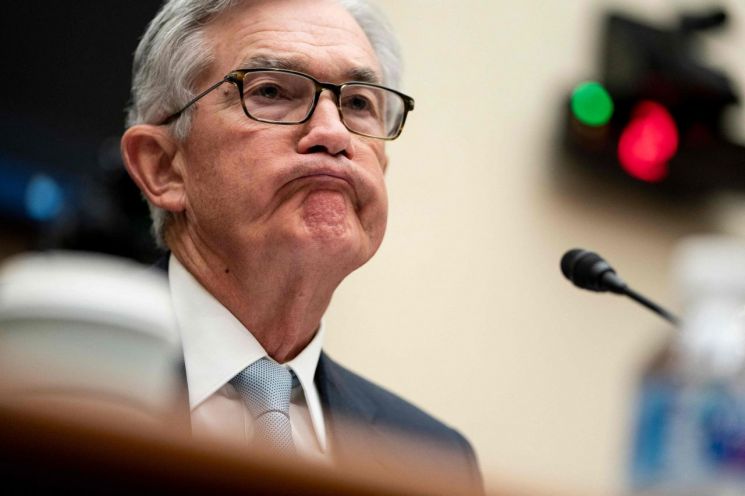
The decline in the stock market that day is analyzed to be due to the U.S.'s aggressive monetary policy normalization stance. Kyungmin Lee, a researcher at Daishin Securities, analyzed, "Investors seem to feel somewhat burdened by the detailed quantitative tightening contents that were concretized as the minutes of the Federal Open Market Committee (FOMC) of the Federal Reserve (Fed), which sets the direction of U.S. monetary policy, were released on the 6th (local time)." However, he added, "From a mid- to long-term perspective, it could be positive as the market is preemptively reflecting the burden of high-intensity rate hikes and quantitative tightening."
Sangyoung Seo, a researcher at Mirae Asset Securities, said, "Along with changes in U.S. monetary policy, news that the number of new COVID-19 cases in Shanghai reached 19,982 and the announcement that strict lockdowns will continue also affected the stock market," adding, "Although the Chinese government announced that port operations continue, news that arrivals and departures have been suspended, affecting logistics, also had an impact."
© The Asia Business Daily(www.asiae.co.kr). All rights reserved.



















