'Reappointment' Director Yoon Beom-mo Presents Vision... Focus on Ecological and Digital Projects
Establishment of 5th Branch in Daejeon... "Opening an Era of Nationwide Art and Culture Enjoyment"
'Lee Kun-hee Collection' Touring Exhibitions in Over 10 Locations Including Gwangju, Gyeongnam, and Busan
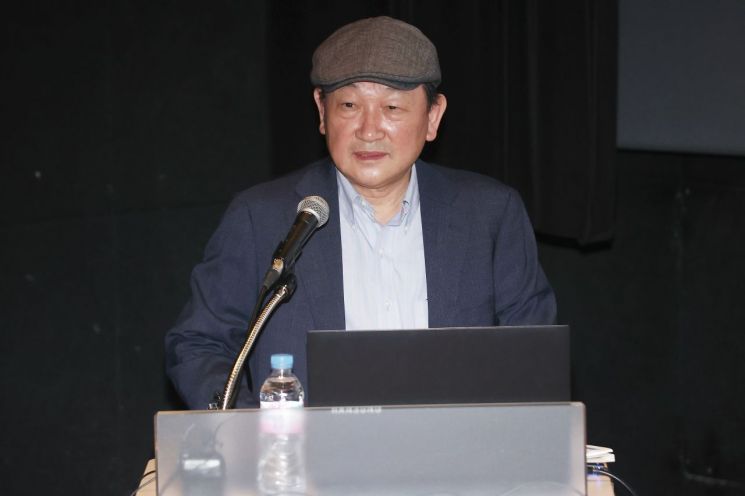 Yoon Beom-mo, Director of the National Museum of Modern and Contemporary Art, announced the new three-year vision and key directions at a press conference held at the National Museum of Modern and Contemporary Art in Jongno-gu, Seoul, on the morning of the 6th. Photo by Yonhap News Agency
[Asia Economy Reporter Kim Heeyoon] "We will create an open museum that connects regions, eras, and the world to offer inspiration and emotion to our society."
Yoon Beom-mo, the reappointed director of the National Museum of Modern and Contemporary Art (MMCA), held a press conference on the 6th to announce the 'New 3-Year Vision' and presented key projects to be promoted during his term, focusing on expanding Hallyu (Korean Wave), ecology, digital innovation, and regional projects. After passing the open recruitment and evaluation by the Ministry of Personnel Management last November, Director Yoon was reappointed on February 5th and will lead the MMCA again until February 2025.
In his announcement, Director Yoon revealed the museum operation plan focusing on ▲Expansion and Connection ▲Art Hallyu ▲Ecological Museum ▲Digital Innovation to achieve the vision of an "open museum connecting regions, eras, and the world."
He named the upcoming 3-year term as the "New 50-Year Expansion Period" and emphasized pursuing values of professionalism, expansibility, and diversity.
Construction of the 5th Branch, Daejeon Branch, and Promotion of Museum Culture Expansion
First, the establishment of an 'Open Museum' will be promoted. The MMCA plans to expand to a five-branch system by adding the 'National Art Collection Storage and Conservation Center Daejeon' (hereafter Daejeon Branch) in Daejeon, a key city in the central region, following the four branches in Seoul, Gwacheon, Deoksugung, and Cheongju, thereby opening an era of nationwide art culture enjoyment.
The Daejeon Branch will be created by utilizing the 'Old Main Building of Daejeon Chungcheongnam-do Provincial Office,' a national registered cultural property built in 1932. The opening is scheduled for the first half of 2026. Director Yoon stated, "While leveraging the unique characteristics of the science city Daejeon, we will gather regional and art community opinions to establish it as a central institution for culture and arts in the central region."
He added, "The expansion through the construction of the Daejeon Branch following the Cheongju Branch responds to the spread of donation culture due to changes in art policy environments and signifies the establishment of a systematic system for managing and researching national artworks. We aim to continuously reduce the cultural gap between the metropolitan area and regions and expand art enjoyment nationwide."
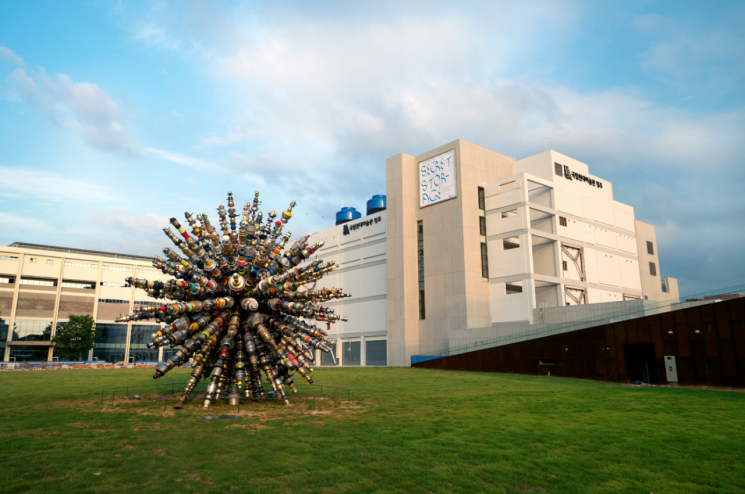 National Museum of Modern and Contemporary Art, Cheongju. Photo by National Museum of Modern and Contemporary Art
Cheongju Branch as a National Hub for Art Conservation... Establishment Based on Scientific Appraisal
Opened in December 2018, the Cheongju Branch will strengthen its function as a 'general hospital' for art conservation, and the Gwacheon Branch's Art Research Center will be expanded and reorganized into the 'MMCA Korean Art Research Institute.'
The Cheongju Branch will build foundational data for preventive conservation using information and communication technology (ICT) and artificial intelligence (AI) to predict the degree and cycle of artwork damage. Using advanced analytical technology, it will construct big data on artists' expression techniques and art materials, while also establishing conservation treatment and scientific appraisal bases.
The 'Lee Kun-hee Collection' will be exhibited on a traveling basis over three years at about ten public museums, starting this year with the Gwangju Museum of Art, Gyeongnam Provincial Museum, and Busan Museum of Art.
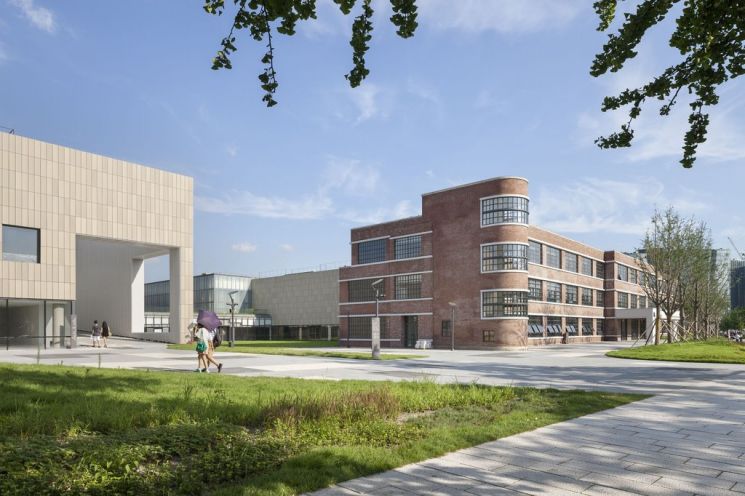 National Museum of Modern and Contemporary Art, Seoul. Photo by National Museum of Modern and Contemporary Art
The First Year of Art Hallyu, Establishment of International Exchange TF and Hosting 'Korean Art Week'
Director Yoon declared this year as the inaugural year of Art Hallyu. He said, "I believe it is a historical mission for fine arts to join the Hallyu wave," and added, "We will form an 'International Exchange Task Force' as the core of Art Hallyu to invite art researchers, provide artist residencies, and explore exhibitions and academic events with foreign institutions."
In November, in collaboration with the Korea Foundation for International Exchange and Dartmouth College in the U.S., 'Korean Art Week' will be held, and the website 'MMCA Research Lab' will be launched to allow overseas researchers easy access to Korean art information.
Exhibitions introducing Korean art abroad will also be steadily held. In September, a Korean modern art exhibition will be held in Los Angeles (LA), USA, and next year, an experimental art exhibition will be showcased at the Guggenheim Museum in New York.
Key research themes for the five museums have also been set. The Seoul Branch will focus on 'Contemporaneity,' the Gwacheon Branch on 'Architecture' and 'Ecology,' the Deoksugung Branch on 'East Asian Avant-Garde Art' and 'Marginalized Genres,' the Cheongju Branch on 'Conservation Science,' and the Daejeon Branch on 'Specialization in Science and Art.'
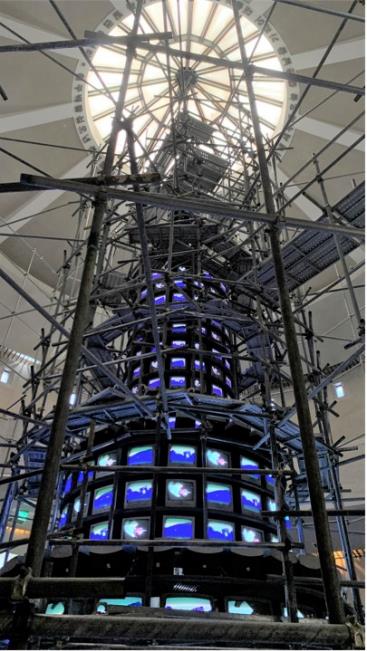 The largest-scale work among video art pioneer Nam June Paik's (1932?2006) pieces, "Dadaikseon," has been reactivated.
 Installed at the Gwacheon branch of the National Museum of Modern and Contemporary Art in 1988, "Dadaikseon" was completely shut down four years ago due to safety concerns related to monitor aging, and restoration work has been ongoing since then.
The National Museum of Modern and Contemporary Art announced that the basic preservation and restoration process of "Dadaikseon" has been completed, and a six-month trial operation has been underway since January. The photo shows Nam June Paik's "Dadaikseon" during the trial operation. Photo by National Museum of Modern and Contemporary Art [Image source=Yonhap News]
ESG Management for Future-Oriented 'Ecological Museum' Responding to Climate Crisis
Director Yoon pledged five major action plans to reduce carbon emissions for a future 'Ecological Museum' responding to the climate crisis: ▲Reducing waste and recycling ▲Stopping the use of vinyl and plastic packaging for catalogs ▲Producing promotional materials using eco-friendly paper and recycled paper ▲Minimizing paper ticketing ▲Reducing the use of disposable cups, among others.
He added that the 'MMCA Multidisciplinary Arts: Carbon Project,' which measures energy and carbon emissions generated during museum exhibitions and seeks reduction methods, will begin in August.
Additionally, for digital innovation, the museum will enhance website functions, build a metaverse-type virtual museum, provide customized services using Internet of Things (IoT) technology, upgrade the collection management system, and conduct research related to non-fungible tokens (NFTs).
Director Yoon described the past three years of his term as a 'Future Preparation Period.' During this time, the MMCA achieved remarkable results such as reaching 10,000 pieces in the collection through the national donation of the Lee Kun-hee Collection, restoring Nam June Paik's work 'Dadaikseon,' and establishing an art history research system.
He said, "Having laid the foundation for a new 50-year leap through the three years of future preparation, the next three years will see more dynamic projects systematically promoted than ever before."
© The Asia Business Daily(www.asiae.co.kr). All rights reserved.
![Clutching a Stolen Dior Bag, Saying "I Hate Being Poor but Real"... The Grotesque Con of a "Human Knockoff" [Slate]](https://cwcontent.asiae.co.kr/asiaresize/183/2026021902243444107_1771435474.jpg)


















