Russia-Ukraine War Triggers Energy and Food Price Crisis
Last Month's Inflation Rate 4.1%... Twice the Bank of Korea's Target
Food and Beverage Prices Hit Hardest for Ordinary People
Experts Say "Raw Material Supply Instability Cannot Be Solved by Short-Term Measures"
"Crisis Must Be Addressed with Long-Term and Strategic Approach"
[Asia Economy Reporter Lim Juhyung] As the Russia-Ukraine war continues for over a month, the global supply chain shock is intensifying. The domestic inflation rate has also risen to the 4% range for the first time in about 10 years. In particular, this supply instability is having an immediate impact on essential everyday items such as crude oil, gas, grains, and meat, raising concerns that the financial hardships of ordinary citizens may deepen further.
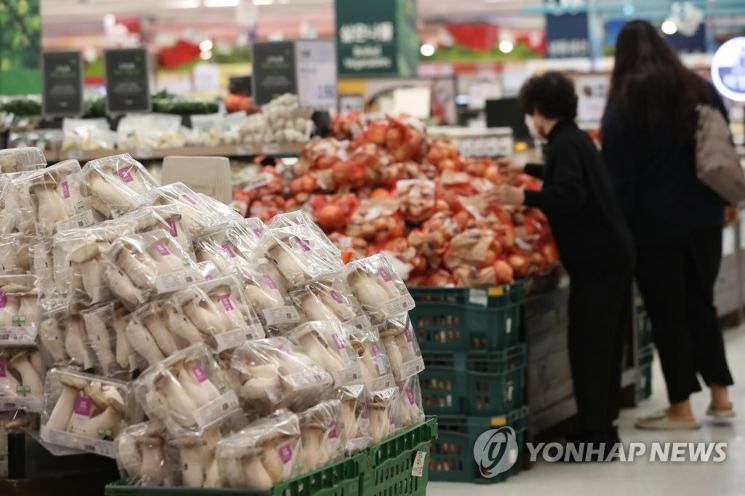 Products displayed in the grocery section of a supermarket. According to Statistics Korea on the 5th, the domestic inflation rate as of last month was recorded at 4.1%, marking the highest level in about 10 years. / Photo by Yonhap News
◆Worst Inflation Rate in 10 Years and 3 Months... Bank of Korea: "Upward Trend to Continue for the Time Being"
According to the 'Consumer Price Trends' released by Statistics Korea on the 5th, the consumer price index rose by 4.1% year-on-year last month, marking the highest level in 10 years and 3 months.
Looking at detailed items, petroleum prices surged by a staggering 31.2%. Gasoline (27.4%), diesel (37.9%), and automotive LPG (20.4%) all recorded double-digit increases. The dining-out price index also rose by 6.6%, the highest since April 1998 (7.0%).
Korea's inflation rate has exceeded 3% for five consecutive months since October last year and reached the 4% range last month. This figure is double the Bank of Korea's long-term inflation stability target of 2%.
The Bank of Korea expects high inflation to continue for the time being. In the 'Inflation Situation Review Meeting' held immediately after Statistics Korea's inflation announcement, the Bank of Korea forecasted, "Due to the rise in raw material prices such as crude oil and grains caused by the Ukraine situation, the inflation rate will remain in the 4% range for the time being."
◆Russia-Ukraine War Triggers Energy and Food Price Crisis
The aftermath of the Russia-Ukraine war, which broke out on the 24th of last month (local time), is shocking the global supply chain. Russia is the world's largest producer and exporter of natural gas, selling vast amounts of gas to Europe through its state-owned energy company, Gazprom. However, due to the war, gas supply has become unstable, causing global gas prices to soar repeatedly beyond Europe.
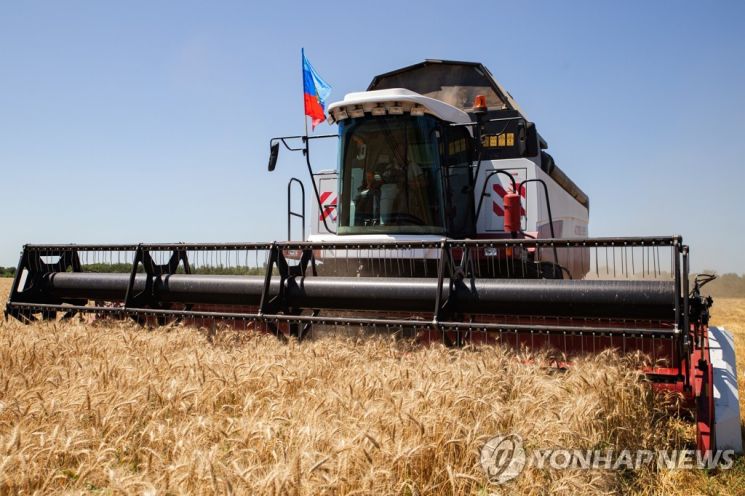 A wheat farm in the Luhansk region of Ukraine. Ukraine is a grain-producing country accounting for about 8% of the world's wheat exports. Due to the aftermath of the war, farming has been disrupted, and with the Black Sea ports closed, grain supply and demand are expected to become unstable. / Photo by Yonhap News
Although Ukraine's economy itself is not very large (ranked 56th in the world by GDP according to the IMF in 2021), it boasts enormous influence in the international grain market, earning the nickname "Europe's breadbasket." As of 2020, Ukraine accounted for 13.2% of global corn exports and 8% of wheat exports.
However, this year, the war has disrupted farming, and the Black Sea, a major export route for grains, has been blocked, potentially triggering a 'food crisis.'
This supply crisis is particularly problematic because it severely affects energy and food, which are most sensitive to the daily lives of ordinary people. Workers commuting by car and citizens shopping daily are already feeling the impact of soaring prices.
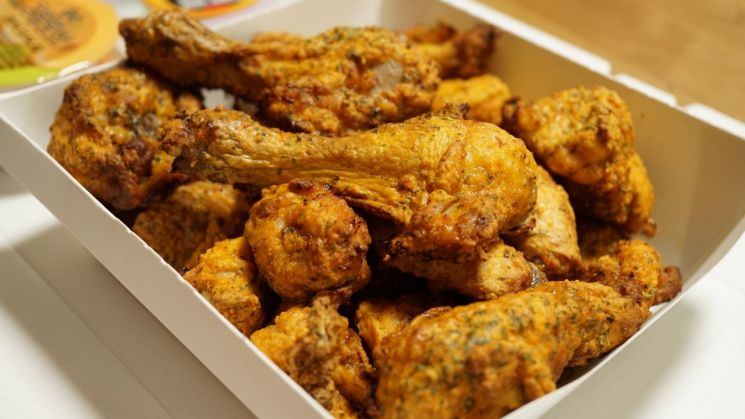
The food service industry, mainly composed of small business owners and self-employed individuals, cannot avoid feeling the pressure of rising prices. Yoon Hong-geun, chairman of Korea's largest chicken franchise Genesis BBQ, said in an interview with a media outlet last month, "Chicken should now cost 30,000 won instead of 20,000 won," adding, "Small business owners rent stores and put all their labor into providing services, but they cannot freely raise prices due to customers' perceptions."
Although the domestic inflation rate was 4.1% last month, the 'table price' had already been deteriorating sharply long before that. In the third quarter of last year (July-September), the price of food and non-alcoholic beverages in Korea rose by 5.0% year-on-year, ranking 4th among OECD member countries. That survey was conducted before the war, so the situation is likely to worsen this year.
◆Already a 'High Inflation Era' from the Perspective of Ordinary Citizens
Citizens are already expressing that they feel they are living in a 'high inflation era.'
A housewife in her 50s living in Gyeonggi Province, Ms. A, said, "Every time I go to the market, I can visibly see the prices of vegetables, meat, and eggs rising daily," adding, "Now, going shopping is frightening. I worry first about what I will eat in the future."
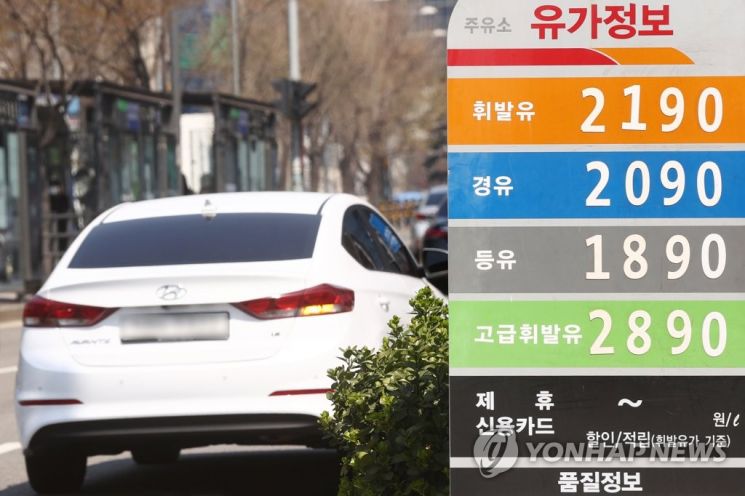 Diesel and gasoline prices posted at a gas station in downtown Seoul on the 3rd. / Photo by Yonhap News
B, a 25-year-old university student, said, "Even convenience store food, which I used to grab for a quick meal, has gone up by 200 to 300 won. Food that usually cost around 3,000 won suddenly jumped by 10%," adding, "This is a huge burden for students with tight budgets."
C, a 30-something office worker, said, "Nothing from car fuel to dining out prices has not gone up," expressing concern, "I'm worried that the era when we pay 30,000 won for a single chicken might really come."
Experts emphasize that long-term government strategies are crucial to prevent the rapid deterioration of citizens' lives due to rising prices.
Professor Kim Taegi of Dankook University's Department of Economics pointed out, "The current inflation is a supply shock caused by shortages in raw materials and manufactured goods production," adding, "It is not a problem that can be solved solely by the central bank's interest rate hikes."
He continued, "In crises where monetary policy has limited influence, government efforts are very important. As seen in the Ukraine crisis, instability in raw material exporting countries can escalate into an inflation crisis," adding, "This is an area of international politics where the president's role is emphasized."
He emphasized, "The solution to the crisis should not be limited to one-off tax cuts but should involve long-term and strategic approaches such as jointly developing resources with allied countries to establish a stable global supply chain."
© The Asia Business Daily(www.asiae.co.kr). All rights reserved.
![Clutching a Stolen Dior Bag, Saying "I Hate Being Poor but Real"... The Grotesque Con of a "Human Knockoff" [Slate]](https://cwcontent.asiae.co.kr/asiaresize/183/2026021902243444107_1771435474.jpg)


















