[Seoul Autonomous District News] Dobong-gu plays a central role in diagnosing and supporting Dobong-gu community spaces spanning 533㎡ from 1st to 4th floors above ground... Open weekdays from 10 AM to 8 PM, Saturdays from 10 AM to 2 PM... Guro-gu establishes a new space for people with brain lesions in Guro 2-dong, spanning basement 1 to 4th floor above ground, relocates Guro Salmteo Regional Self-Support Center to secure a larger space with training rooms and counseling rooms... Yeongdeungpo-gu strengthens social safety nets for homeless people through Bohyeon Comprehensive Support Center, a specialized homeless protection facility, and street outreach... Dongjak-gu,
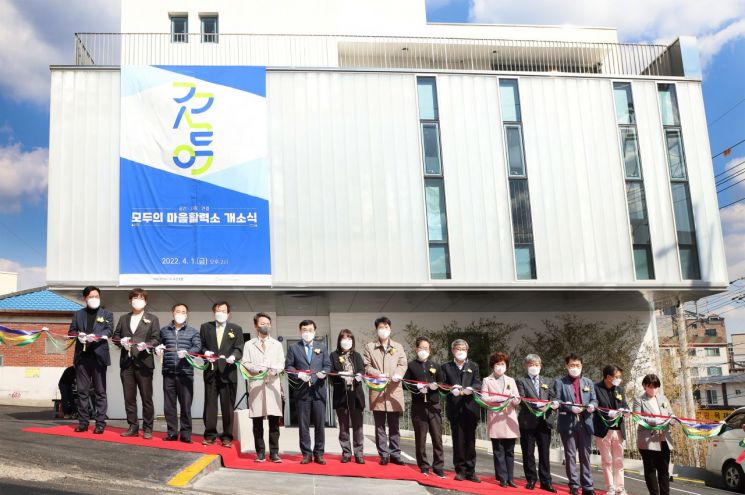
[Asia Economy Reporter Park Jong-il] Dobong-gu (Mayor Lee Dong-jin) has established 'Modu-ui Maeul Hwalryeokso' (Everyone's Village Vitality Center) in Ssangmun-dong to serve as a hub for community spaces, and held an opening ceremony on the 1st.
'Modu-ui Maeul Hwalryeokso' (227 Nohae-ro, Dobong-gu) spans 533㎡ across four floors above ground. ▲The 1st floor is a ‘public parking lot’ ▲The 2nd floor houses ‘Modu-ui Maeul Broadcasting Station’ and ‘Dobong Village Archive’ ▲The 3rd floor contains an ‘education room’ and ‘center director’s office’ ▲The 4th floor includes the ‘Dobong-gu Village Social Economy Support Center Village and Autonomy Team offices’.
As a hub-type village vitality center, Modu-ui Maeul Hwalryeokso is expected to play a pivotal role in diagnosing and supporting community spaces within Dobong-gu. To revitalize community spaces, it will also conduct space networking and operator training courses.
Additionally, ‘Modu-ui Maeul Broadcasting Station’ will function as a ‘media platform’ that delivers local information and produces content.
To ensure professional operation of the vitality center, Dobong-gu relocated the ‘Village Support Team’ and ‘Resident Autonomy Team’ of the Dobong-gu Village Social Economy Support Center (279-5 Nohae-ro) to the vitality center.
The district expects that this relocation and integration will enhance the synergy between village communities and resident autonomy.
Mayor Lee Dong-jin of Dobong-gu said, “Modu-ui Maeul Hwalryeokso will be a space not only for Ssangmun-dong but also for nearby residents, serving as a center supporting Dobong-gu’s community spaces and playing a central role in creating a village culture where residents unite and cooperate.”
Modu-ui Maeul Hwalryeokso operates on weekdays (Monday to Friday) from 10 a.m. to 8 p.m., and on Saturdays from 10 a.m. to 2 p.m. By May, it plans to collect diverse resident needs and opinions and open various programs such as education and leisure activities.
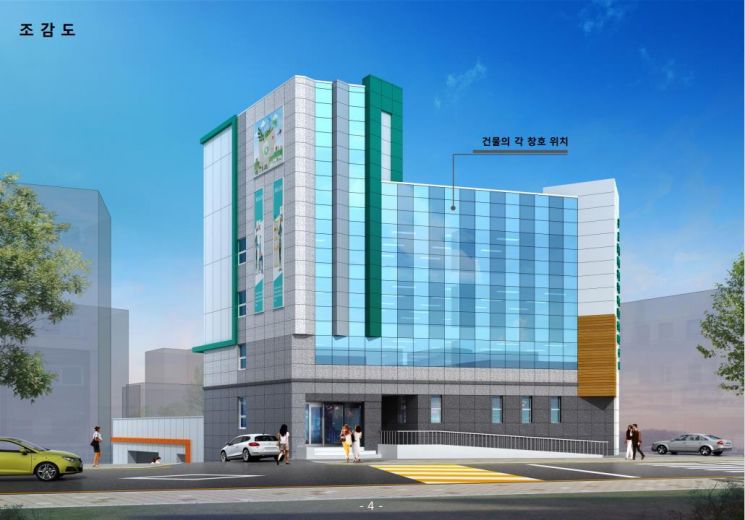
Guro-gu (Mayor Lee Sung) is establishing a ‘Regional Self-Support Center and Brain Lesion Disabled Vision Center’.
On the 5th, Guro-gu announced, “To assist rehabilitation for people with brain lesions and provide self-support services to low-income individuals with work ability, we are remodeling a building located at 43 Gurodong-ro 42-gil to create the ‘Regional Self-Support Center and Brain Lesion Disabled Vision Center.’”
The ‘Regional Self-Support Center and Brain Lesion Disabled Vision Center’ will cover a total area of 949㎡, spanning from basement level 1 to the 4th floor above ground. The project, with a total budget of about 5.8 billion KRW, will start this month and is scheduled for completion in October.
The newly established Brain Lesion Disabled Vision Center on the 1st and 2nd floors above ground will include a psychological stabilization room, kitchen, group activity room, and classrooms. Special facilities such as a wheelchair-accessible elevator and a ceiling-mounted hoist transfer device will be installed. This center will provide comprehensive services including care, education, and health for adult brain lesion disabled individuals, along with systematic lifelong education information for the disabled.
The district plans to select an operator for the center in June. In December last year, it signed a business agreement with the International Lions Club District 354-D for elevator installation.
The basement 1st floor and the 3rd and 4th floors above ground will house the relocated Regional Self-Support Center, equipped with an information room capable of audiovisual education, a shared workshop, meeting rooms, and counseling rooms. The center will offer counseling to improve work ability for low-income residents.
Guro-gu previously had the ‘Guro Salteo Regional Self-Support Center,’ but due to limited space and outdated facilities, it faced difficulties in providing education and counseling rooms.
This relocation has secured a space of over 571㎡ to resolve these issues.
A Guro-gu official said, “Once construction is completed, facilities needed by brain lesion disabled individuals and low-income residents will be available. We will continue to strengthen welfare projects to improve residents’ quality of life.”
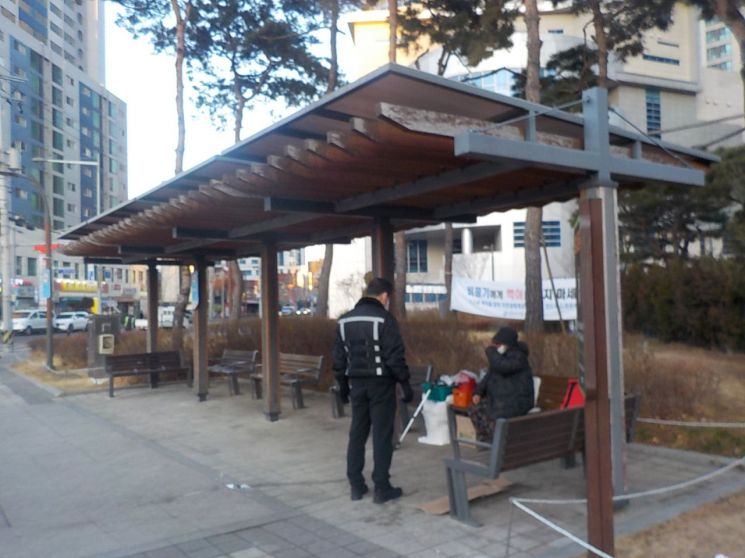
Yeongdeungpo-gu (Mayor Chae Hyun-il) is promoting a ‘Public-Private Joint Street Outreach’ to identify and support street homeless people in blind spots with professional expertise.
As the weather warms and the number of street homeless people increases sharply, the district decided to strengthen on-site protection activities together with the municipal Bohyeon Comprehensive Support Center, a social welfare facility for the homeless in the area.
The public-private street outreach team, consisting of five members including professional staff from Bohyeon Comprehensive Support Center, the district’s self-support protection team, and street counseling team workers, will conduct joint patrols twice a week on Wednesday and Thursday evenings starting in April.
They will visit places such as Seoul Bridge, Yeongdeungpo Station, and jjokbangchon (tiny room villages), meeting homeless people to listen to their difficulties and problems, and provide tailored protection through counseling, emergency support, facility and hospital admission, etc.
In particular, they aim to actively identify not only homeless people needing urgent protection but also those living on the streets outside the system, such as those with stable housing or who do not use homeless facilities, or non-legal homeless individuals, to help stabilize their lives.
Along with outreach counseling, they will also promote COVID-19 prevention guidelines, encourage vaccination, and provide various hygiene supplies to help eliminate blind spots in quarantine.
Additionally, the district will hold quarterly case coordination meetings to address the diverse and complex needs of street homeless people. Homeless facility officials and dedicated case management staff from the district office will participate to devise multifaceted support measures and seek fundamental solutions.
Yeongdeungpo-gu was the first in the nation to establish a homeless countermeasure team (currently the self-support protection team), leading efforts in homeless support and problem resolution.
Through operating the street counseling team, it has worked to protect homeless people in crisis and resolve complaints from local residents, provided about 200 jobs annually to build a foundation for homeless self-support, and conducted continuous on-site patrols and counseling (about 22,000 times annually), implementing various field-oriented relief projects.
Mayor Chae Hyun-il of Yeongdeungpo-gu said, “Through public-private joint outreach activities, we will actively identify street homeless people in blind spots and support their return as healthy members of society. We will continue to carefully manage various homeless-related policy projects to promote homeless independence and self-support and alleviate residents’ inconveniences.”
Recently, ‘guaranteeing mobility rights for the disabled’ has emerged as a very important social issue in our society.
In response, Dongjak-gu (Mayor Lee Chang-woo) is actively promoting projects to facilitate mobility for the disabled, including ▲support for installing small-scale customized ramps closely linked to daily life ▲support for repair costs of rehabilitation assistive devices ▲operation of a free shuttle bus exclusively for the disabled.
First, the district is creating customized ramps to enable people with disabilities and other mobility-impaired individuals to conveniently enter small-scale facilities closely linked to daily life, such as convenience stores, supermarkets, and pharmacies.
This project is designed to build a barrier-free living environment by installing ramps in facilities where inconvenience may be felt in daily life, although they are not required by the ‘Convenience Facilities Act’ to have ramps.
This year, the district plans to install ramps at about 55 locations for the first time and is recruiting support operators in advance. Applicants must be disability welfare facilities or organizations in Dongjak-gu, and if selected, ramp installation will be promoted at small-scale workplaces under 300㎡.
Facilities and organizations wishing to apply should submit application forms and other documents by the 7th to the Dongjak-gu Office Elderly and Disabled Division (161 Jangseungbaegi-ro, 2nd floor) either in person or by email. For more details, contact the Elderly and Disabled Division.
Also, from this year, the district has expanded the annual support amount for rehabilitation assistive device repair costs. Repairs can be done through six designated repair shops, and the support amount for manual and electric wheelchair and electric scooter repairs, previously ranging from 100,000 to 200,000 KRW per person, has been increased to a maximum of 150,000 to 300,000 KRW.
For disabled individuals aged 24 or younger with physical, brain lesion, or spinal disabilities, the district also provides rental vouchers for growth-stage customized assistive devices such as electric and manual wheelchairs. This is to support assistive devices necessary for daily life but difficult to purchase due to cost. Last year, a total of 145 assistive devices were supported, improving the welfare level of low-income disabled people.
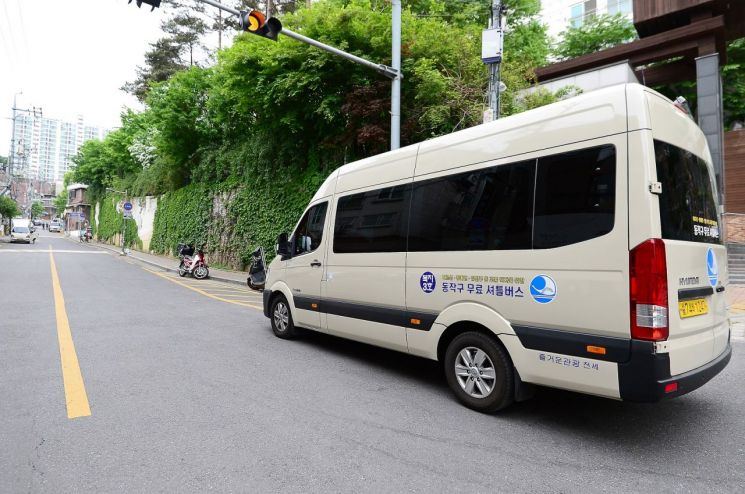
In addition, to facilitate convenient mobility for the disabled, a new ‘free shuttle bus exclusively for the disabled’ equipped with a wheelchair lift operates from Sindebang Samgeori Station to the Municipal Disabled Welfare Center, and plans are underway to expand the automatic enforcement system in disabled parking zones.
Lee Sun-hee, head of the Elderly and Disabled Division, said, “We will break down physical and psychological barriers for the disabled and provide welfare services that can be used with confidence to create a happy Dongjak.”
© The Asia Business Daily(www.asiae.co.kr). All rights reserved.
![Clutching a Stolen Dior Bag, Saying "I Hate Being Poor but Real"... The Grotesque Con of a "Human Knockoff" [Slate]](https://cwcontent.asiae.co.kr/asiaresize/183/2026021902243444107_1771435474.jpg)


















