COVID-19, Recombinant Variant Combining Two Mutations Detected
Attention on 'XE' Combining Omicron and Stealth Omicron
"May Be 10% Faster Than Stealth Omicron"
However, Further Research Needed to Measure Actual Infection Growth Rate
 On the morning of the 1st, citizens are waiting to get tested at the temporary COVID-19 screening center set up at Seoul Station Plaza. / Photo by Yonhap News
[Asia Economy Reporter Lim Juhyung] A new COVID-19 variant called 'XE' has been discovered in the UK, Taiwan, and other countries, drawing attention from the international scientific community. Some express concerns that it may spread more than 10% faster than the Omicron variant. However, the academic community remains cautious, stating that current data is insufficient to confirm XE's transmission speed.
The UK Health Security Agency (HSA) was the first to report the XE variant. According to HSA, on January 19 (local time), two new variants named XE and XF were detected in the UK. Among these, 38 cases of XF and 637 cases of the concerning XE variant were identified.
These new variants are called 'recombinant variants.' Typically, coronaviruses generate numerous mutations during replication, but recombinant variants are new types formed by the combination of two different variants. So far, recombinant variants reported include XE and XF by HSA, as well as the XD variant.
XE is a combination of the existing Omicron variant BA.1 and the so-called 'Stealth Omicron' subvariant BA.2, while XD and XF are combinations of the Delta and Omicron variants.
XE has been found not only in the UK. In Taiwan, XE was first reported through arrivals from the Czech Republic, and Israel has also reported two cases of the XE variant.
◆XE Combining Omicron and Stealth Omicron
What worries scientists is the transmission speed of XE. The Omicron variant is known to spread much faster than the Delta variant, and Stealth Omicron is reported to be 40-50% faster than Omicron. There are concerns that XE, born from the combination of these two variants, may have the highest transmissibility among existing variants.
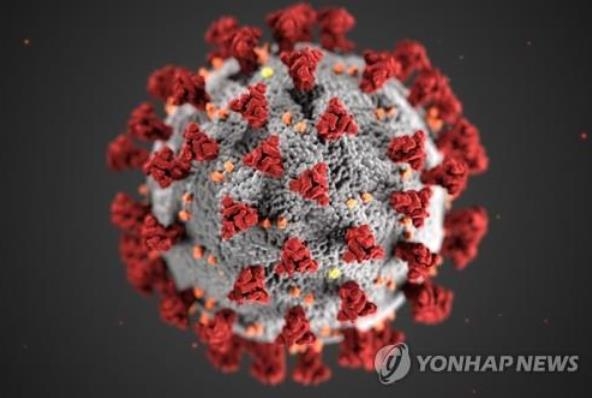
In this regard, the World Health Organization (WHO) stated in its weekly epidemiological report on the 29th of last month, "Preliminary studies show that XE has about a 10% 'transmission advantage' over BA.2 (Stealth Omicron)," adding that "further confirmation is needed."
In fact, HSA initially found that XE's transmission rate was not significantly different from BA.2, but after analyzing the latest cases up to the 16th of last month, it was reported to be 9.8% higher than BA.2.
Anthony Fauci, director of the U.S. National Institute of Allergy and Infectious Diseases (NIAID), also speculated that "XE may be about 10% more transmissible than BA.2."
◆UK Researchers: "Insufficient Evidence to Conclude Transmission Level Yet"
However, the actual transmission speed and fatality rate of XE remain uncertain. There is a lack of sufficient samples to understand XE's characteristics. Professor Susan Hopkins, chief medical advisor at HSA, explained on the 25th of last month, "The emergence of recombinant variants is not uncommon in the virus's evolution process, especially during a global pandemic when multiple variants are circulating."
She added, "While the specific variant XE shows a distinguishable increase in transmission, we still cannot determine its true transmission rate," emphasizing, "There is currently insufficient evidence to conclude specific information such as transmission level, fatality rate, or vaccine effectiveness."
 Citizens lined up in front of a hospital in Seoul designated as a respiratory specialty clinic / Photo by Yonhap News
Typically, COVID-19 variants are detected using a technique called 'whole genome sequencing.' By analyzing the genome from samples that test positive via PCR, new variants can be identified.
However, even after detecting a variant, understanding how it differs from existing viruses is very challenging. For example, the Omicron variant was first discovered by South African researchers in November last year, but it took several months to accurately assess its transmission rate and fatality.
◆Health Authorities: "Continuously Monitoring for Domestic Inflow and Occurrence"
Meanwhile, health authorities explained that no cases of the XE variant have been reported domestically yet, but monitoring will continue.
The Central Disease Control Headquarters stated on the 3rd, "XD, XE, and XF have not been confirmed to occur domestically," adding, "We are continuously monitoring overseas situations and the possibility of domestic inflow and occurrence."
They further noted, "WHO recently classified recombinant variants including Deltacron as XD, XF, and XE, and research on their transmissibility and severity characteristics is ongoing."
They emphasized, "According to early UK analysis, XE shows about a 10% faster growth rate than BA.2, but the number of cases is still low, so this figure may change," adding, "Further investigation is needed to understand the variant's transmissibility and severity."
© The Asia Business Daily(www.asiae.co.kr). All rights reserved.



















