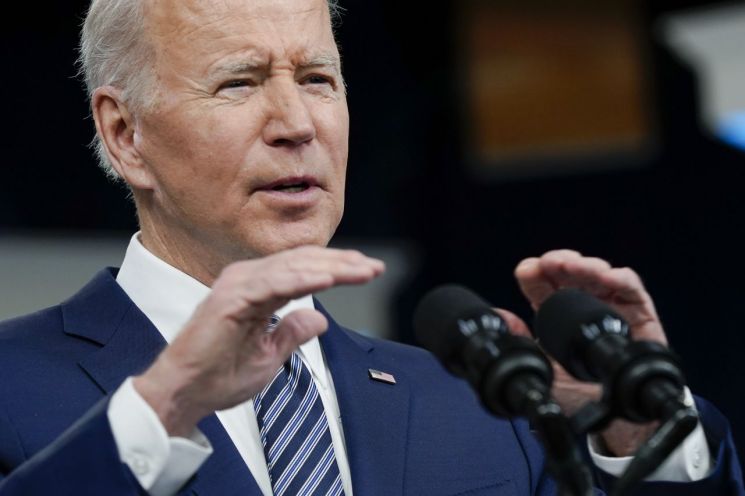
[Asia Economy New York=Special Correspondent Joselgina] With the midterm elections coming up this November, U.S. President Joe Biden is at a loss over soaring oil prices. The inflation problem in the U.S., cited as a key reason for his low approval ratings, has worsened recently due to rising oil prices. Moreover, the policies he has painstakingly introduced to curb oil prices are contradicting his emphasized commitment to addressing ‘climate change.’ Currently, President Biden’s approval rating is in the 40% range, the lowest since his inauguration.
◇"Control Oil Prices" ? Largest Ever Strategic Petroleum Reserve Release
On the 31st of last month (local time), President Biden announced in a national address at the White House that an additional release of 1 million barrels per day?the largest ever?will be made from the Strategic Petroleum Reserve over the next six months. He also decided to expand domestic oil drilling by imposing fines on about 9,000 oil wells that have permits but have not started production.
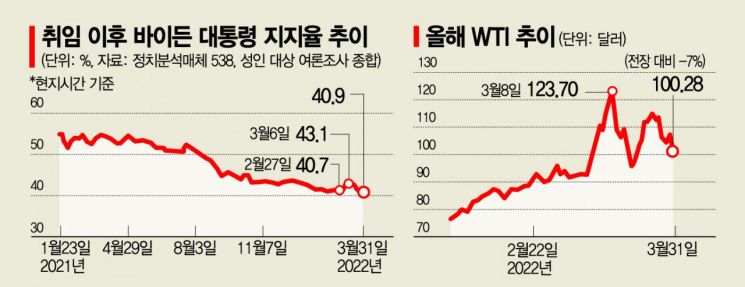
This is a measure to curb the recent sharp rise in oil prices. On that day, the price of West Texas Intermediate (WTI) crude oil fell 7% from the previous session to $100.28 per barrel following the news of the reserve release. However, it remains about 35% higher compared to the beginning of the year.
Particularly, President Biden’s decision to release such a large volume was strongly influenced by the judgment that the soaring oil prices are intensifying the inflation crisis in the U.S. The U.S. Consumer Price Index (CPI) for February rose 7.9% year-on-year, the highest since January 1982. Among these, energy prices surged by a staggering 25.6%. Considering Russia’s invasion occurred at the end of February, some analyses suggest the figure could soon reach double digits. Facing the midterm elections, President Biden could not ignore the public sentiment directly affected by rising grocery costs, which could be a critical blow to his electoral support.
On the day, President Biden mentioned that it is difficult to comment on the immediate impact of the reserve release but said it would likely reduce gasoline prices by 10 to 35 cents per gallon in the future.
The problem is that these measures contradict the Biden administration’s key pledge to combat climate change. The administration seemed aware of such criticism, stating, "Releasing the largest-ever strategic petroleum reserve does not mean abandoning climate goals," but clear contradictions have drawn heavy criticism. Peggy Shepard of the Environmental Justice Law said, "The White House should be moving away from fossil fuels," adding, "Soaring oil and gasoline prices only prove that the U.S. needs to focus more on green energy initiatives." Earlier, President Biden also expanded LNG exports to Europe.
◇A Gamble on ‘Climate Change’ Amid Low Approval Ratings
This is interpreted as President Biden prioritizing economic issues over his climate change commitments. It reflects political calculations ahead of the election. Bloomberg News reported, "As the Ukraine war overshadowed the climate change agenda, President Biden accepted oil," calling it a "big gamble." While this may cause a temporary deviation from climate goals, it could help prevent a devastating defeat for the Democratic Party in the midterms.
After briefly rebounding following the West’s sanctions against Russia immediately after the Ukraine crisis, President Biden’s approval ratings have recently fallen back to their lowest levels. According to political analysis site FiveThirtyEight, which aggregates major polls, Biden’s approval rating among U.S. adults hit a low of 40.7% on February 27, shortly after the Ukraine invasion, rose to the 43% range on March 6, but then dropped again to 40.9% on the day of reporting. CNN analyzed that "inflation and the economy are dragging down President Biden’s approval ratings." According to a poll released that day by the nonprofit Kaiser Family Foundation, 55% of respondents identified inflation as the biggest problem facing the U.S.
The inflation issue is considered a major variable that will determine the outcome of the November midterm elections. The New York Times (NYT) reported, "If President Biden fails to control oil prices and inflation continues, it could be difficult for the Democrats to maintain control of both the House and Senate in the midterms." CNN reported that in midterm elections held when a president’s approval rating was below 50% up to 2018, the ruling party lost an average of 37 seats. If approval ratings do not improve, the Democrats could lose their majority in Congress. Currently, the Democrats, including pro-Democratic independents, are tied with Republicans in the Senate and hold an 8-seat lead in the House.
© The Asia Business Daily(www.asiae.co.kr). All rights reserved.