April OTT 'Babayo' Launch
Ambiguous Standards Like Customs
Censorship Weakens K-Content
Will Include New Entertainment Formats on Sex, Death, and Funeral Culture
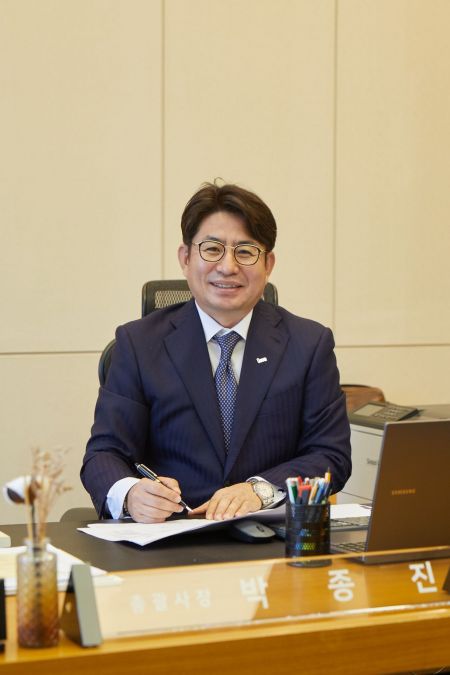
[Asia Economy Reporter Cha Min-young] "Korea has not escaped Confucian culture. Legal regulations that censor content based on ambiguous standards such as customs, traditions, and ethical criteria only weaken the hard-earned power of K-content."
IHQ, transforming into a comprehensive media group, will launch a new online video service (OTT) platform called ‘Babayo’ in April. It plans to present new programs that touch on taboo areas rarely seen on traditional TV broadcasts or OTT platforms, such as sex, death, funeral culture, and shamanism, in a variety show format.
Strict Lyrics Censorship Has Continued Until Now
On the 30th, the schedule board in the office of Park Jong-jin, IHQ’s General Manager, located at the headquarters in Gangseo-gu, Seoul, was packed. Even before sitting down, he criticized the shackles tied to K-content that need to be removed. Park said, "Looking back at the old pre-censorship system for albums, it was absurd that they demanded changes to lyrics for unreasonable reasons, and current broadcasting regulations are no different. We need to apply reasonable regulations that future generations 20 to 30 years from now will also find justifiable."
In the past, singer Hye-eun Lee’s song ‘Je3 Hanganggyo’ was asked to change lyrics by broadcasters because it was considered decadent. Seo Taiji and Boys’ 4th album track ‘Sidae Yugam’ was only released as an instrumental because it failed the pre-censorship by the Korea Performance Ethics Committee. KBS’s ‘Gag Concert,’ which lacked political and social satire, lost its shine and was eventually canceled. Park said, "The regulations imposed on K-content today are not much different from those times."
YouTube Is Untouched, Only OTT Is Troubled
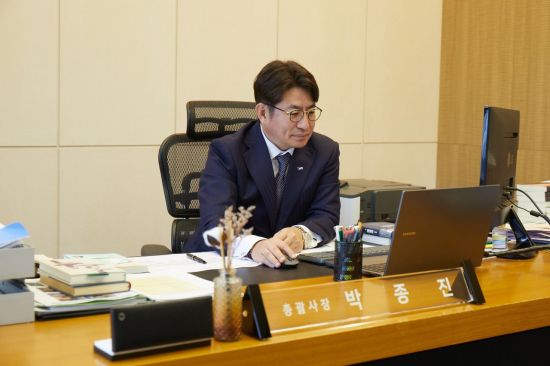
Park revealed that although they plan to launch an OTT similar to YouTube, there was an unexpected variable. Domestic OTT content must undergo pre-censorship according to the ‘Act on Promotion of Movies and Video Products.’ Park said, "The usual pre-censorship period is up to 14 days, but recently, due to backlog at the Video Rating Board, content with longer broadcast durations can take up to three weeks. Even content with 10 to 15 minutes of broadcast time must wait about a week." YouTube, on the other hand, has no pre-censorship, allowing content to be posted immediately after production. The OTT industry has consistently expressed concerns that the pre-censorship system may cause them to miss timeliness or timing during production and distribution. There is a strong call to switch to a self-rating system and adopt post-censorship filtering like in games or general broadcasting.
He also harshly criticized the Korea Communications Standards Commission (KCSC), which is responsible for broadcasting censorship. The KCSC is structured with nine commissioners, three each recommended by the President, the Speaker of the National Assembly, and the relevant standing committee. Park said, "Although it is called a private organization, the commissioners are actually appointed based on political logic," adding, "It only seems to be a tool for political powers to monitor the media." He said it is necessary to have members recommended by industry groups such as the PD Association, Writers Association, and Journalists Association.
Competing with ‘Non-mainstream Content’
Park emphasized Babayo as ‘non-mainstream content.’ Instead of competing with Netflix, Wavve, and TVING, which provide blockbuster dramas and movies, they aim to secure a niche market with infotainment-specialized content. Park, who has long expressed his desire to create a broadcast where social and political satire can be freely and sharply expressed, plans to bring this vision to OTT. Along with about 30 new short-form contents launched with the OTT, they will also showcase various entertainment programs they have prepared, including the killer content ‘Delicious Guys.’
They are also planning a new type of OTT app combined with live commerce. They intend to include product placement (PPL) in variety show formats and guide users to mobile shopping through direct links.
© The Asia Business Daily(www.asiae.co.kr). All rights reserved.


















