[Seoul District News] Gangdong-gu to Open Various Facilities Including Underwater Rehabilitation Exercise Room, Book Cafe, Multipurpose Rehabilitation Treatment Room, and Barrier-Free Indoor Playground, Scheduled for Completion in January 2024... Nowon-gu to Construct 5-Story Building with 434㎡ Total Floor Area Focused on Office Spaces, Offering Affordable Rental Rates and Fostering Social Economy Enterprises in Social Service Sector as a Hub in Sangye Area... Gwangjin-gu Supports Installation of Evacuation Rescue Equipment (Escape Devices) for Fire-Vulnerable Groups

[Asia Economy Reporter Park Jong-il] Gangdong-gu (Mayor Lee Jeong-hoon) has finally begun construction on the "Gangdong Eoullim Comprehensive Welfare Center for the Disabled," a key project aimed at implementing comprehensive welfare services for people with disabilities.
In January, the district held the "Gangdong Eoullim Comprehensive Welfare Center for the Disabled Final Design Report Meeting," concluding a lengthy nine-month design process and taking the first step toward construction. The district plans to build the public comprehensive welfare center for the disabled in the Cheonho and Amsa areas, where a large population of people with disabilities reside, by January 2024.
The "Gangdong Eoullim Comprehensive Welfare Center for the Disabled" (741 Olympic-ro) will be constructed with a total floor area of 4,476㎡, consisting of three basement levels and six above-ground floors. True to its name "Eoullim" (meaning "Harmony"), the center will feature a water rehabilitation exercise room, multipurpose rehabilitation therapy rooms, a barrier-free indoor playground, as well as facilities accessible to the general public such as a fitness center, temporary care room, book caf?, and auditorium. These spaces will serve both people with and without disabilities.
From the start of the design phase, the project incorporated feedback from the "Gangdong-gu Public Comprehensive Welfare Center for the Disabled Construction Advisory Group," composed of experts in architecture and disability welfare, as well as diverse opinions from local residents and professionals in various fields, all reflected in the design.
Additionally, the center has obtained preliminary certification for "Barrier-Free Living Environment" (BF), ensuring no inconvenience for disabled users, and has also received preliminary certification as a Zero Energy Building (ZEB) to enhance energy efficiency.
Mayor Lee Jeong-hoon of Gangdong-gu stated, "A Gangdong-gu where people with disabilities are happy will be a Gangdong-gu where all residents are happy. We will do our best to ensure that the Gangdong Eoullim Comprehensive Welfare Center for the Disabled becomes a welfare space loved by non-disabled residents and a place that gives dreams and hope to people with disabilities."

Nowon-gu (Mayor Oh Seung-rok) officially opened the "Nowon Social Economy Support Center Building 3" on the 30th to promote the activation of the social economy and provide space support for social economy organizations.
The social economy values cooperation and sharing to create a healthy society together, moving away from economic principles that prioritize competition and profit. It operates in areas closely related to daily life such as education, culture, and jobs, with various forms including self-support enterprises, social enterprises, village enterprises, and cooperatives, aiming for a virtuous cycle of growth and distribution.
The newly opened Building 3 (1035-12 Sanggye-dong, Nowon-gu) is located within the Sanggye-dong Administrative Complex Town (Sanggye 1-dong) and was created primarily to provide office space for enterprises and solo prospective entrepreneurs who have difficulty securing office space due to lack of capital.
The building has five floors above ground with a total floor area of 434㎡, including ▲1st floor offices and counseling rooms ▲2nd floor classrooms and two meeting rooms ▲3rd floor solo startup rooms (5 seats) and one tenant company office ▲4th floor tenant company offices (2 offices) ▲5th floor tenant company offices (2 offices).
The center will operate as a hub for the Sanggye area, focusing on fostering and revitalizing social economy enterprises in the growing social service sector. It will discover and provide social services tailored to local characteristics and resident needs, offering affordable rental spaces to enterprises struggling with rising rents.
In particular, leveraging its geographic advantage, the center plans to focus on projects linked with the Youth Counseling Welfare Center currently located in the administrative complex, the under-construction Madeul Health Branch, and the Second Senior Welfare Center. It will provide customized social services targeting seniors, youth, single-person households, discharged patients, and those excluded from public care, playing a key role in creating a "Nowon-type integrated care ecosystem" without blind spots.
So far, the district has established and operated the Social Economy Support Center to build a self-sustaining economic ecosystem where residents take the lead in solving social problems through solidarity and cooperation.
Building 1, opened in 2016 (Gongneung 1-dong), supports the establishment and operation of social economy organizations through customized education and consulting, currently housing 20 enterprises and 3 institutions. Building 2, opened in 2020 (Junggye-bon-dong), provides workspaces and storage and houses a lunchbox manufacturing social enterprise and a bakery employing people with developmental disabilities.
The district is making multifaceted efforts to support the activation and independence of social economy enterprises through events such as the "Public Procurement Expo," "Social Economy Festival," and "Social Economy Organization Academy." Currently, a total of 188 social economy enterprises are active in various fields.
Mayor Oh Seung-rok said, "The social economy, which prioritizes people over profit, is emerging as a healthy supplier of the increasing demand for social services. We expect the Nowon Social Economy Support Center Building 3 to play a major role in expanding economic participation, strengthening social safety nets, and restoring communities."
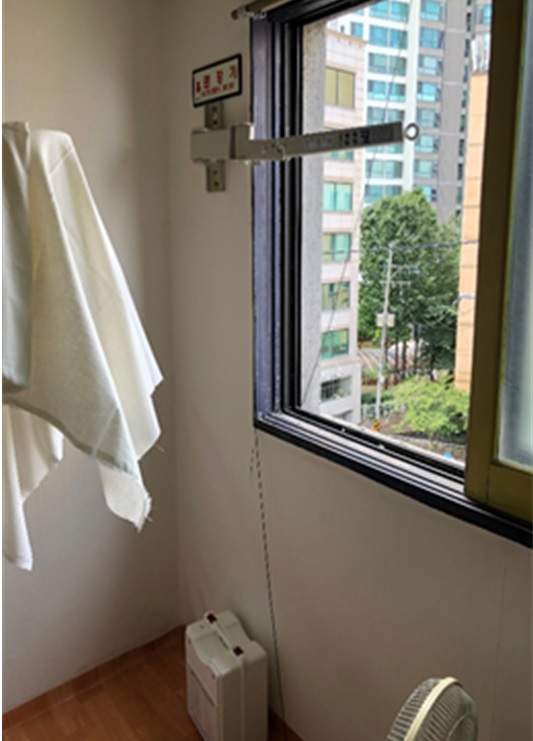
Gwangjin-gu (Mayor Kim Seon-gap) is promoting the "Emergency Evacuation Equipment (Escape Device) Installation Support Project" to prevent casualties among residents living in small-scale housing vulnerable to fire.
An escape device is an evacuation tool that allows a person to descend from a high floor to the ground through a window or similar opening by wearing a belt when evacuation via emergency stairs is impossible during a fire.
According to the Fire Prevention, Installation and Maintenance of Fire Facilities, and Safety Management Act, apartments of five floors or more and non-residential buildings of a certain scale are classified as specific fire safety targets and are required to have fire extinguishing, alarm, and evacuation rescue facilities.
However, small-scale housing such as single-family homes, multi-family houses, multiplex houses, and row houses, where most residents live, are excluded from the requirement to install fire facilities. Without secured evacuation routes, residents must rely solely on firefighters for rescue.
In response, Gwangjin-gu decided to support the installation of escape devices for residents in small-scale housing and enacted the "Gwangjin-gu Fire Safety Vulnerable Housing Emergency Evacuation Equipment Installation Support Ordinance," which provides the legal and financial basis for the project last year.
Based on this, this year the district will carry out the "Emergency Evacuation Equipment (Escape Device) Installation Support Project," providing free installation of escape devices for households living in buildings with three or more floors above ground and exclusive area of 85㎡ or less. The district will cover all installation costs.
The application process is scheduled to begin in April. Applications can be submitted by email with the required documents, by visiting the Gwangjin-gu Office Architecture Division, or by mail. For more details, contact the Gwangjin-gu Office Architecture Division.
For the applicants, experts will conduct on-site inspections to determine installation feasibility. The selection of beneficiaries will be made through deliberation by the Gwangjin-gu Emergency Evacuation Equipment Support Review Committee, composed of fire safety experts such as fire engineers. After installation, users will be trained on how to use the device to respond to emergencies.
Mayor Kim Seon-gap of Gwangjin-gu said, "Safety is the top priority value of our district administration that cannot be exchanged for anything else. We hope many residents apply for this project, which was prepared to create a safe environment for all residents, to prevent casualties and property damage caused by fire."
© The Asia Business Daily(www.asiae.co.kr). All rights reserved.



















