[Asia Economy Reporter Seungjin Lee] Kakao Mobility is taking steps to build an electric vehicle industry ecosystem to further strengthen its ongoing ‘Green Mobility Program.’
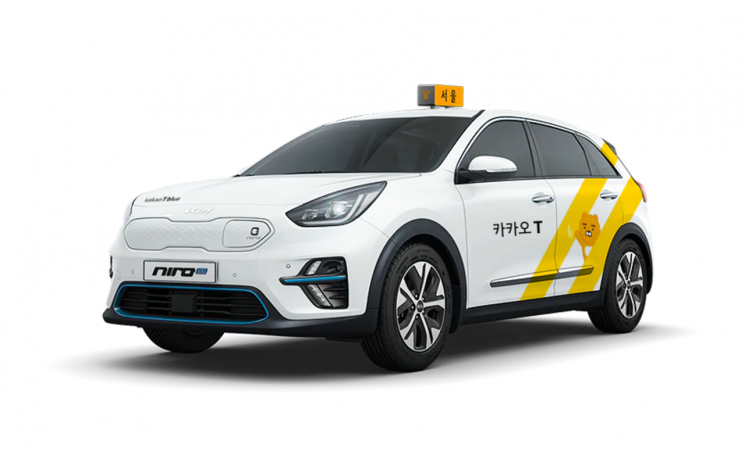
On the 29th, Kakao Mobility announced that it plans to expand its platform-based eco-friendly electric taxis, including affiliated taxis and Pro Membership members, to 10,000 units within the year, and increase the number of linked electric vehicle chargers to 40,000 units.
‘Green Mobility’ is a program promoted by Kakao Mobility as part of its efforts to establish an eco-friendly ecosystem in line with ESG (Environmental, Social, and Governance) management, which has recently become a key indicator in corporate management.
Activation of Electric Taxis... Expansion to 10,000 Units Within the Year
Kakao Mobility plans to expand eco-friendly electric taxis, which have been mainly distributed among affiliated taxis, to include Pro Membership members of general mid-sized taxis, reaching 10,000 units within the year.
In January of last year, to alleviate the ‘high price’ burden of eco-friendly electric taxis in the taxi industry, Kakao Mobility signed a business agreement with Kia Motors to promote the distribution of eco-friendly electric vehicles.
Through this, Kakao Mobility explained that it has been operating a ‘Electric Taxi Purchase Support Program’ on an ongoing basis to ease the burden of high prices, and has been making efforts to reduce inconveniences and burdens throughout the entire process from vehicle selection, purchase, use, to charging.
Additionally, it plans to expand the ‘charging discount cards and charging station information’ provided to affiliated taxi drivers who purchased electric taxis in partnership with GS Caltex, and also expand the ‘battery management service’ that allows continuous diagnosis of electric taxi battery performance in collaboration with LG Energy Solution.
As of March, Kakao Mobility has achieved the conversion of 2,000 affiliated taxis. Kakao Mobility aims to expand platform-based electric taxi users to 10,000 units within the year by promoting the conversion of affiliated taxis as well as Pro Membership users to electric taxis. To this end, it plans to continuously explore solutions for supporting electric taxi operations through the platform and electrification plans for corporate taxis, thereby participating in the government’s policy to promote electric vehicle distribution.
Expansion of Electric Vehicle Charging Infrastructure... Linking 40,000 Units Within the Year
Kakao Mobility plans to expand and link electric vehicle chargers to 40,000 units within the year through partnerships with the government, public enterprises, and private charging operators.
Through partnerships with the Ministry of Environment and other government and public enterprises, as well as private charging operators such as Daeyoung Chaebi, Everon, and Chargebee, Kakao Mobility has secured about 32,000 chargers nationwide as of March, which are provided through the Kakao Navi and Kakao T apps.
Along with expanding electric vehicle charging infrastructure, Kakao Mobility continues to enhance smart features for electric vehicle drivers and prospective owners. It has introduced ▲Kakao T Point payment and ▲electric vehicle subsidy inquiry functions. In the future, it plans to sequentially introduce features such as ▲optimal routes to charging stations, ▲charger malfunction information, and ▲charger reservation, thereby improving accessibility and convenience of electric vehicle charging infrastructure through its platform.
Ryu Geung-seon, CEO of Kakao Mobility, said, “Since one electric taxi can reduce about 10 tons of carbon dioxide annually, we expect to contribute to creating an eco-friendly ecosystem by promoting the distribution of electric vehicles. We will continue to collaborate with leading companies and government agencies to enhance infrastructure accessibility and specialized services for electric vehicle drivers on our platform, thereby improving overall convenience for electric vehicle use and contributing to achieving carbon neutrality.”
© The Asia Business Daily(www.asiae.co.kr). All rights reserved.
![User Who Sold Erroneously Deposited Bitcoins to Repay Debt and Fund Entertainment... What Did the Supreme Court Decide in 2021? [Legal Issue Check]](https://cwcontent.asiae.co.kr/asiaresize/183/2026020910431234020_1770601391.png)
















