Impact of Widening US-Japan Interest Rate Gap and Sharp Rise in Commodity Prices
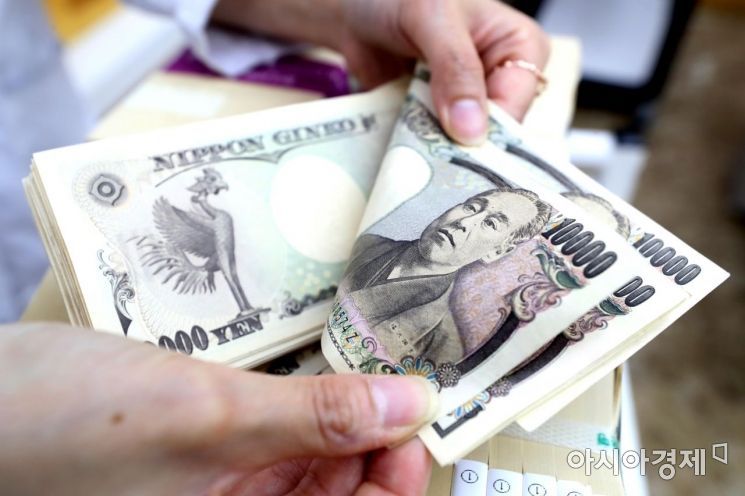
[Asia Economy Reporter Cha Min-young] The value of the Japanese yen is expected to fall to 150 yen per dollar for the first time in over 30 years since 1990, due to the widening interest rate gap between the US and Japan and the sharp rise in commodity prices.
According to foreign media on the 28th, some experts predict that the yen's weakness will deepen amid the widening US-Japan interest rate gap and rising commodity prices. Albert Edwards, a strategist at Societe Generale (SG), forecasted last week that the yen could fall to around 150 yen per dollar for the first time since 1990.
The yen hit its lowest level in about 6 years and 3 months on the 28th. As of 3:31 PM that day, the yen was trading at 123.10 yen per dollar, down 0.86%, marking its lowest level since December 2015. According to Kyodo News, the exchange rate surpassing 123 yen per dollar is the first time since December 2015.
The yen has fallen about 6% over the past 12 trading days. On the morning of the same day, the yen broke through 123 yen per dollar following the Bank of Japan's announcement of unlimited purchases of 10-year Japanese government bonds at a 0.25% interest rate. The Bank of Japan unusually announced bond purchases twice, in the morning and afternoon.
The Bank of Japan is interpreted to have intervened in the market to prevent bond yields from rising above the target level. Shinji Ebihara, a strategist at Barclays, said, "Today's action by the Bank of Japan sends a strong message that it will not tolerate the 10-year government bond yield rising above 0.25%."
The recent yen weakness is largely due to the widening gap between US and Japanese government bond yields. Bloomberg News pointed out that the yield difference between 10-year US and Japanese government bonds is about 2.13%, the largest since 2019, having expanded by nearly 0.6 percentage points this year.
Recently, US Treasury yields surged amid expectations that the Federal Reserve will accelerate interest rate hikes. Bond yields move inversely to prices. The rise in commodity prices is also increasing Japan's trade deficit, acting as a factor weakening the yen.
© The Asia Business Daily(www.asiae.co.kr). All rights reserved.
![Clutching a Stolen Dior Bag, Saying "I Hate Being Poor but Real"... The Grotesque Con of a "Human Knockoff" [Slate]](https://cwcontent.asiae.co.kr/asiaresize/183/2026021902243444107_1771435474.jpg)
















