Walking Assistance Robot 'Gems' Expected to Launch First
Additional Releases of Care and Home Robots Anticipated
Full-Scale Entry into 90 Trillion Won Robot Market in 2026

[Asia Economy Reporter Jin-ho Kim] Samsung Electronics is set to introduce its first commercial robot to the market as early as the first half of this year. The walking assist robot ‘GEMS,’ which was unveiled as a prototype last year, is expected to be the first commercial model. Having designated robots as a future new business, Samsung Electronics is also actively pushing for the commercialization of care robots and home robots, aiming to dominate the global robot market.
According to industry sources on the 27th, Samsung Electronics officially identified robots and the metaverse (extended virtual world) as future growth businesses at the recently held ‘53rd Annual General Meeting of Shareholders.’ Han Jong-hee, Vice Chairman and CEO of Samsung Electronics, emphasized at the meeting, “Our first step in actively exploring new businesses is robots,” adding, “We will consider commercialization across various robot sectors so that future generations can experience ‘life companions.’”
Samsung Electronics has shown strong interest in the robot business over recent years. Following the unveiling of the elderly care robot ‘Samsung Bot Care’ in 2019, it introduced the intelligent robot ‘Ballie’ in 2020. In August last year, Vice Chairman Lee Jae-yong personally announced an aggressive plan to invest 240 trillion KRW in future technology industries, including robotics.
At the end of last year, Samsung Electronics upgraded its ‘Robot Commercialization Task Force (TF)’ to an official organization named the ‘Robot Business Team’ through organizational restructuring. According to industry insiders, the Robot Business Team’s workforce has grown nearly tenfold in just one year. This is a representative example showing how much effort Samsung Electronics is putting into the robot business. Notably, Vice President Jeon Kyung-bin, who leads the Robot Business Team, holds a Ph.D. in Mechanical Engineering from the Korea Advanced Institute of Science and Technology (KAIST) and has served as head of Samsung Electronics’ Global CS Center, making him a key figure representing quality management within the company.
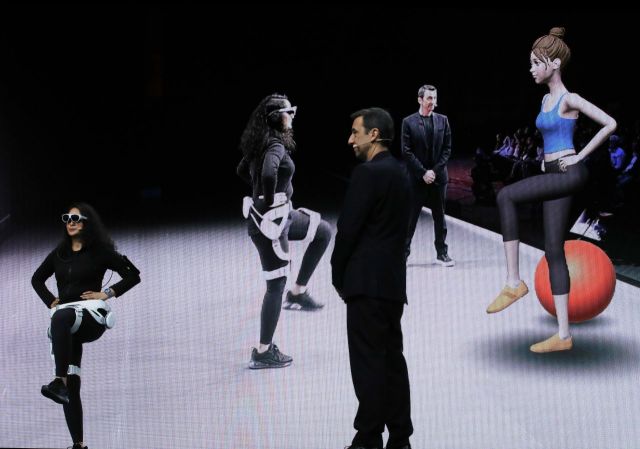
Samsung Electronics’ first robot product is likely to be the wearable walking assist robot ‘GEMS.’ Previously revealed robots such as ‘Samsung Bot Care’ and ‘Ballie’ are not commercialized products. ‘GEMS,’ which was unveiled at CES 2020, the world’s largest IT exhibition held in Las Vegas, USA, last January, is expected to be released to the market as early as next month.
GEMS has been developed in three types according to user needs: ▲GEMS Hip (worn on the hip joint), ▲GEMS Knee, and ▲GEMS Ankle. When worn, it is used to reduce the burden on major muscles involved in walking or climbing stairs. According to Samsung Electronics, GEMS Hip assists about 24% of the force during walking, increasing walking speed by 14%. Notably, it has already secured international standard certification from the Korea Institute for Robot Industry Advancement last year, earning high marks for safety.
Following GEMS, mass production is expected for ▲‘Samsung Bot Serving,’ which helps with ordering and food serving in stores, ▲‘Samsung Bot Guide’ for customer service, ▲care robot ‘Samsung Bot Care,’ and ▲home robot ‘Samsung Bot Handy,’ which assists with dishwashing and other tasks.
Samsung Electronics’ designation of the robot business as a future core business is analyzed to be influenced by the growing aging population and the increasing importance of home appliances that can care for health and daily life.
In particular, the COVID-19 pandemic has led to more time spent at home, such as telecommuting, significantly increasing demand for such products. According to market research firm Mordor Intelligence, the global robot market size is expected to grow from 33.617 trillion KRW in 2020 to 89.8314 trillion KRW by 2026.
© The Asia Business Daily(www.asiae.co.kr). All rights reserved.


















