Increasing Number of Elderly Dying Alone Without Family or Neighbors Knowing
45% of Domestic 'Unclaimed Body Disposal' Are Aged 65 and Over
Lonely Deaths Also Rising Annually... Over 1,000 Cases Each Year Since 2018
Growing Need for Social Safety Nets and Welfare Systems for Aging Society
Experts Say "Not Only Economic Support but Also Social Solidarity Is Important"
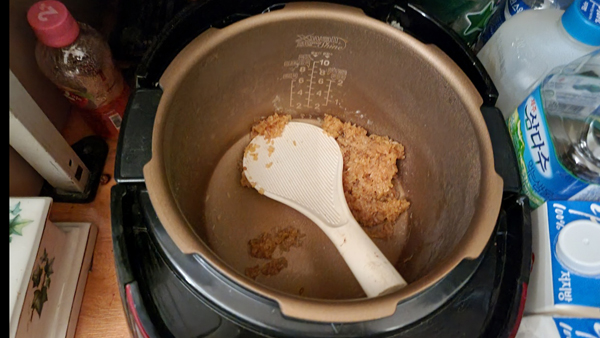 The rice cooker at the home of the elderly man in his 70s who was found dead on the 20th. / Photo by Yonhap News
[Asia Economy Reporter Lim Juhyung] The number of elderly people passing away alone without family or neighbors knowing is increasing. They face their final moments, which should be the most dignified time for a person, in solitude. As the number of single elderly households vulnerable to sudden health deterioration rises, calls for strengthened support for them are growing louder.
On the 20th at around 7:37 PM, a man in his 70s, Mr. A, was found dead in a villa located in Seongnae-dong, Gangdong-gu, Seoul. When discovered, pots containing food were scattered messily on the floor inside his home, and the rice cooker had burnt leftover rice that was not eaten.
The body of Mr. A was found by a neighbor living in the same building. The neighbor noticed a foul odor coming from Mr. A’s home and, finding it suspicious, reported it to the fire department. After firefighters arrived and opened the door, the body was discovered.
According to police investigation, Mr. A was a single elderly person receiving basic livelihood security benefits. He was also a diabetic patient and was included in the local district office’s monitoring program for single-person households. He had no contact with family or relatives for the past two weeks, and the last person to meet him was a district office monitoring staff who visited for a check-up on the 25th of last month.
The police estimate that Mr. A died due to complications from his chronic illness and are investigating the exact circumstances of his death.
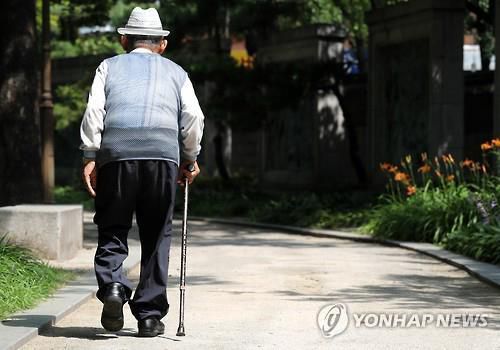 Among more than 12,000 unclaimed bodies handled domestically, approximately 45% were elderly aged 65 or older. The photo is unrelated to specific expressions in the article. / Photo by Yonhap News
The issue of elderly people dying alone in loneliness, unknown to neighbors or even family, is increasingly surfacing in society.
In December 2020, Mr. B, a man in his 70s living alone in Jongno, Seoul, suddenly lost consciousness and collapsed. He was rushed to a university hospital but ultimately passed away. Mr. B’s family refused to claim the body, and the local government eventually conducted a public funeral.
In February of the same year, Mr. C, a man in his 60s living alone in Guro-gu, Seoul, was found dead at home. Mr. C, who usually used an electric wheelchair to visit a nearby welfare center, had expressed frustration and depression after the facility closed due to the COVID-19 pandemic, reducing his social interactions. After several days of his electric wheelchair remaining in the same spot at the front door, a concerned acquaintance entered the home and found his body, then reported it to the police.
Many of the deceased single elderly are classified as 'unclaimed deceased' and undergo funeral procedures accordingly. An unclaimed death refers to cases where there are no known relatives or the relatives refuse or avoid claiming the body. Elderly people who die alone often have no family or have family who are difficult to contact, and even when contact is possible, the family may refuse to conduct the funeral.
According to data received by Lee Jongseong, a member of the National Assembly’s Health and Welfare Committee from the People Power Party, from the Ministry of Health and Welfare in September last year, about 45% (5,480 people) of the total 12,079 unclaimed bodies handled domestically were elderly aged 65 or older.
The number of deaths from solitary deaths in Korea has also steadily increased: 835 in 2017, 1,067 in 2018, 1,204 in 2019, and 1,385 in 2020. Last year, up to August, 989 cases were recorded, nearing the 1,000 mark even before the third quarter ended.
The rise in elderly solitary deaths appears closely related to the overall aging of Korean society and the increasing trend of single elderly households.
The number of single elderly households aged 65 or older was 1,346,677 in 2017 but increased by about 24% to 1,670,414 last year.
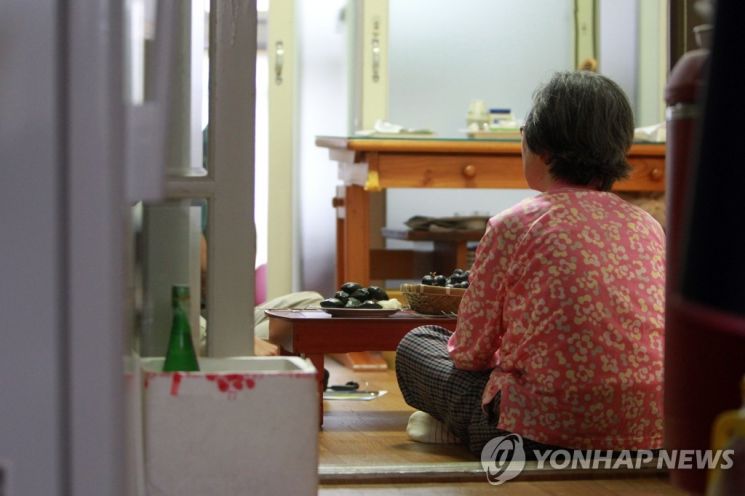 Experts emphasized the need for the government and local governments to actively establish 'outreach welfare services' to support elderly people living alone. The photo is unrelated to specific expressions in the article. / Photo by Yonhap News
Generally, elderly people aged 65 or older are prone to sudden health deterioration and require regular health check-ups and medical service support. However, single elderly households often have difficulty accessing these services, making them more vulnerable to solitary death issues.
Currently, the government supports single elderly households aged 65 or older through the 'Customized Care Service for the Elderly.' Examples include short-term housekeeping services providing domestic helpers, self-reliance support projects offering essential educational programs for daily living, social relationship activation and community resource linkage projects for single elderly, and installation of fire and gas detectors and emergency call devices in homes.
Experts suggest that beyond simple government support, it is necessary to create a society where local communities can protect vulnerable single-person households such as the elderly living alone.
Professor Kim Seongho of the Department of Social Welfare at Korea Bible University said, "Most single-person households in Korea are low-income and elderly, requiring government-led monitoring and 'outreach services.' It is important for the government to actively develop social safety nets and welfare services in the field of elderly welfare."
He added, "However, government policies alone have limitations, and above all, what matters most to those living alone is not economic support but social solidarity. They need neighbors they can always rely on, not just family or relatives. For this, efforts from all of us forming the community beyond the government are necessary," he emphasized.
© The Asia Business Daily(www.asiae.co.kr). All rights reserved.



















