No Education Experts in Transition Team and Even Talks of Merging Ministry of Education and Ministry of Science and ICT
Both KCTU and KTU Protest "Education Neglect" and Demand "Stop Discussions"
Concerns Grow Over Granting Education Policy Decision Authority to National Education Committee
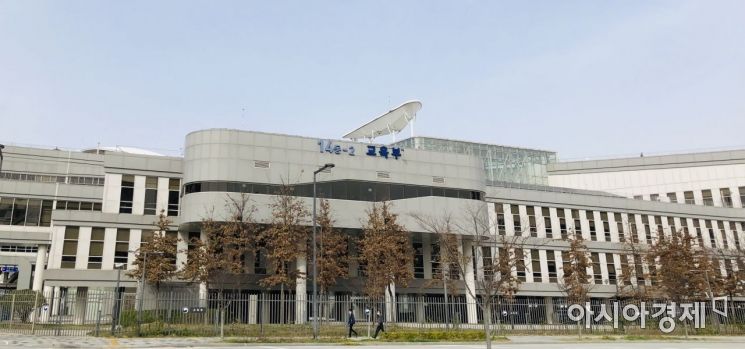
[Asia Economy Reporter Han Jinju] The education sector is protesting as ‘education’ has been pushed down the priority list by the Presidential Transition Committee. This comes amid discussions of excluding education experts from the committee and merging the Ministry of Education with the Ministry of Science and ICT.
Both the conservative Korea Federation of Teachers' Associations and the progressive Korean Teachers and Education Workers Union have voiced a united stance, while criticism is growing in academia as well.
On the 18th, the Korea Federation of Teachers' Associations stated, "The personnel appointments and organizational restructuring discussions by the transition committee are acts of neglecting and weakening education. There is a need for organizational management and restructuring that places education at the center of national governance and strengthens the state's educational responsibilities as stipulated in the Constitution." The federation added, "While emphasizing science and technology in the era of the Fourth Industrial Revolution is important, education must be the foundation for nurturing talent," and noted, "Since the establishment of the government, there has never been a case where education was excluded from the names of government ministries."
The Korean Teachers and Education Workers Union also said, "The role of the Ministry of Education remains valid in addressing pressing educational issues such as closing the education gap caused by the prolonged COVID-19 pandemic and normalizing public education," and demanded, "Discussions on merging the Ministry of Education with the Ministry of Science and ICT, which infringe upon the constitutionally guaranteed expertise in education, must be stopped."
The teachers' union expressed concern, saying, "There are worries that the transition committee might be belittling early childhood, elementary, and secondary education or subordinating education to science and technology," and requested, "During the presidential transition process, we ask for constructive measures that respect the expertise of education and strengthen its public nature." The Justice Party Policy Committee commented, "There is a possibility that the approach will focus mainly on current issues such as university entrance exams and the high school system, aside from the omnipotence of artificial intelligence (AI) due to changes in science and technology."
The education sector is also concerned about Transition Committee Chairman Ahn Cheol-soo’s pledge to transfer educational policy decision-making authority to the National Education Commission, which is set to launch in July. The National Education Commission is a consensus-based administrative committee that handles mid- to long-term policies and collects and coordinates opinions on educational policies, differing in nature from ministries responsible for policy execution.
The Korea Federation of Teachers' Associations said, "The National Education Commission is a decision-making body and not an organization that carries out administrative execution. Creating another Ministry of Education is unnecessary and inefficient." The ‘K-Policy Platform,’ which includes Lee Ju-ho, a professor at KDI School of Public Policy and Management and former Minister of Education, Science and Technology during the Lee Myung-bak administration, has also advocated transferring higher education affairs to the Prime Minister’s Office and establishing a provisional ‘Ministry of Science and Technology Innovation Strategy.”
Professor Song Ki-chang of the Department of Education at Sookmyung Women’s University said, "The Ministry of Education oversees more than 5 million students and over 400,000 teachers, and abolishing the organization responsible for policy would cause far more side effects than benefits," adding, "The National Education Commission is only a consensus-based committee and not an institution capable of taking responsibility for policies."
The Ministry of Education was launched in 1948 as the Ministry of Education, renamed the Ministry of Education under the Roh Tae-woo administration in 1990, and changed to the Ministry of Education and Human Resources Development in 2001. In 2008, it merged with the Ministry of Science and Technology during the Lee Myung-bak administration to become the Ministry of Education, Science and Technology, and has maintained the name Ministry of Education since 2013.
© The Asia Business Daily(www.asiae.co.kr). All rights reserved.