[Asia Economy Reporter Na Ye-eun] As the daily new COVID-19 cases surpassed 400,000, concerns are rising about the increase of so-called 'Shy Omicron' cases who avoid polymerase chain reaction (PCR) testing and self-quarantine.
According to the Korea Disease Control and Prevention Agency (KDCA) Central Disease Control Headquarters, as of midnight on the 16th, the number of new confirmed cases reached 400,741, surpassing 400,000 for the first time. The number of critically ill patients also hit a record high of 1,244. The number of deaths reported in one day was 164.
However, experts caution against trusting the current figures as they are. It is analyzed that only about one-third of the total infected individuals are being identified since the Omicron surge. When including hidden infections, the total number of infected people is estimated to be around 500,000 to 600,000.
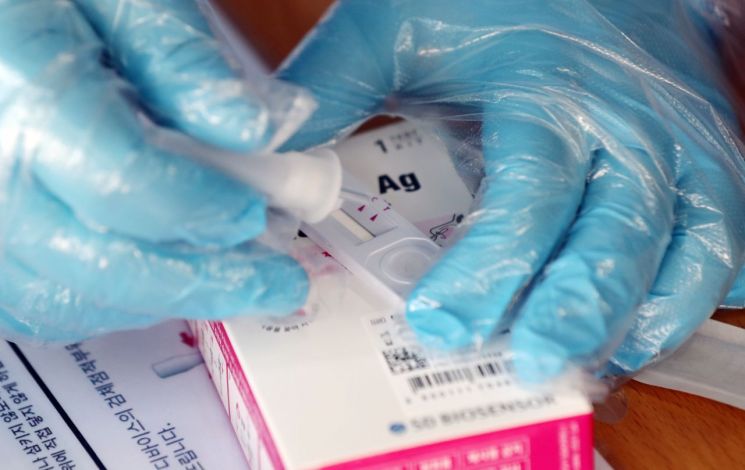
In particular, among socially vulnerable groups such as single-person households, self-employed individuals, and platform workers, there are gaps in case management as people who test positive on self-test kits do not proceed to the next step of PCR testing. Once confirmed positive, a 7-day quarantine is mandatory. However, due to inconvenience, financial difficulties, or anxiety about difficulty in receiving prescribed medication while living alone, many avoid testing.
The dulled social atmosphere toward COVID-19 is also reflected in survey results. According to the 'COVID-19 Public Perception Survey' released on the 15th by Professor Yoo Myung-soon’s team at Seoul National University Graduate School of Public Health, 27.8% of respondents said they believed they were highly likely to be infected with COVID-19, marking the highest rate ever recorded.
Conversely, only 47.9% responded that the consequences of infection would be severe, the lowest rate ever recorded. The percentage of respondents who said they canceled gatherings or did not attend scheduled events due to COVID-19 was 71.8%, down from 87.2% in January last year, and those who refrained from using multi-use facilities also dropped by 8.4 percentage points to 76.4% compared to last year.
Meanwhile, government measures to address PCR test avoidance remain insufficient. On the same day, Ko Jae-young, Crisis Communication Team Leader at the KDCA Central Disease Control Headquarters, stated at the KDCA briefing, "This is a time to focus on high-risk groups while restoring daily life according to the characteristics of Omicron." He added, "We hope the public will show altruism by protecting those aged 60 and over with underlying conditions and socially vulnerable groups. Please participate in testing and vaccination, and wear health masks properly."
© The Asia Business Daily(www.asiae.co.kr). All rights reserved.

















