Uncomfortable Sentiments on Blue House's Pardon Proposal for MB
Transition Team's Atmosphere Also Calms Down
Abolition of the Civil Affairs Office Plays a Role
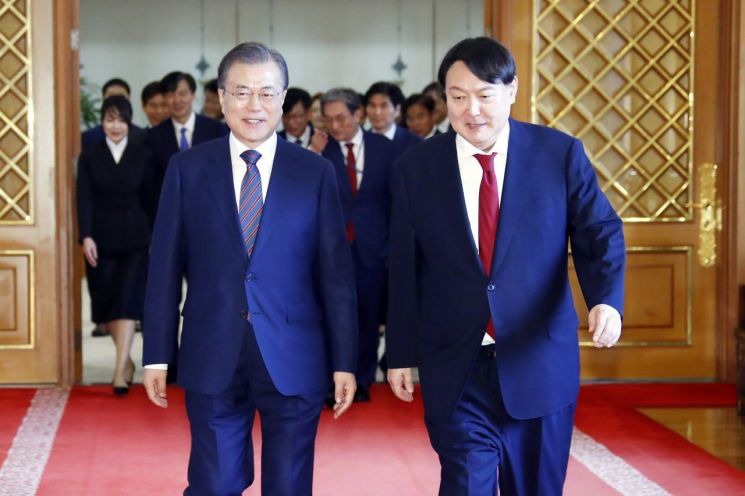
[Asia Economy reporters Lee Ji-eun, Bae Kyung-hwan, Kwon Hyun-ji] The sudden postponement of the meeting between President Moon Jae-in and President-elect Yoon Seok-yeol has brought conflicts during the power transition period to the surface. While conflicts were expected during the regime change process between different parties, the fact that both sides strongly opposed each other to the extent of delaying the meeting indicates that the impact on the political situation is likely to be significant.
Signs of discord have already been observed in various places. The Blue House’s discomfort over the pardon proposal for former President Lee Myung-bak, the ‘entrenchment’ personnel appointments in public enterprises, and the abolition of the Office of Civil Affairs led to a standoff between the transition committee and the Blue House. The backlash was significant after the ruling party mentioned pardon candidates and the President-elect’s side requested to "consult with us" regarding personnel appointments in public enterprises.
On the 15th, Kwon Young-se, Vice Chairman of the Presidential Transition Committee, appeared on a cable news program and stated regarding public institution and public enterprise personnel appointed during the Moon administration, "Those politically appointed employees should consider their own positions." On the same day, the Blue House firmly stated, "Until May 9, it is the Moon administration’s term, and it is natural to exercise personnel authority within the term," which can be interpreted as the President-elect’s side still maintaining their stance.
Within the People Power Party, this is seen as a full-scale standoff over political issues between the old and new administrations. It is said that the transition committee and the Blue House have become uncomfortable over issues such as the pardon of former President Lee Myung-bak, the abolition of the Blue House Office of Civil Affairs, the appointment plan for the Bank of Korea governor, personnel changes in political positions at public institutions, and investigations into the Daejang-dong real estate scandal.
In particular, regarding the pardon of the former president, there is an analysis that the President-elect’s side burdened the Blue House by publicly revealing it as a major agenda item for the meeting in advance. A senior Blue House official did not explicitly mention the ‘pardon’ issue but said, "If the meeting with the President-elect, who should send messages of congratulations and hope, is agenda-driven like a ruling-opposition summit, doesn’t that mean a conclusion must be reached?" adding, "It is a huge burden for the working-level staff."
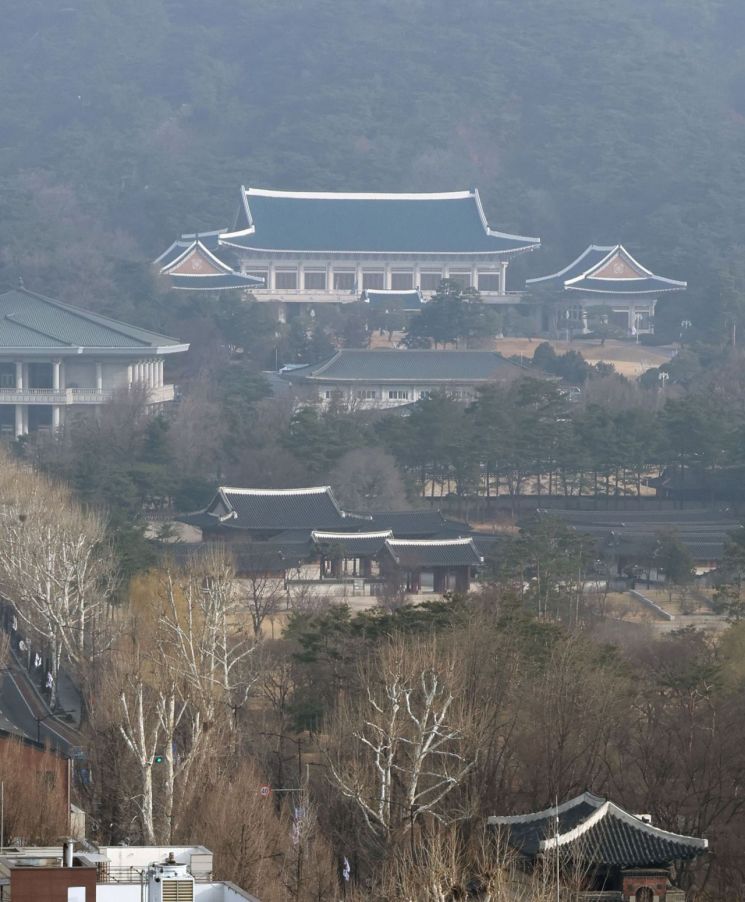
In political circles, there is also an analysis that the ‘pardon agenda’ irritated the Blue House. Jang Sung-chul, a special professor at Daegu Catholic University, appeared on CBS Radio’s ‘Kim Hyun-jung’s News Show’ and said, "The President-elect’s side continuously said they would raise the demand for the former president’s pardon, and the fact that such an agenda was exposed in advance probably pressured President Moon," adding, "The atmosphere in the Blue House was that they often said, ‘Why are they acting like occupying forces?’"
The dispute between the transition committee and the Blue House over the pledge to abolish the Blue House Office of Civil Affairs also seems to have had an impact. The abolition of the Office of Civil Affairs was one of the major pledges that President-elect Yoon advocated since his candidacy, and the Blue House responded by saying, "It does not seem appropriate to use things not done by the current administration as grounds for abolishing the Office of Civil Affairs," targeting President-elect Yoon.
Following the sudden news of the meeting’s postponement, the transition committee, which had begun government handover work, started preparing countermeasures. However, they refrained from giving specific plans. A senior official of the transition committee said regarding the breakdown of the meeting between President-elect Yoon and President Moon, "We are assessing the situation," and another committee member said, "The transition work will proceed as scheduled according to the law."
Like the Blue House, the President-elect’s side did not provide a specific statement on the background of the meeting’s postponement. Kim Eun-hye, spokesperson for the President-elect, explained at a briefing at the Yeouido party headquarters that morning, "The schedule was postponed because the working-level consultations were not finalized. Please understand that we cannot disclose the reasons for the postponement due to mutual agreement," which was the extent of the explanation, matching the Blue House’s level of disclosure.
In political circles, it is anticipated that the government handover process will not proceed smoothly in the future due to the visible conflicts between both sides during the failed meeting between President-elect Yoon and President Moon. In particular, the term of Bank of Korea Governor Lee Ju-yeol is set to end on the 31st, just two weeks away, and differences in opinion between the Blue House and the transition committee regarding the successor appointment are likely to surface soon. The Blue House has already stated, "The appointment of the Bank of Korea governor can also be made by President Moon."
© The Asia Business Daily(www.asiae.co.kr). All rights reserved.


















