Strict Standards and Testing Methods
Increase Costs for Freight Trucks, etc.
New Diesel Vehicle Registrations Down 30%
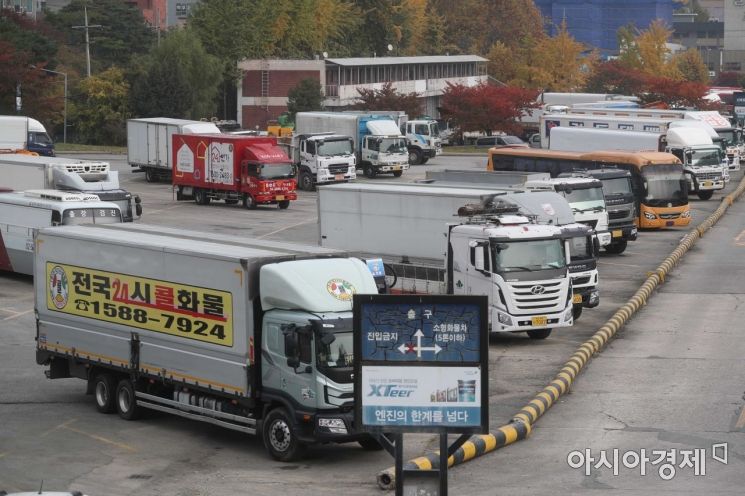
[Asia Economy Reporter Choi Dae-yeol] As President-elect Yoon Seok-yeol has pledged to phase out internal combustion engine vehicles early as one of his environmental policy promises, the complete vehicle industry is on high alert for the establishment of detailed measures in the future. In particular, regarding the announcement to introduce Euro 7, a vehicle emission regulation directly related to medium and large commercial vehicles such as buses and trucks, by 2025 during his term, the key issue is whether this will be reflected in actual policy. There are many concerns about the pledge to ban new registrations of internal combustion engine vehicles using gasoline and diesel from 2035. Although there is still more than 10 years left for sufficient deliberation, the fact that Euro 7, which is controversial even in Europe, is intended to be applied domestically starting just three years from now has raised worries.
Yoon: "Introduce Euro 7 with one-tenth emissions by 2025"
Euro 7 is a strengthened vehicle emission regulation that has been applied in Europe since 2014, and the industry views it as the de facto final regulation on internal combustion engines. Although the specific details have not yet been finalized, according to the current draft, it will not only raise existing standards but also regulate new substances and tighten testing methods.
Typically, South Korea has applied European emission regulations (Euro 1 to 6) with a few years' delay. When Europe first introduced Euro 1 in 1992, South Korea applied it in 1994; Euro 3, which expanded to passenger cars, was applied in Europe in 2001 and in South Korea in 2005. The most recent Euro 6 was introduced in Europe in phases (A, B, C steps) from 2014 to 2018, while South Korea applied it from 2015 to 2021, maintaining a gap of about 1 to 3 years.
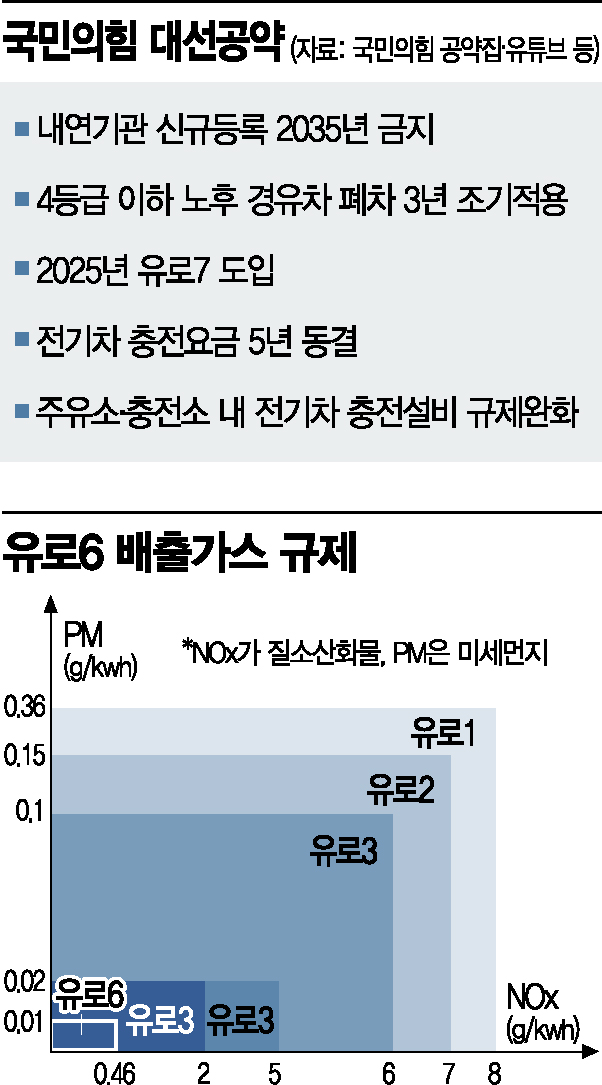
In Europe, the commercial vehicle industry has strongly opposed Euro 7, causing conflicts in setting specific standards. Discussions began in 2020, and only a draft has been released; it was originally planned to be finalized last year but remains stalled as the new year begins. According to the draft released by the European Commission's Emission Regulation Advisory Committee, nitrogen oxides, a representative emission gas, must be reduced to 120 mg/kWh (Plan A) or as low as 40 mg/kWh (Plan B), which is more than a 90% reduction from the Euro 6 standard of 460 mg/kWh. Other substances such as carbon monoxide and methane are also required to be reduced to about one-tenth of current levels.
Additionally, measures to regulate greenhouse gases such as nitrous oxide and methane, which were not previously regulated, and requirements for emission standards within 8 km after engine start are being discussed, which are difficult to meet with current technology. A representative from the complete vehicle industry said, "Large trucks, cargo vehicles, and buses are equipped with various after-treatment devices to comply with Euro 6. If the regulation standards are raised further, additional parts and research and technology development will inevitably increase costs."
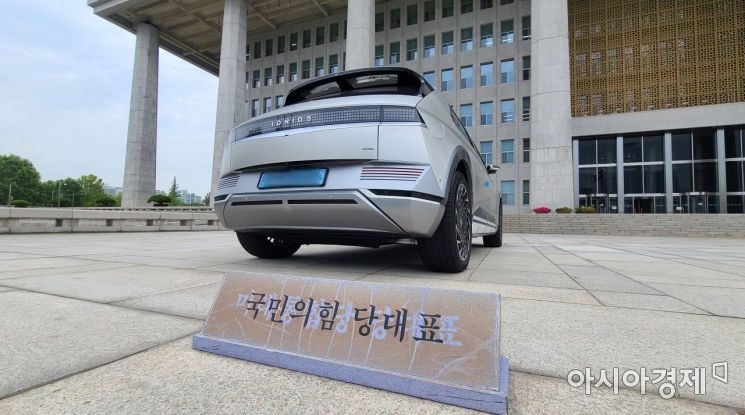 Hyundai's exclusive electric vehicle Ioniq 5 parked in the 'People Power Party Leader' parking space in front of the National Assembly main building. Representative Lee Jun-seok usually drives this car. Photo by Yoon Dong-ju doso7@
Expansion of Electric Vehicle Adoption Likely to Continue Under New Government
Some view that the phase-out of diesel vehicles is inevitable, only a matter of timing. According to the Korea Automobile Manufacturers Association, diesel vehicles accounted for about 416,000 of newly registered vehicles domestically last year, a decrease of more than 29% compared to the previous year. The market share of diesel vehicles among all new registrations shrank from 31% to 24%. Hyundai Motor and Kia sell diesel models only for some leisure vehicles (RVs) among passenger cars, and some imported car brands already sell only hybrids or electric vehicles. Each automaker has stopped developing new internal combustion engines and is focusing on electrification, anticipating stricter environmental regulations in the future.
President-elect Yoon's pledge to expand electric vehicle adoption aligns with this trend. To increase charging infrastructure, regulations on electric vehicle charging facilities at gas stations and LPG stations will be eased. He also promised to freeze electric vehicle charging fees for five years. Charging fees have been rising, with special discounts reduced, and from July this year, the fee will be about 313 KRW per kWh (for fast charging), nearly double compared to five years ago.
Since there is consensus among the industry and consumers on the direction of expanding eco-friendly vehicles, there is an expectation that the new government will introduce various support measures. Kim Joo-hong, head of policy planning at the Korea Automobile Manufacturers Association, said, "Since the expansion of eco-friendly vehicles is a global trend, it is necessary to approach it from multiple angles, including subsidies for low-emission vehicles, improvements in systems and infrastructure, and support for R&D in the parts industry."
© The Asia Business Daily(www.asiae.co.kr). All rights reserved.



















