Supply Shortages Worsen Due to Ukraine Crisis
Factories Halt and Production Decreases
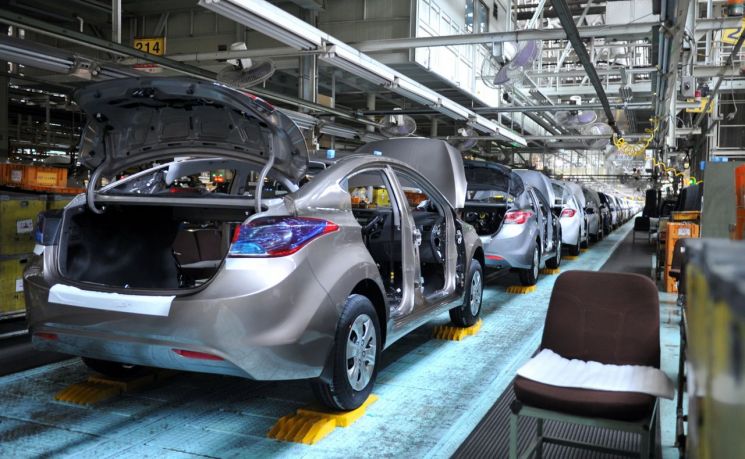
[Asia Economy Reporter Choi Dae-yeol] It has been revealed that automakers are still facing issues where production lines stop or new cars are sold without certain parts due to delays in parts supply. The parts supply shortage, which has been a bottleneck for the global automotive industry since early 2020 when COVID-19 first emerged, appears to have worsened due to Russia's invasion of Ukraine.
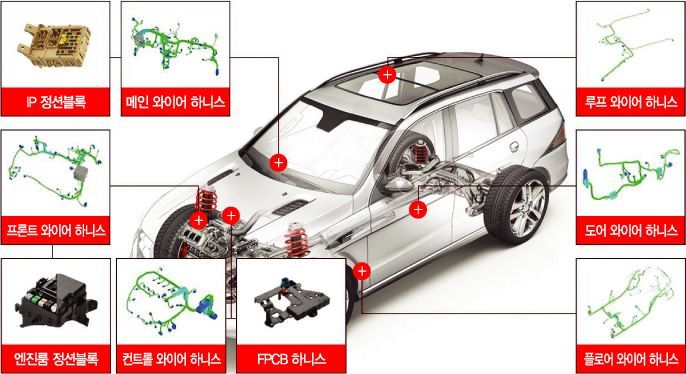
According to the industry on the 14th, Hyundai Motor adjusted the production schedule at some domestic plants due to disruptions in the supply of wiring harness parts. A wiring harness is a component that connects wire bundles and control devices, supplying the power needed to operate electronic components in the vehicle and transmitting electrical signals to each electronic control module. It can be compared to blood vessels or nerve networks in the human body.
It is reported that parts supply was disrupted as a supplier's factory in China, which delivers parts to Hyundai Motor, halted operations due to COVID-19. Production volumes of models such as the Palisade, Porter, Tucson, and Genesis GV60, GV70, and GV80, which are made at the Ulsan plant, were adjusted.
Hyundai Motor Group previously halted operations at all its plants in February 2020 due to the inability to receive this part. An industry insider said, "In China, even one or two confirmed cases in a factory can lead to a full shutdown due to strict COVID-19 prevention measures," adding, "It is said that some volume was redirected to parts of Southeast Asia after initial COVID-19 issues, but the majority of supply still comes from China."
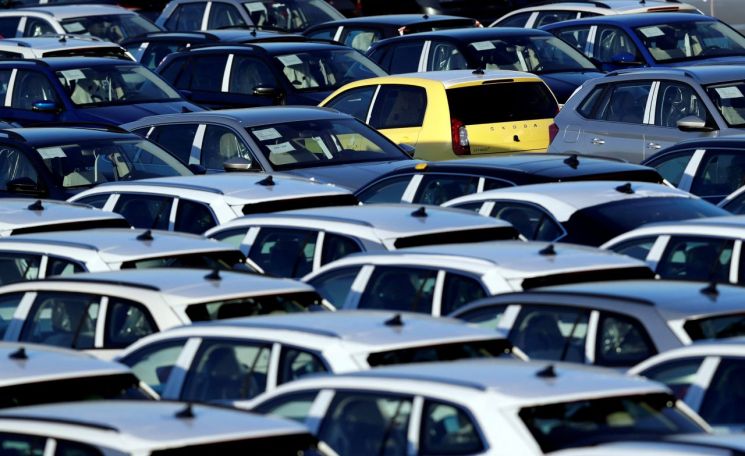
Toyota, the world's largest automaker, plans to reduce production by up to 20% in the second quarter of this year. The company explained that this is to ease the burden on suppliers as the parts supply shortage continues. They plan to reduce production by about 20% next month, 10% in May, and 5% in June.
American automaker Ford has decided to deliver new cars without parts that are not directly related to safety. They plan to hand over the new cars to buyers first and then provide free repairs through dealers once the parts are supplied. This is a measure also taken by General Motors (GM) for some models. Similarly, Kia is shortening delivery times by several months for so-called minus-option vehicles equipped with displays without navigation functions starting this month.
European automakers such as Volkswagen, Mercedes-Benz, Audi, and BMW, which have many factories in Europe, are stopping factories or completely adjusting production plans due to delays in parts supply caused by the Ukraine crisis. They have been assembling and selling final vehicles by receiving many parts from Eastern Europe, where labor costs are low, but supplies of wiring harnesses and raw materials used in semiconductor manufacturing processes for vehicles, which were previously sourced from Ukraine, have been cut off.
© The Asia Business Daily(www.asiae.co.kr). All rights reserved.



















