59% of Senior Superintendents Are Police University Graduates
Frontline Police Also Interested in Public Security Roles
Experts Say "National Consensus Needed"
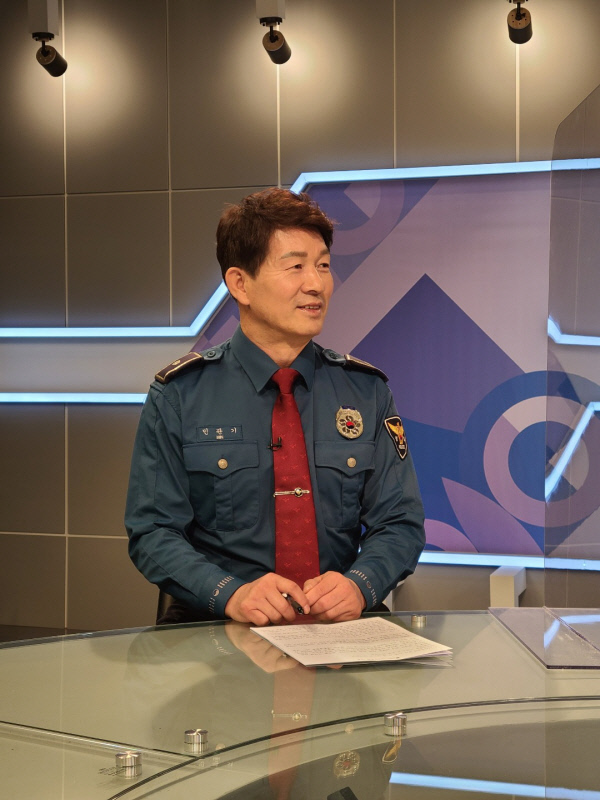
[Asia Economy Reporter Oh Gyumin] Min Ganki, chairman of the Police Workplace Council, said on the 14th, "Regarding the police personnel system, about 70% of senior officers at the rank of superintendent and above are graduates of the Korean National Police University," adding, "If a quota system is implemented, pathways for officers from the rank-and-file to reach senior positions will open."
Among all police officers, 59.1% of superintendents at the police station chief level are graduates of the Korean National Police University, while only 13.5% of superintendents come from general backgrounds. In an interview with Asia Economy, Chairman Min expressed expectations about President-elect Yoon Seok-yeol's police-related pledges, saying, "There is anticipation on the ground regarding these pledges." Earlier, President-elect Yoon stated that "improving the treatment of police officers from the rank-and-file working at frontline crime scenes is necessary," and proposed measures to overcome this issue, including ▲assigning more than 20% of senior positions at the rank of police commissioner or above to officers from the rank-and-file ▲transforming police positions into public security roles. Previously, the Police Workplace Council delivered a booklet to major presidential candidates containing requests such as ▲adjusting base pay to the level of public security positions ▲expanding the scope of 112 dispatch allowances ▲introducing a presumed injury system ▲enacting detective business laws ▲allowing nationwide unionization of the Police Workplace Council.
Frontline police officers also have high expectations for the transition to public security positions (such as railway police, immigration control, etc.). According to data from the National Police Agency, a public security officer at grade 6 receives a monthly salary of 3,649,000 KRW, which is 248,000 KRW more than the average base pay of 3,401,000 KRW for a police inspector at the same grade. Chairman Min said, "The transition to public security positions, along with the presumed injury system (which allows skipping review if a work-related injury is clear), is the most necessary system on the ground," but added, "Since police officers have been advocating for this for 15 years, it is important that it becomes a reality."
Professor Kwak Daekyung of Dongguk University’s Police Science College said, "If promotions are made based on numerical targets, problems may arise. A system that comprehensively evaluates expertise in specialized fields is necessary," and added, "(Regarding the public security transition) since a significant amount of national funds will be invested, public persuasion is required." The Police Workplace Council was launched in 2020 following the enforcement of the revised 'Act on the Establishment and Operation of Public Officials’ Workplace Councils.' It targets about 100,000 members at grade 6 and below, and unlike labor unions, it cannot exercise collective action rights such as strikes, nor can it appoint full-time officials.
© The Asia Business Daily(www.asiae.co.kr). All rights reserved.
![Clutching a Stolen Dior Bag, Saying "I Hate Being Poor but Real"... The Grotesque Con of a "Human Knockoff" [Slate]](https://cwcontent.asiae.co.kr/asiaresize/183/2026021902243444107_1771435474.jpg)
















