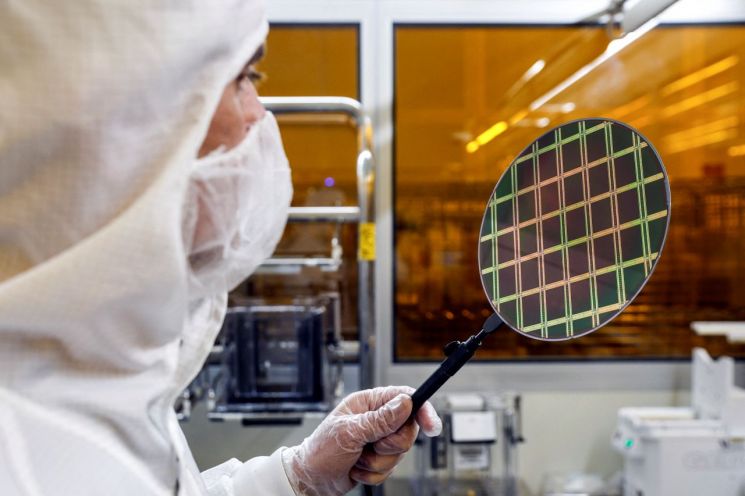
[Asia Economy Reporter Jeong Hyunjin] Despite Russia's airstrikes on Ukraine, semiconductor manufacturers are not experiencing significant disruptions for the time being, the Wall Street Journal (WSJ) reported on the 13th (local time). Although market concerns have grown over potential disruptions in the supply of neon gas and palladium, which are essential for semiconductor manufacturing, it appears that production can continue as raw materials have been secured in advance through supply chain diversification.
WSJ, citing sources, reported that Taiwan's TSMC, the world's largest foundry (semiconductor contract manufacturer), has secured alternative suppliers of neon gas following Russia's airstrikes on Ukraine, and thus no supply issues are currently occurring. German semiconductor company Infineon issued an official statement saying it has increased its inventory of raw materials and inert gases that could potentially be affected.
Russia and Ukraine are major producers of neon gas. It is estimated that one-third of palladium is produced in Russia. Recently, two Ukrainian companies responsible for half of the world's neon production have halted operations due to Russian attacks, making neon production itself difficult.
However, Mark Tursk, Managing Partner at Lynx Consulting, assessed that current inventories of neon and other key semiconductor raw materials hold enough supply for 6 weeks to 3 months. As Russia's airstrikes on Ukraine enter their third week, the situation could pose risks in the medium to long term, but for now, semiconductor manufacturers are expected to sustain production without disruption for the next 2 to 3 months.
WSJ explained that semiconductor manufacturers began preparing for geopolitical uncertainties when Russia annexed Crimea in 2014. Additionally, the global supply chain issues experienced over the past two years due to COVID-19 appear to have helped in responding to the current situation. Jimmy Goodrich, Vice President of the Semiconductor Industry Association (SIA) in the U.S., said, "If this had happened 10 years ago, the pain would have been much greater than it is now."
Meanwhile, the semiconductor supply shortage, ignited by COVID-19, worsened again last month. Bloomberg News recently reported, citing Susquehanna Financial Group, that semiconductor lead times (the time from order to delivery) in February increased by 3 days from the previous month to 26.2 days. Although lead times had decreased in January compared to the previous month, they showed a significant increase again in February.
© The Asia Business Daily(www.asiae.co.kr). All rights reserved.

















