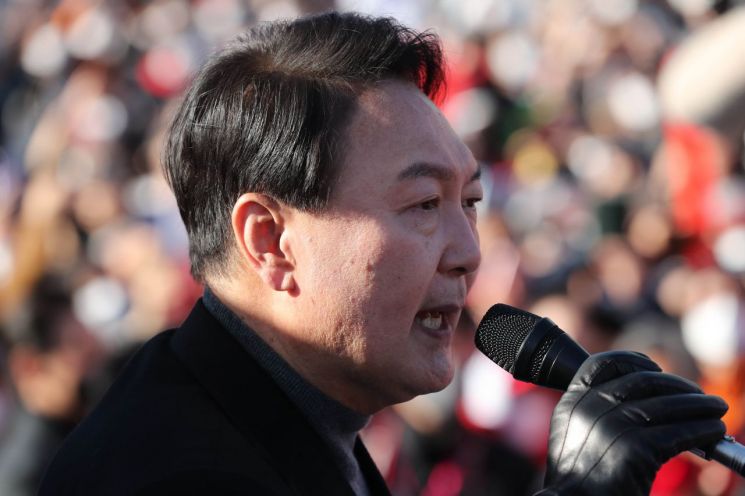
[Asia Economy Reporter Kwon Jae-hee] In an era of 10 million individual investors, all major presidential candidates have presented capital market-related pledges centered on 'protecting individual investors.' Although individual investors have emerged as major players in our stock market, it is judged that various capital market systems still operate disadvantageously for individual investors. Both candidates voiced a unified stance on 'protecting individual investors' and 'fairness,' but showed differences in detailed methodologies.
◆Both candidates united on 'protecting individual investors'... Oppose abolition of short selling= A representative issue is the 'short selling' system. Short selling is an investment method that can generate profits when a stock price is expected to fall, involving borrowing stocks that one does not own and selling them. When the stock price falls, the stocks are repurchased and returned, securing arbitrage profits. Foreigners and institutions, who have better access than individuals, mainly utilize this, leading to criticism that it is a 'tilted playing field' where individuals always suffer losses.
Nevertheless, short selling helps discover appropriate corporate value and is positive in terms of liquidity supply. It can also be used as an investment and risk hedging tool. For this reason, there are claims that the ban on short selling must be fully lifted to be included in the MSCI (Morgan Stanley Capital International) developed market index.
Both candidates share the intention of 'protecting individual investors,' but oppose abolishing short selling, citing concerns that it could prompt foreign investors to withdraw.
Instead, Candidate Lee pledged to protect individual investors by strongly sanctioning unfair trading related to short selling and regulating unfair lending fees by securities firms. He also promised to extend the current 90-day limit on the lending period for individuals (the period during which stocks can be borrowed) to allow profits from short selling. Currently, institutions and foreign investors have no limit on the short selling period.
Candidate Yoon also proposed adjusting the collateral ratio for individual investors higher than that for institutions to prevent harm from short selling, improving the stock lending system, and introducing a 'circuit breaker' (trading halt) that bans short selling during stock price crashes.
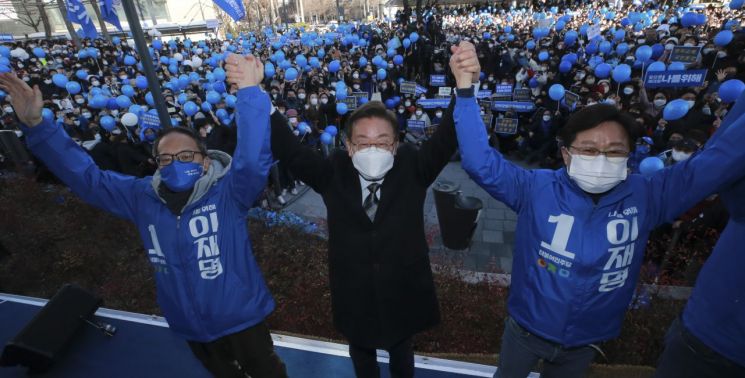
◆Yoon "Abolish capital gains tax on stocks" Lee "Abolish securities transaction tax" = Regarding taxes, both candidates promised preferential capital gains tax rates for long-term investors. However, Candidate Yoon advocates abolishing the capital gains tax on stocks, while Candidate Lee calls for abolishing the securities transaction tax. Both appealed to individual investors for votes, but their methods are completely opposite.
The capital gains tax on stocks is a tax on profits earned when selling stocks, whereas the securities transaction tax is levied when stocks are sold.
According to tax law, starting next year, if domestic listed stock investments yield annual profits exceeding 50 million KRW, a capital gains tax of 20% will be imposed on taxable income up to 300 million KRW, and 25% on amounts exceeding 300 million KRW. Candidate Yoon intends to abolish this tax.
Candidate Lee promised to abolish the securities transaction tax, which is imposed every time stocks are bought or sold regardless of transaction size, aiming to return benefits to individual investors.
© The Asia Business Daily(www.asiae.co.kr). All rights reserved.
![User Who Sold Erroneously Deposited Bitcoins to Repay Debt and Fund Entertainment... What Did the Supreme Court Decide in 2021? [Legal Issue Check]](https://cwcontent.asiae.co.kr/asiaresize/183/2026020910431234020_1770601391.png)
















