[Seoul District News] Dongjak-gu, 155㎡ total floor area inside Kkamangdol Library, entire interior visible from outside through glass window structure with trampoline and ball pool for children's physical play space and parent self-help meeting space in one place... Nowon-gu, establishing 'All-day Care Ecosystem'... Seodaemun-gu Our Neighborhood Care Center 'Chingurang' 7th branch (Namgajwa 2-dong) opened
... Yeongdeungpo-gu, SH Corporation rents 3 purchased rental houses free of charge to low-income households at risk of losing housing... Jungnang-gu, providing 10 major services including 5 major care services and 5 mid- to long-term linked care services this year
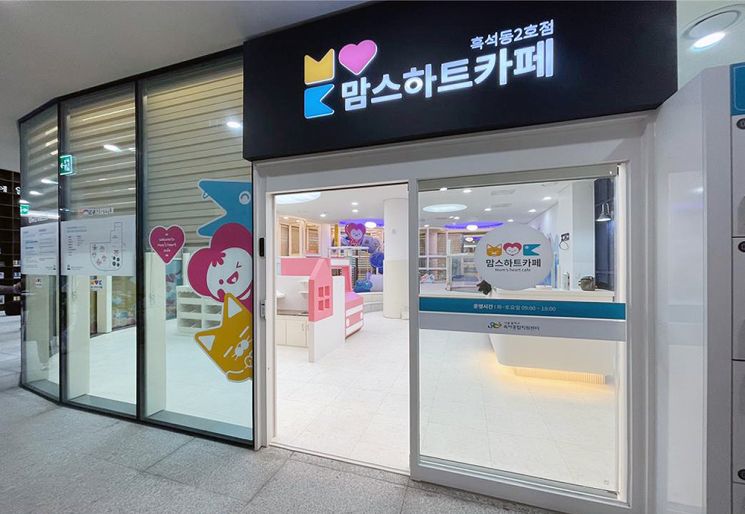
[Asia Economy Reporter Park Jong-il] Dongjak-gu (Mayor Lee Chang-woo) will open the second branch of Moms Heart Cafe in Heukseok-dong (129 Seodal-ro) on the 2nd, a place designed to foster children's creativity and allow parents to participate in childcare together.
The second branch in Heukseok-dong was created by utilizing the first-floor space inside the Kkamangdol Library. Most notably, the entire interior is structured with floor-to-ceiling glass windows visible from outside, enhancing openness and allowing parents using the library to observe their children playing.
This complex space spans a total floor area of 155㎡ and includes a physical play area where children can enjoy trampolines and ball pools, as well as a self-help meeting space where parents can share childcare information. Additionally, various educational programs and events will be offered so that children and parents can enjoy playtime together even at home.
Operating hours are from Tuesday to Saturday, 9 a.m. to 6 p.m. The usage fee is 2,000 KRW per person, and guardians are free of charge.
Applications can be made by accessing the Seoul Dongjak-gu Childcare Comprehensive Support Center website and reserving on the 15th and 30th of the previous month for preschool children residing in Seoul.
There are a total of 10 Moms Heart Cafe locations operating in the area, including the newly opened Heukseok-dong 2nd branch. Each facility offers themed play spaces such as block and role play (Sangdo 4-dong), media play (Sangdo 2-dong), and more.
Additionally, the Sangdo 3-dong branch, scheduled to open in July, will be created by remodeling the third floor of the public Gaon Daycare Center, covering an area of 192㎡. This location will feature a cloud bridge and challenge course utilizing the high ceiling, and will be centered around media play spaces such as 3D sketching and story walls designed to attract young children's interest.
Kim Ji-hyun, Head of the Childcare Division, said, “Moms Heart Cafe has received positive responses from residents as it can be used safely and hygienically regardless of weather or season. We will continue to open additional branches to alleviate the burdens of parents facing childcare difficulties and create a Dongjak where both children and parents are happy.”
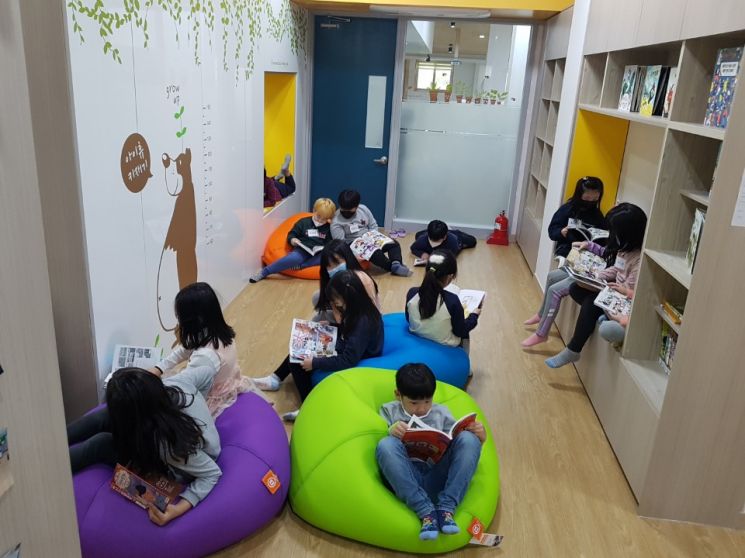
Nowon-gu (Mayor Oh Seung-rok) announced that it is resolving care gaps by establishing a community-centered all-day care ecosystem.
By identifying gaps that may arise from home- and school-centered care methods, the district is building a community-centered ecosystem and actively supporting childcare for elementary school-aged children through policies that realize this vision.
Representative care support projects in the district include the ‘I-Hyu (Rest) Center,’ ‘Sick Child Care Center,’ and ‘Meal Care - Children's Cafeteria’ operations.
First, the ‘I-Hyu Center’ is located within apartment complexes or near schools within a 10-minute walking distance to enhance accessibility.
Dual-income families with lower-grade elementary school children, who usually finish classes before 3 p.m., face the greatest difficulty in afternoon care. Children left alone at home or shuttling between academies pose safety concerns and financial burdens due to private education costs.
The basic operational direction of the I-Hyu Center is “a place where children can eat well on time, rest safely, and play with friends.” Located close to home and school, children spend safe and enjoyable time with peers, receiving various programs through care teachers and balanced meals and snacks. Parents are highly satisfied as it relieves concerns about safety, health, and education all at once as an afternoon care solution.
Additionally, to support parents who commute long distances or work on Saturdays, morning care and Saturday care classes are operated, gradually expanding the scope of care.
The I-Hyu Center was introduced at the ‘Moon Jae-in Government Inclusive Nation Social Policy Public Field Report’ in February 2019 and was recognized by the Blue House as a model case. Since then, the concept has been established as the Seoul Our Neighborhood Care Center and is operated throughout Seoul.
Starting with the first branch opened in 2018, currently 27 centers serve about 700 children, the highest number among Seoul's 25 districts. The district plans to increase the number of centers to 30 by 2022 to create a safe childcare environment.
The most challenging situation for working parents with young children is when their child is sick. The ‘Sick Child Care Center,’ opened in 2020, provides ‘hospital accompaniment service’ and ‘bed care service’ to reduce difficulties faced by dual-income families who must leave work early or take sudden leave for hospital treatment of their sick children.
With just one phone call from the parent, a two-person care team visits the child’s location, accompanies the child to hospital appointments, and assists with the child’s return home to a location designated by the parent.
Hospital accompaniment also covers regular checkups, vaccinations, and psychological treatment. Medication guidance and child protection services are included, with results communicated to the guardian after the entire hospital visit process.
For mild symptoms such as colds that make attending school difficult, bed care services are available. The center has six beds and a dedicated staff team consisting of one nurse and four child care workers who provide nursing care tailored to the child's condition. The child care workers are qualified nurses or nursing assistants.
The Sick Child Care Center currently has 1,316 members and receives strong support from dual-income parents. It was also selected as a ‘2020 Government Innovation Case that Brought Positive Changes to Citizens’ Daily Lives’ by the Ministry of the Interior and Safety, recognized as a life-centered administrative service.
Lastly, the ‘Children’s Cafeteria’ combines meal care with after-school care to prevent child food insecurity. Any child, including those from food-insecure or dual-income families and those attending after-school classes, can eat healthy meals. Currently, three locations operate within Nowon-gu.
Under strict management by nutritionists and cooks, nutritious and safe menus are provided, offering weekday dinners and lunch during school vacations to ensure no gaps in meal care. The cafeteria helps maintain children's health through meals and creates an environment where children can be safely cared for even when parents return home late.
During vacations, the Children’s Cafeteria also supports meal provision in connection with general-type I-Hyu Centers. Side dishes are delivered from the cafeteria, and each center prepares rice. Currently, 23 general-type centers are linked, reducing meal costs for parents and providing balanced meals for children.
Mayor Oh Seung-rok said, “Building a care ecosystem where children are happy and parents feel secure is the key to solving various social issues such as low birth rates and women's career breaks. We aim to provide services that meet parents’ expectations who worry most about their children, so that the community can care for children together.”
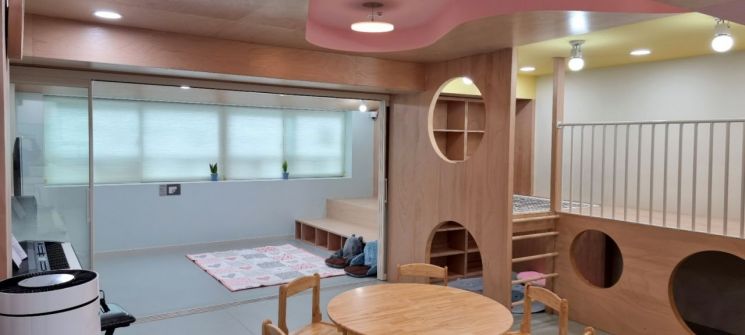
Seodaemun-gu (Mayor Moon Seok-jin) opened the 7th branch of the elementary after-school care facility Our Neighborhood Care Center ‘Chingurang’ on the 2nd in Namgajwa 2-dong (56 Moraenae-ro 15-gil, 2nd floor).
This facility provides basic care including safety guidance and meals/snacks focused on seasonal fruits, and supports school online learning.
It also conducts child-led ‘Project Based Learning’ (PBL) activities that harmonize play and learning, such as art, music, and cooking activities.
Operating hours are until 7 p.m. on weekdays after school during the semester, and from 9 a.m. to 7 p.m. on weekdays during vacations.
Located near Gajaeul Elementary School, it offers a ‘Safe and Secure School Arrival Service’ where care teachers accompany lower-grade students from school to the care center.
The capacity is 23 for regular care and 5 for temporary care, with a monthly fee of 50,000 KRW and a daily fee of 2,500 KRW.
Applications can be made through the Our Neighborhood Care Portal. For more details, contact Chingurang in Namgajwa 2-dong, Seodaemun-gu by phone.
Previously, the district opened the 1st branch in Bukgajwa 1-dong in 2019, the 2nd in Yeonhui-dong in 2020, the 3rd in Hongje 3-dong and 4th in Hong Eun 2-dong in 2021, and this year the 5th in Cheonyeon-dong and 6th in Bukgajwa 2-dong.
‘Chingurang,’ which provides care services near residents’ homes, is available to elementary school students aged 6 to 12.
To prevent care gaps caused by the prolonged COVID-19 pandemic, ‘Chingurang’ offers ‘emergency care services’ and strictly follows infection prevention measures such as twice-daily temperature checks, once-daily disinfection, and restricting external visitors.
Mayor Moon Seok-jin of Seodaemun-gu said, “After-school care services for elementary students are insufficient compared to increasing demand. We will work harder to establish a public care and protection system so that guardians can use the service whenever they wish.”
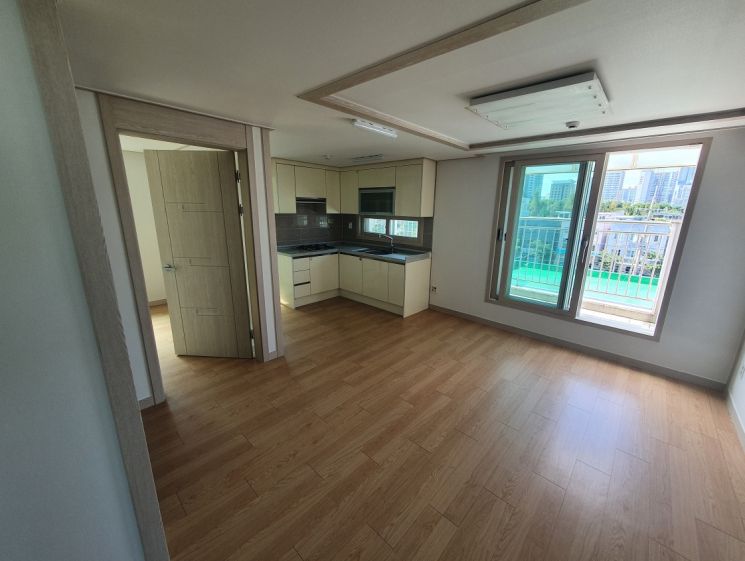
Yeongdeungpo-gu (Mayor Chae Hyun-il) is operating an emergency temporary housing called ‘Yeonghee’s House’ (Yeongdeungpo Hope House) for low-income households facing housing loss crises.
Emergency temporary housing is a project that provides temporary shelter for households at risk of losing their residence due to urgent reasons such as job loss caused by COVID-19, rent arrears, domestic violence, or eviction.
The district has leased three purchased rental houses from SH Corporation for a fee and began full operation in March to stabilize housing for low-income crisis households.
The leased houses include three units: a 3-room (59.13㎡), a 1.5-room (25.73㎡), and a studio (20.01㎡). Each house is equipped with essential appliances such as refrigerators, washing machines, air conditioners, and microwaves.
Eligible residents are low-income citizens with a national basic livelihood security recipient status, near-poverty class, or single-parent families with income below 75% of the median income, who are at risk of housing loss.
After recommendations through community service centers or social welfare facilities, residents are selected by an admission selection task force. There are no restrictions based on household type such as single or multi-person households, but priority will be given to households with children.
The standard stay period is up to three months, but extensions up to six months are possible once in cases of urgent circumstances.
The district covers the deposit and rent, while residents are responsible for utility bills such as electricity and water.
After moving in, residents can receive services such as guidance on purchased and rental housing for housing stability, care SOS (meals, health, laundry, home care, etc.), and emergency support through the district office, community service centers, and Yeongdeungpo Housing Welfare Center.
Mayor Chae Hyun-il of Yeongdeungpo-gu said, “We hope that the emergency temporary housing ‘Yeonghee’s House’ will be a stepping stone for housing upgrades for households in crisis. We will enhance the quality of life for residents through more detailed and meticulous welfare services.”
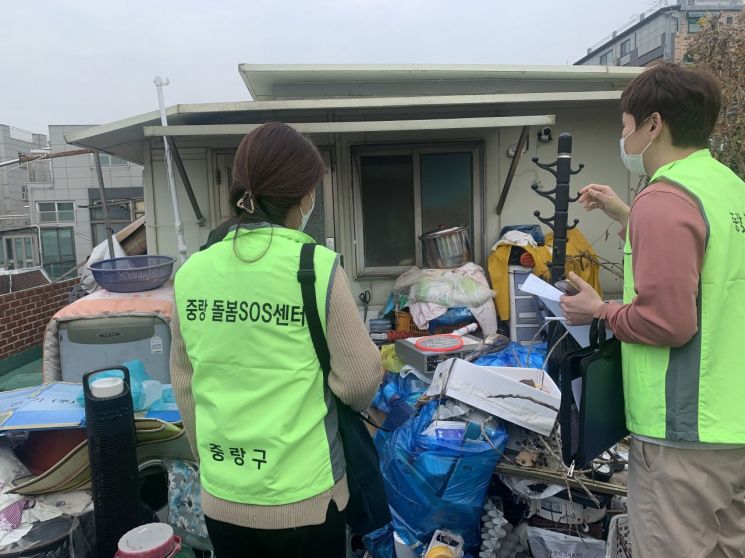
Jungnang-gu (Mayor Ryu Kyung-gi) has revamped the Care SOS Service into 10 major services this year and operates the Care SOS Center without interruption to fill gaps in emergency care.
The Care SOS Service provides assistance related to care such as accompaniment support, residential convenience, meal and health support for seniors suddenly needing care due to illness or accidents, disabled persons aged 6 and above, and middle-aged adults aged 50 and above. Services can be requested by phone or visit to the care manager at the local community service center.
Some services incur fees depending on the type, but eligible basic livelihood security recipients, near-poverty class, and those with income below 85% of the median income (with temporary support for those between 85% and 100%) can use care services free of charge up to an annual limit of 1.6 million KRW.
The Care SOS Center offers 10 customized services reflecting residents’ needs: five care services and five mid- to long-term care linkage services.
The five care services are ▲temporary home care (home visit care) ▲short-term facility admission ▲accompaniment support (support for essential outings) ▲residential convenience (cleaning, disinfection, laundry, etc.) ▲meal support (meal delivery to maintain basic diet). The five mid- to long-term care linkage services include welfare checks, health support, care system guidance, case management, and emergency support.
The district has established a public-private cooperation system with 59 service partner organizations to ensure that those needing care in emergencies receive appropriate services.
Especially as COVID-19 cases increase, the district is striving to resolve care gaps by promptly providing non-face-to-face meal support services to residents undergoing home treatment who have difficulty preparing meals themselves and cannot seek help from family or neighbors.
An elderly resident in Sinnae 2-dong, Mr. Kim, said, “When my health suddenly deteriorated and I couldn’t eat alone, and my children live far away, I felt helpless. But thanks to the care service, I was able to eat and keep my house clean, which was a relief.”
Mayor Ryu Kyung-gi of Jungnang-gu said, “As single-person households increase and infectious diseases spread, demand for care continues to rise. We will do our best to actively utilize the Care SOS Center to ensure no welfare blind spots occur.”
© The Asia Business Daily(www.asiae.co.kr). All rights reserved.
![Clutching a Stolen Dior Bag, Saying "I Hate Being Poor but Real"... The Grotesque Con of a "Human Knockoff" [Slate]](https://cwcontent.asiae.co.kr/asiaresize/183/2026021902243444107_1771435474.jpg)


















