[Asia Economy Reporter Jin-kyung Lee] February is almost over, and spring, when flowers bloom on dry branches, is arriving. While some people are already excited about spring outings and flower viewing, those with pollen allergies dread going outside in spring. They suffer from allergic rhinitis, making it hard to breathe, with itchy eyes and nose, causing much worry about the unwelcome guests of the coming spring. Not all flowers cause pollen allergies. Cherry trees, forsythia, azaleas, and magnolias do not cause pollen allergies, but wind-pollinated flowers like pine, elm, and birch trees are known to cause pollen allergies. So, what is pollen allergy, how can it be avoided, and how can allergic rhinitis be treated? Let's take a look.

● Pollen Allergy That Worsens Especially in Spring
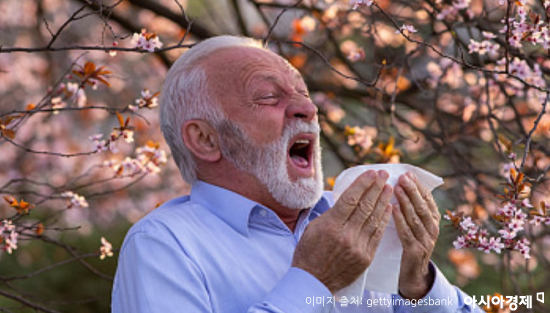
Many people suffer from pollen flying in spring. Those with pollen-induced allergic diseases experience hypersensitive reactions such as runny nose and sneezing when exposed to pollen, causing discomfort in daily life. Recently, the number of patients with pollen allergy rhinitis has increased significantly, largely related to global warming and air pollution. Pollen concentration peaks when the average temperature is 20-30℃ and there is no precipitation. In other words, as the temperature rises, the amount of pollen increases, and the antigenicity, which refers to the degree of pollen allergy, also rises. Therefore, as global warming worsens, the concentration of pollen in the air inevitably increases. Experts predict that the average global temperature will rise by 2-3℃ by 2050, so pollen concentration and pollen allergies are expected to worsen by then. Pollen allergy mainly occurs in March and April when pollen is most abundant. Besides rhinitis symptoms, various hypersensitive reactions may appear, so it is important to visit a hospital to receive appropriate prescriptions based on symptoms and causes.
● What Symptoms Appear with Pollen Allergy?
▶ Symptoms of Allergic Rhinitis
Symptoms include nasal congestion, runny nose, sneezing, headache, and reduced sense of smell. If symptoms worsen, it can lead to otitis media and sinusitis.

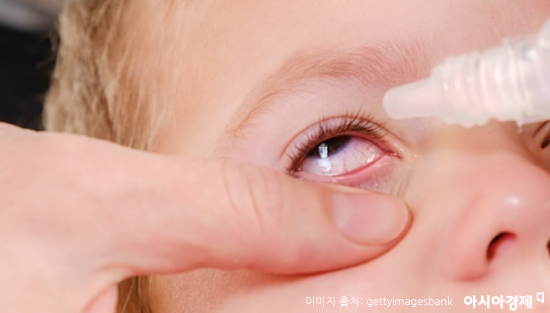
▶ Symptoms of Allergic Conjunctivitis
Frequent tearing, foreign body sensation in the eyes, and itching around the eyes occur. In severe cases, the conjunctiva may swell.
▶ Allergic Bronchial Asthma
The bronchial tubes become sensitive, causing paroxysmal coughing, and in severe cases, breathing difficulties may occur.

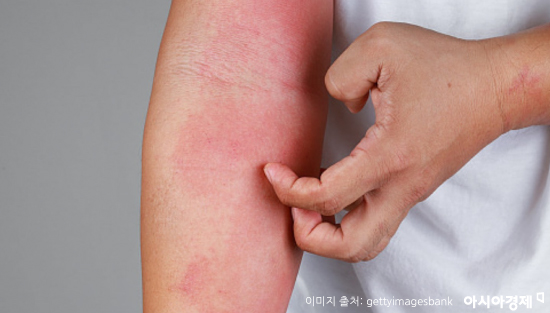
▶ Allergic Contact Dermatitis
When pollen touches the skin, it swells, itches, and the skin becomes red. Edema, blisters, or scabs may also form.
● What to Do When You Have Pollen Allergy Symptoms?
▶ When Your Nose Itches
Spraying saline solution inside the nose can remove inflammatory substances and keep the nasal mucosa moist, reducing nasal congestion and runny nose.

▶ When You Feel a Foreign Body in Your Eyes
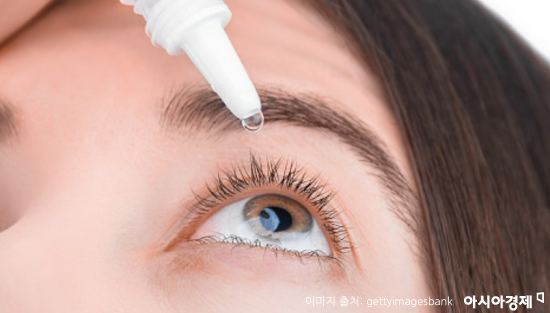
Do not rub your eyes; use artificial tears to wash out foreign substances. If itching is severe, applying a cold compress with a towel can help relieve itching.
▶ When Multiple Symptoms Are Severe
It is best to treat pollen allergy with prescribed medication. If symptoms are severe, nasal sprays or eye drops are recommended. Without timely treatment, allergic symptoms may appear regardless of the season, causing discomfort in daily life, so visiting a hospital is important.

● How to Avoid Pollen That Causes Allergies
▶ Keep windows and doors tightly closed when pollen is heavily airborne
▶ Use an air purifier to manage indoor air quality
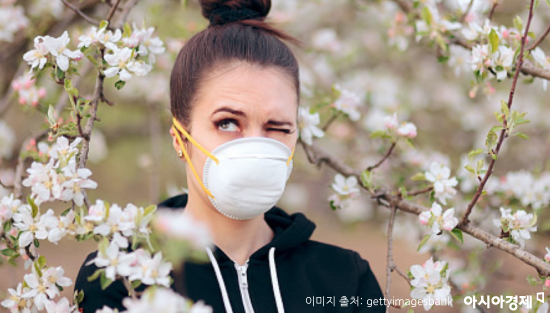
▶ Wear a mask and preferably long-sleeved clothes when going outside
▶ Avoid going out during early morning hours (5-10 a.m.) when pollen spreads more on clear, warm days
▶ Wear glasses instead of contact lenses
▶ Shake off dust and pollen from clothes outside the entrance before entering indoors
▶ Change into indoor clothes immediately after going out and wash your face and brush your teeth
▶ Use personal towels to prevent allergic conjunctivitis
▶ Maintain indoor humidity below 50%
▶ Avoid grassy or lawn areas as much as possible
● Are There Specific Teas Good for Pollen Allergy?
▶ Omija Tea
Widely known as effective for pollen allergy, Omija tea is excellent for lung health and effective for rhinitis, asthma, cough, and phlegm symptoms. It is also known to be good for kidney and hepatitis treatment.
▶ Doraji Tea
Saponins and dietary fiber in Doraji (Platycodon) keep the bronchial mucosa moist and strong, helping improve and relieve colds and bronchial diseases. It is rich in vitamin C, boosting immunity and helping with fine dust exposure.
▶ Jujube Tea
Jujube helps expel harmful substances like heavy metals accumulated in the body, strengthens nasal mucosa to prevent allergic rhinitis, and is effective in treating cold sensitivity.
▶ Green Tea
Green tea contains catechins, which have anti-allergic properties, making it highly effective for allergic rhinitis. For allergy reduction, it is recommended to drink about one cup every three hours.
▶ Magnolia Flower Tea
Magnolia flower tea expels internal coldness and helps relieve various nasal inflammations such as sneezing, runny nose, nasal congestion, rhinitis, and sinusitis. It also has anti-inflammatory and analgesic effects, helping with headaches and toothaches, and promotes blood circulation. Additionally, its unique refreshing floral scent provides a cooling sensation up to the tip of the nose when consumed.

● Is It Only Pollen Allergy That Causes Allergic Rhinitis? Can Other Causes Also Trigger It?
Allergic rhinitis is a disease where the nasal mucosa abnormally reacts with inflammation to specific substances commonly encountered in the environment, such as house dust, animal fur, food, and mold spores, besides pollen allergy. Allergic rhinitis that appears seasonally according to pollen is called 'seasonal allergy,' while symptoms that persist year-round due to house dust or animal fur allergies are called 'perennial allergy.' It is important to identify and treat the causative substances. Patients with allergic rhinitis have hypersensitive constitutions, so symptoms may appear in the eyes as conjunctivitis or manifest as bronchial diseases like asthma. Typical symptoms of allergic rhinitis include sneezing, clear runny nose, and nasal congestion, with possible headaches and tearing.

● Self-Check for Major Symptoms of Allergic Rhinitis
□ Repeated sudden sneezing attacks
□ Frequent clear runny nose
□ Severe nasal congestion causing difficulty breathing
□ Severe and frequent itching of eyes or nose
If these recurring symptoms cause breathing difficulties and interfere with daily life, allergic rhinitis is suspected, so it is advisable to visit a hospital to identify the cause.

● How Can Allergic Rhinitis Be Treated?
▶ Avoidance Therapy
This method involves removing or avoiding contact with the allergen causing the allergy. It is the most effective treatment but can be difficult to identify the exact cause. Therefore, it is important to visit a hospital and undergo various tests to determine the cause.
▶ Immunotherapy
After identifying the allergen causing allergic rhinitis, this treatment gradually administers increasing doses of diluted allergen to enhance immunity against it.
▶ Symptomatic Therapy
This treatment is used when avoidance therapy is difficult. For mild symptoms, antihistamines are used, and if ineffective, they are combined with decongestants. If still ineffective, corticosteroid nasal sprays are used for treatment.
▶ When Surgery Is Needed
Since allergic rhinitis requires long-term treatment for a cure, experts emphasize the importance of patients' perseverance during treatment. However, if symptoms do not improve despite various treatments, or if nasal polyps, deviated septum, or sinusitis accompany the condition, or if nasal congestion severely disrupts daily life, surgery may be considered.

● Acupressure Helpful for Rhinitis
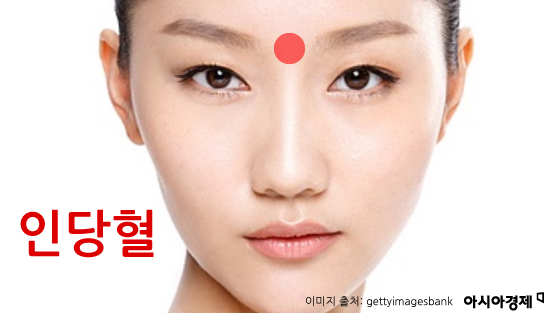
▶ Yintang Point (Relieves Rhinitis Symptoms)
When the nose itches, runny nose persists, nasal congestion, and difficulty breathing occur, pressing the Yintang point can relieve rhinitis symptoms. The Yintang point is located at the midpoint between the eyebrows, the center of the glabella. Rubbing the Yintang point more than 30 times with a finger can create a refreshing and clearing sensation inside the nose. It also helps relieve headaches caused by nasal congestion, so it is good to try when feeling stuffy.
▶ Fengchi Point (Refreshes from Nose to Back of Neck)
By feeling the back of the neck with your fingers, you can find a hollow area at the base where the head connects to the neck; this is the Fengchi point. Pressing the Fengchi point firmly can clear a blocked nose and relieve discomfort in the back of the neck. It also helps relax tense muscles and alleviate tension headaches.

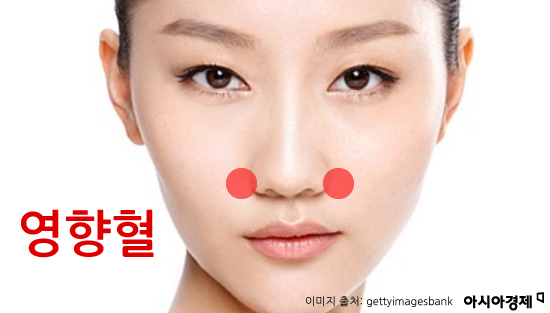
▶ Yingxiang Point (Effective for Nasal Congestion and Runny Nose)
The Yingxiang points are the depressions on both sides of the nostrils and are frequently used acupressure points for rhinitis treatment. Gently pressing and massaging both Yingxiang points promotes blood circulation around the nose and is effective when the nose is blocked or runny. Additionally, it helps improve facial qi and blood circulation, reducing facial swelling.
© The Asia Business Daily(www.asiae.co.kr). All rights reserved.
![Clutching a Stolen Dior Bag, Saying "I Hate Being Poor but Real"... The Grotesque Con of a "Human Knockoff" [Slate]](https://cwcontent.asiae.co.kr/asiaresize/183/2026021902243444107_1771435474.jpg)


















