[Seoul District News] Dobong-gu Signs Agreement with Unity Korea on the 23rd to Establish a Metaverse-Based Creator Ecosystem, Supporting Real-Time 3D Content Creators... Gwangjin-gu Expands Medical Expense Support Guidelines from 1,110 to 1,147 Diseases... Songpa-gu Compensates Over 80 Million Won for 222 Bicycle Accidents in 2021
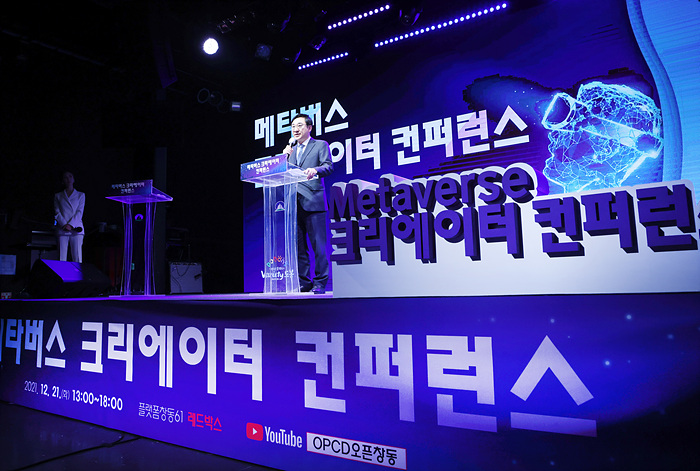
[Asia Economy Reporter Park Jong-il] “The realm of the metaverse is expanding at an unimaginably rapid pace. Dobong-gu aims to create new jobs in the metaverse and realize a creator economy” (Lee Dong-jin, Mayor of Dobong-gu, Seoul)
In 2017, the digital cats from the game ‘CryptoKitties’ developed by Dapper Labs were traded for $110,000 (about 120 million KRW), AI humans have advanced into idols and show hosts, and Naver Zepeto has already become another distinct world. These are all developments within just five years.
The Ministry of Science and ICT likened the metaverse to a ‘digital new continent’ in a press release this January, adopting the slogan ‘Korea leaping into the metaverse.’ Gradually, the metaverse is breaking down the walls of virtual worlds and approaching reality as another market and land of opportunity.
In this era of great transformation, Dobong-gu (Mayor Lee Dong-jin) is one of the local governments making strenuous efforts to channel this transformative energy into the region as a driving force for economic growth. On February 23, Dobong-gu became the first autonomous district to sign an agreement with Unity Korea (Head of Business Division Kwon Jeong-ho) to create a metaverse-based creator ecosystem.
Although Dobong-gu and the metaverse may not seem closely connected at first glance, Dobong-gu has consistently worked to establish an industrial ecosystem for future job creation. Given the weak industrial base in terms of the number of businesses and workers, the district believes that ‘culture and future technology’ are the core of the ‘new economy’ that can attract population and investment and generate infinite added value and jobs.
To this end, Dobong-gu is currently focusing on laying the foundation for future industries through the Chang-dong New Economic Hub project, which includes Seoul Arena (scheduled for completion in October 2025), Seed Cube Chang-dong - Startup and Cultural Industry Complex (scheduled for completion in May 2023), Chang-dong Aurene - Northeast Generation Convergence Complex Facility (completed in October 2020), Seoul Robot AI Science Museum (scheduled for completion in May 2023), and Seoul Photo Art Museum (scheduled for completion in December 2023).
Alongside infrastructure development, Dobong-gu is concentrating on fostering a ‘creator economy’ through ‘3D talent development’ within the metaverse ecosystem. The district noted that while the platform areas such as infrastructure and devices within the metaverse ecosystem are becoming overheated with competition, there is high demand for content creators, making job creation highly feasible.
Going forward, Dobong-gu plans to fill the space from the 2nd to 5th floors of Seed Cube Chang-dong - Startup and Cultural Industry Complex with spaces for music creators and metaverse-based creators. Through support facilities such as music studios and 3D creator education and exchange spaces, Dobong-gu aims to make Chang-dong a cradle for creators who will lead culture in the metaverse era.
In this context, the agreement signed on the 23rd between Dobong-gu and Unity Korea is a fruit of Dobong-gu’s efforts in new industries and a new attempt in the public sector.
Unity, the partner in this agreement, started as a game company in Copenhagen, Denmark, and is now the world’s largest developer of ‘real-time 3D platforms and content creation’ engines for virtual and augmented reality (VR/AR). Unity currently distributes software used to build global metaverse platforms such as Facebook’s ‘Horizon’ and Naver Zepeto across various industries.
The agreement includes ▲ cooperation in utilizing metaverse technology in public administration ▲ support for building Dobong-gu’s metaverse infrastructure and creating future jobs ▲ support for training 3D content creators based on the metaverse ▲ activation of creator activities through contests, seminars, and conferences. The agreement is valid for three years from 2022 to 2025, with the possibility of extension through mutual cooperation.
As the first pilot project after signing the agreement, Dobong-gu plans to launch ‘3D environment production personnel (metaverse creator) training education’ starting this year. Through this program, the district intends to prepare a platform in the northeastern area of Seoul for the metaverse and nurture content creators who will fill the metaverse world.
Kwon Jeong-ho, Head of Business Division at Unity Korea, said, “There is continuous demand for real-time 3D engineers across all industries such as shipbuilding, manufacturing, architecture, automotive, and video, but there is a shortage of professionals. It is meaningful to sign an agreement with Dobong-gu, the first at the autonomous district level, to train metaverse creators. We will actively support establishing a metaverse creator talent platform based in Dobong-gu Chang-dong.”
Lee Dong-jin, Mayor of Dobong-gu, stated, “The metaverse is a platform where communication, production, and consumption occur in a space that merges virtual and reality. Due to COVID-19, non-face-to-face interactions have become routine, causing explosive demand. Globally, the market is expected to grow to 570 trillion KRW annually by 2025. Dobong-gu will leverage this major transformation as a stepping stone for the new economy and lead the way in supporting music creation and metaverse content creation projects.”
He added, “I believe the cooperation between companies and the public sector in new industries like the metaverse holds great potential. As we pioneer new areas, I hope many creators will grow and advance to platforms, and that Dobong-gu’s case will serve as a precedent for other regions.”
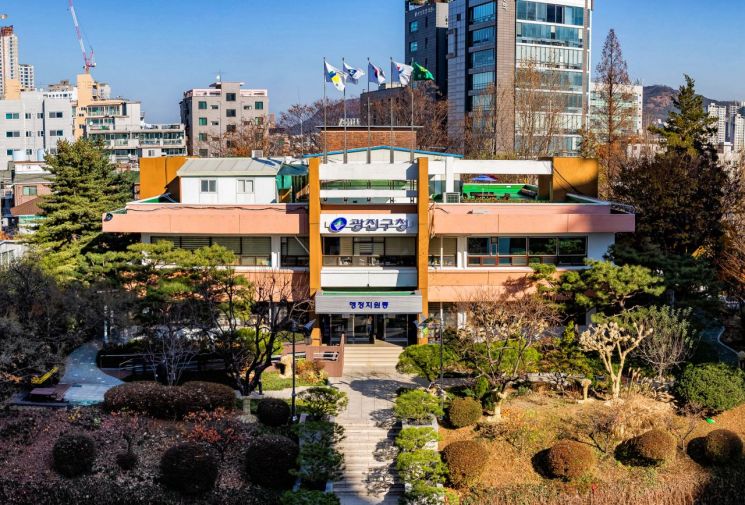
Gwangjin-gu (Mayor Kim Seon-gap) is improving and implementing the criteria for the medical expense support project for patients with rare diseases.
The medical expense support project for rare disease patients aims to alleviate the economic burden on patients and their families and promote psychological stability by providing medical expense support for patients with rare diseases requiring continuous treatment.
The support targets residents who are registered under the special medical expense coverage for rare diseases such as chronic kidney disease and meet the income and property criteria of the patient and their supporting family members.
Support items for health insurance subscribers include medical fees, purchase costs of assistive devices, rental fees for ventilators and cough stimulators, etc. Medical aid recipients and those eligible for reduced co-payments can receive support for nursing care costs and special dietary purchase costs.
From this year, the number of target diseases has increased by 37 from 1,110 to 1,147.
Additionally, the criteria for supporting family members have been relaxed. The previous criterion that ‘patients aged 65 or older or those with severe disabilities’ were excluded from the supporting family member category has been removed and replaced with ‘if the supporting family member is a basic pension recipient.’
Furthermore, married female patients previously counted their spouse’s parents as supporting family members, but now, regardless of gender or marital status, their own parents are counted as supporting family members.
Also, the clause excluding married daughters of patients from supporting family members has been deleted.
Rare disease patients wishing to receive medical expense support can register as eligible at the Gwangjin-gu Public Health Center and apply.
Kim Seon-gap, Mayor of Gwangjin-gu, said, “We expect that more rare disease patients will be able to receive medical expense support through the improvement of the criteria for this project. We hope to ease the burden on patients with rare diseases, which are difficult to diagnose and treat and require continuous treatment, even if only a little.”
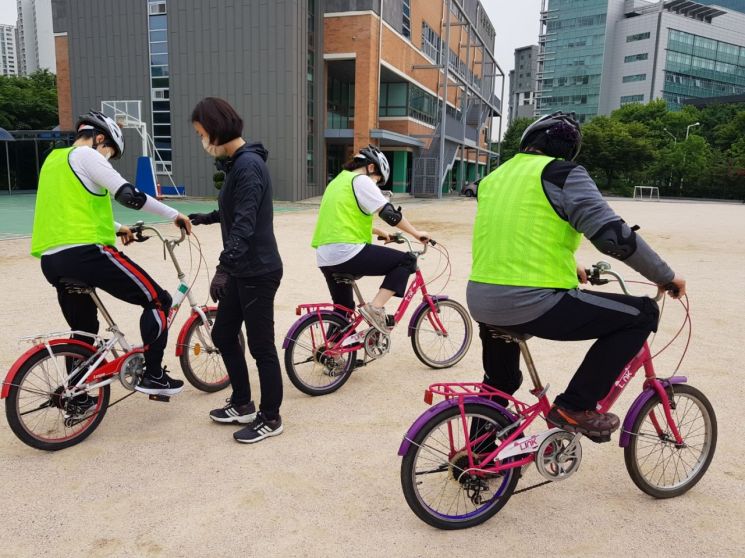
Songpa-gu (Mayor Park Seong-su) announced that it has enrolled all residents in bicycle insurance again in 2022, following 2021. All approximately 660,000 residents registered in Songpa-gu, including foreigners, are automatically enrolled without any separate procedures and can receive benefits. Last year, a total of 222 accidents resulted in compensation payments of 79.5 million KRW.
Mayor Park Seong-su explained the background, saying, “Under the ‘Songpa-type Green New Deal Carbon Neutral City Plan,’ the first established by a Seoul autonomous district, we are actively creating a ‘Green Mobility’ friendly environment, including bicycles, aiming to reduce the district’s greenhouse gas emissions by 50% by 2030.”
Songpa-gu’s total bicycle road length is 107.41 km, and the greenhouse gas reduction through bicycle use activation in 2021 was 117 tons (tCO2eq).
The bicycle insurance covers residents regardless of the accident location within Korea. The coverage period is until February 28 next year. Coverage items include ▲hospitalization consolation money ▲traffic accident treatment support money ▲aftereffects disability ▲fines, etc., and claims can be made within three years from the accident date. Payments range from 200,000 KRW to a maximum of 30 million KRW depending on the item, and claims can be made concurrently with personal insurance.
To promote bicycle use as a lifestyle, the district opened the nation’s first autonomous district-operated bicycle repair center and operates a ‘bicycle on-site repair service’ that visits residents’ homes. In 2021, 6,169 people used the repair center, and 962 on-site repairs were made for 1,434 bicycles.
Additionally, to ensure a safe and pleasant riding environment, the district actively collects bicycles illegally abandoned on pathways. In 2021, Songpa-gu collected 2,680 abandoned bicycles, the highest number in Seoul. Other initiatives include visiting bicycle safety education, bicycle driving certification system implementation, and maintenance experience classes to strengthen residents’ capabilities.
Mayor Park Seong-su said, “Through the activation of bicycle use, we will ensure that residents participate in carbon reduction and can safely enjoy a residential environment conducive to cycling, such as the ‘Songpa Dullegil’ trail.”
© The Asia Business Daily(www.asiae.co.kr). All rights reserved.
![Clutching a Stolen Dior Bag, Saying "I Hate Being Poor but Real"... The Grotesque Con of a "Human Knockoff" [Slate]](https://cwcontent.asiae.co.kr/asiaresize/183/2026021902243444107_1771435474.jpg)


















