Three Major Strategies: Digital Emotional Culture City, Citizen Culture Enjoyment City, 2,000-Year History City
Rebuilding Sejong Center for the Performing Arts and Gwanghwamun Plaza Area as a Digital Cultural Hub
Waterfront Areas like Nodeul Island as Art Landmarks... Successive Openings of Infrastructure such as Samcheonggak
Establishment of ‘Convergence Arts Comprehensive Support Center’ in 2026... Promotion of Integrated UNESCO Listing for Hanyangdoseong, Tangchundaeseong, and Bukhansanseong
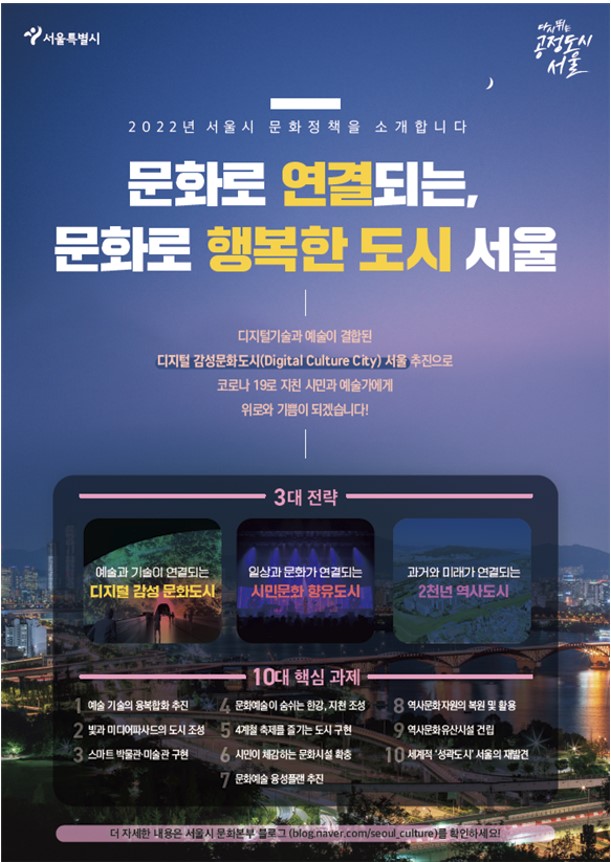
[Asia Economy Reporter Lim Cheol-young] Seoul Mayor Oh Se-hoon’s cultural policy announced last year in ‘Seoul Vision 2030’ is being put into full operation. The Seoul Metropolitan Government has presented a blueprint called ‘Digital Culture City Seoul,’ which combines digital technology and art, and set a goal to leap into one of the world’s top five cultural cities where tradition, present, and future coexist by investing 608 billion KRW.
On the 23rd, Seoul declared this year as the inaugural year of ‘Digital Culture City Seoul’ and announced 10 major cultural policies under three key strategies to be intensively promoted this year under the vision of ‘a city connected by culture, a city happy with culture.’ The three strategies include ▲Digital Culture City ▲City of Citizen Cultural Enjoyment ▲2,000-Year Historical City, while the 10 core tasks include ▲Promoting convergence of art and technology ▲Creating a city of light and media facades ▲Implementing smart museums and art galleries ▲Developing the Han River and tributaries as spaces where culture and arts breathe, and realizing a city that enjoys four-season festivals.
Becoming a ‘Digital Culture City’ where art and technology connect... Launch of the Sejong Center for the Performing Arts and Gwanghwamun Square ‘Rebuilding Project’
Seoul will first expand support for ‘convergent arts’ that combine digital technology and art to realize a ‘Digital Culture City.’ The Sejong Center for the Performing Arts, reborn as the ‘New Sejong Digital Art Center,’ and the reopened Gwanghwamun Square area will be developed as a digital cultural hub through the ‘Rebuilding Project.’ Preparation has begun to open the Convergent Arts Comprehensive Support Center, which supports all fields of convergent arts, by 2026. In September, a studio equipped with the country’s largest ‘LED Wall’ for immersive content production will open in Namsan, and Dongdaemun Design Plaza (DDP) will usher in the 2.0 era as a ‘Digital Design Platform’ by fostering digital media art as its unique content.
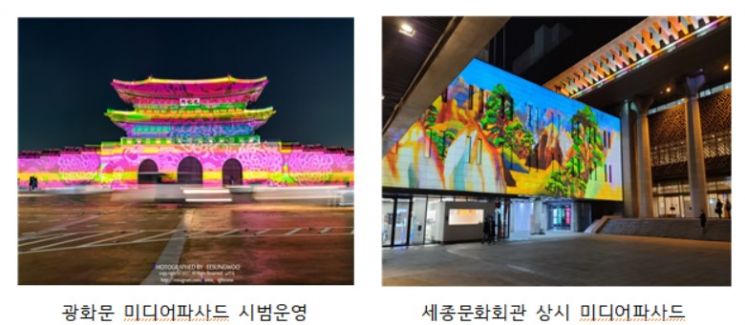
In July, a large media facade will be installed on the left wall of the Chamber Hall in the courtyard on the 2nd floor of the Sejong Center for the Performing Arts to operate it as an exhibition hall in the city center. In November, the Seoul Library’s ‘Dream Writing Board’ will be replaced with an LED digital media canvas, and starting this year, the ‘Gwanghwamun Media Facade Festival’ will be held every December using major buildings around Gwanghwamun Square such as the Sejong Center, KT Building, and Haechi Square.
Seoul will integrate new technologies such as VR (Virtual Reality), AR (Augmented Reality), panorama, and holograms into cultural facilities like museums and art galleries it operates to create ‘museums and art galleries in the palm of your hand’ that can be enjoyed anytime, anywhere, and advance them into future-oriented smart cultural facilities. Following the online museum opening of the Seoul Craft Museum in February, the Hanseong Baekje Museum will launch an augmented reality game app service in April, and the Seoul Museum of History will start a panorama exhibition incorporating ‘projection mapping’ in May.
‘City of Citizen Cultural Enjoyment’ connecting daily life and culture... Nodle Island, Seonyudo Park, and Nanji Park as public art landmarks
Additionally, Seoul plans to create a ‘City of Citizen Cultural Enjoyment’ where culture and arts can be enjoyed anywhere by developing Nodle Island, Seonyudo Park, and Nanji Park into public art landmarks by 2026. Public art works that citizens can enjoy will be implemented on Nodle Island (2022), Seonyudo Park (2024), and Nanji Park (2026) to establish new public art landmarks. The ‘365 Street Performances’ held across Seoul will also expand to the Han River, tributaries, and tourist attractions, with 150 street performance teams performing 2,200 times at 50 locations this year alone.
 Samcheonggak Main Gate
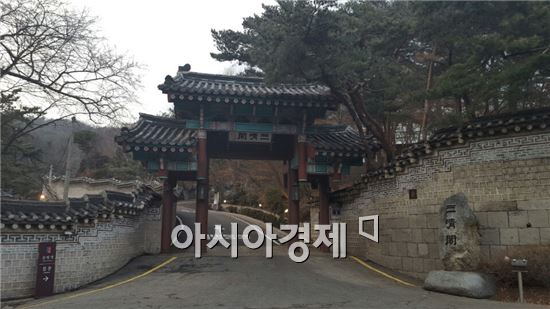
Various cultural facilities will open one after another this year, including Samcheonggak, which has completed a full renovation after 50 years, the new concept art space ‘Seoul Municipal Art Archive’ combining an art gallery and archive, and Korea’s first art book cultural space ‘Seoul Art Book Bogo.’ Among the six hanok buildings of Samcheonggak, which reopened in March after a full renovation, two buildings (Dongbaekheon and Chwihandang) will be operated as cafes and hanok experience spaces open to all citizens at any time. The remaining four buildings will house professional performance and banquet halls and Korean restaurants.
In September, the ‘Seoul Municipal Art Archive,’ a new concept art space combining an art gallery and archive, will open in Pyeongchang-dong, Jongno-gu. It is an art museum specialized in archive functions that collects, preserves, researches, and exhibits important materials and records of modern Korean art, building a unique archive collection. The ‘Performance Spring Day’ project, which supports free admission for elementary school students, will be implemented for 6th graders this year and expanded to middle school students in 2023 and high school students in 2024.
Support will be provided to artists facing livelihood crises due to COVID-19 with living stabilization funds and infrastructure. A total of 13 billion KRW will be urgently provided to 13,000 artists experiencing livelihood difficulties due to the prolonged pandemic, with 1 million KRW per person. Production costs will be supported by genre and career stage (10.3 billion KRW), and other expenses related to production such as studio rent and research costs (1.9 billion KRW) will also be supported. Additionally, 1.9 billion KRW will be provided to 19 performing groups for creative spaces, and 500 million KRW will be given to 15 excellent private small theaters for theater rent support.
‘Art spaces in daily life’ will be expanded so that citizens can naturally enjoy culture and arts close to their daily lives in plazas, bus stops, neighborhood creative spaces, etc. Policies to lower the threshold of performance venues, such as the municipal symphony orchestra’s ‘Our Neighborhood Concert’ and Sejong Center’s ‘Happiness for 1,000 Won,’ will also be expanded to diversify citizens’ cultural and artistic experiences.
‘2,000-Year Historical City’ connecting past and future... Pursuing UNESCO World Heritage registration for Hanyangdoseong, Tangchundaeseong, and Bukhansanseong
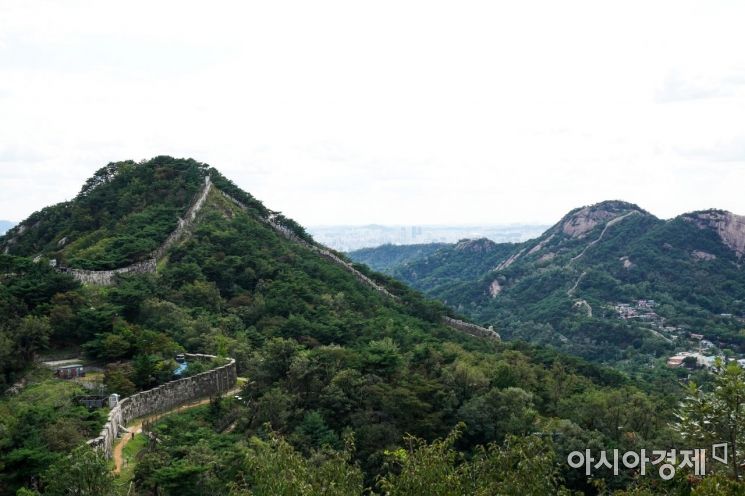
Furthermore, Seoul will establish the identity of the ‘2,000-year historical city’ that has continued since the Three Kingdoms period and actively utilize it as cultural and artistic content. While establishing the first comprehensive plan to digitally restore and reproduce Seoul’s historical and cultural heritage, a digital experience center will be created to allow citizens to experience the real thing first through digital content before the full restoration of the Pungnap-dong earthen fortification. The ‘Seoul Seongbuk-dong Byeolseo,’ which preserves the traditional Joseon Dynasty private garden, will also be gradually acquired, restored, and opened. Efforts will be made to register Hanyangdoseong, Tangchundaeseong, and Bukhansanseong as UNESCO World Heritage sites.
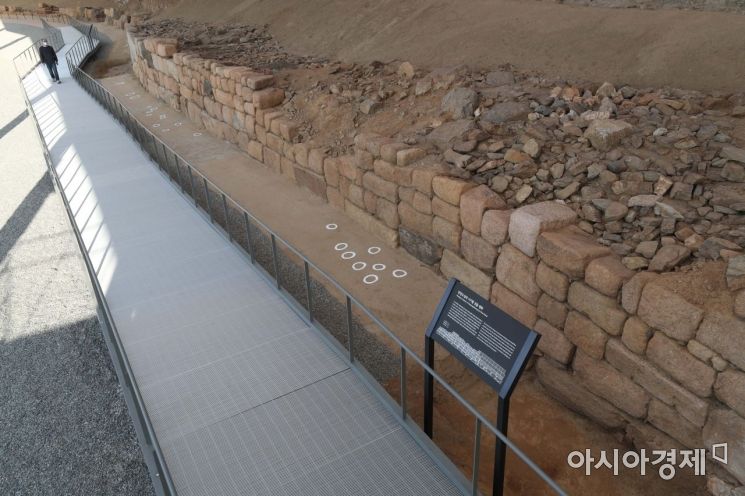 On the 12th, the 'Hanyangdoseong Relics Exhibition Hall,' created by preserving and maintaining the excavation state of the Hanyangdoseong ruins near Namsan, is being operated on a trial basis. A citizen visiting the exhibition hall on this day is examining the structures used in the construction of Hanyangdoseong. Photo by Moon Honam munonam@
Seoul plans to digitally restore and reproduce areas such as ▲Uijeongbu ▲Gyeonghuigung ▲disconnected sections of Hanyangdoseong (4.9 km) in phases and complete them by 2027. Before continuing focused compensation and excavation surveys to clarify the historicity of the Pungnap-dong earthen fortification, a digital experience center will open in 2026 to allow any citizen to experience the excavation site through digital content. The Seoul Seongbuk-dong Byeolseo, which preserves the traditional Joseon Dynasty private garden, will be gradually acquired and restored with plans to open it in 2025. In particular, comprehensive efforts will be made to register Hanyangdoseong, Tangchundaeseong, and Bukhansanseong as a World Heritage site in 2027 under the theme of ‘Joseon Dynasty Capital Defense System.’ This year, Seoul will pursue provisional registration on the World Heritage tentative list and national cultural asset designation (historic site) for Tangchundaeseong, and cooperate with Gyeonggi Province to establish an integrated protection and management system.
Mayor Oh Se-hoon said, “We will expand opportunities for all citizens to enjoy culture and arts in daily life through digital technology and minimize cultural exclusion,” adding, “Under this year’s vision of ‘a city connected by culture, a city happy with culture,’ we will focus on promoting three key strategies and 10 core tasks to lay the foundation for Seoul’s leap into one of the world’s top five cities.”
© The Asia Business Daily(www.asiae.co.kr). All rights reserved.



















