[Seoul District News] Gwanak-gu Plans Gradual Expansion with 4 Dementia Awareness Education Centers, Promotion, Prevention Programs, Early Screening, and Family Support Groups; Korean Human Rights Cities Association Holds 2022 1st Regular General Meeting; Gwangjin-gu Designated Lifelong Learning City; Gangbuk-gu Improves Old Signs near Mia Station; Gwanmunsa Supports Low-Income Welfare Recipients in Seocho-gu with Monthly Donations; Seodaemun-gu Develops Children's Board Games; Jongno-gu Coffee Specialty...
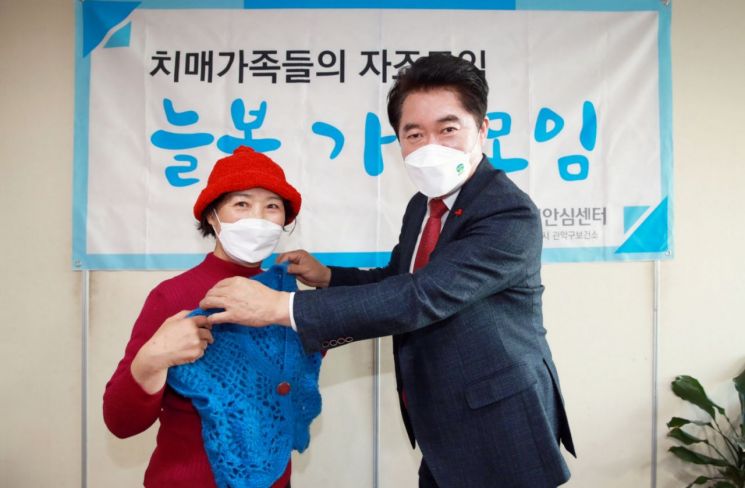 In December of last year, District Mayor Park Junhee encouraged participants of the dementia family self-help group.
[Asia Economy Reporter Park Jong-il] Gwanak-gu (Mayor Park Jun-hee) is operating the ‘Dementia Safe Village’ again this year to help residents properly understand dementia and create a social environment where dementia patients can live together.
The district maintains and manages a total of four neighborhoods as Dementia Safe Villages, including three neighborhoods with high elderly population, single elderly, and dementia patient registration rates (Samseong-dong, Euncheon-dong, Nangok-dong) and Sillim-dong, where demand is high.
In the Dementia Safe Village, a dementia safety net linked with local resources is established to ensure safe care for dementia patients and to foster a dementia awareness culture shared by the community. Activities include dementia awareness improvement, education on responding to dementia patients, publicity, and campaigns.
Additionally, high-demand hope services and program support are provided, including dementia prevention education, cognitive programs, and visiting early screening.
Last year, in response to social distancing due to COVID-19, a non-face-to-face program using workbooks was operated so that people could easily do it themselves at home.
Despite restrictions on daily life due to the prolonged COVID-19 pandemic, regular self-help meetings for families of dementia patients were held to provide emotional support and information exchange among families, aiming to reduce the burden of dementia patient care and prevent social isolation.
This year, to respond more actively, dementia prevention programs combining face-to-face and non-face-to-face methods will be expanded, and education on understanding and correctly knowing dementia for local residents, including dementia family self-help groups, will be expanded.
In particular, by investigating the actual conditions of dementia and the status of local resources, one new Dementia Safe Village will be newly selected, partner organizations will be recruited, and plans will be made to gradually expand and improve the quality management of Dementia Safe Villages.
Meanwhile, the Gwanak-gu Dementia Safety Center has professional staff on standby to provide various dementia prevention services such as ▲dementia counseling ▲early dementia screening and prevention management ▲operation of dementia patient rest centers ▲support for dementia treatment costs ▲missing prevention.
Also, due to restrictions on the use of the Dementia Safety Center caused by COVID-19, text and phone consultations focusing on checking on the elderly’s well-being, health status, and guidance on COVID-19 infection prevention rules are being conducted more intensively.
A district official said, “As dementia has emerged as a social problem due to rapid aging, community-centered management and awareness improvement efforts are important. We will strive to maintain the daily lives of dementia patients and reduce the caregiving burden on families through the expansion and support of Dementia Safe Villages where the community cares and manages together.”
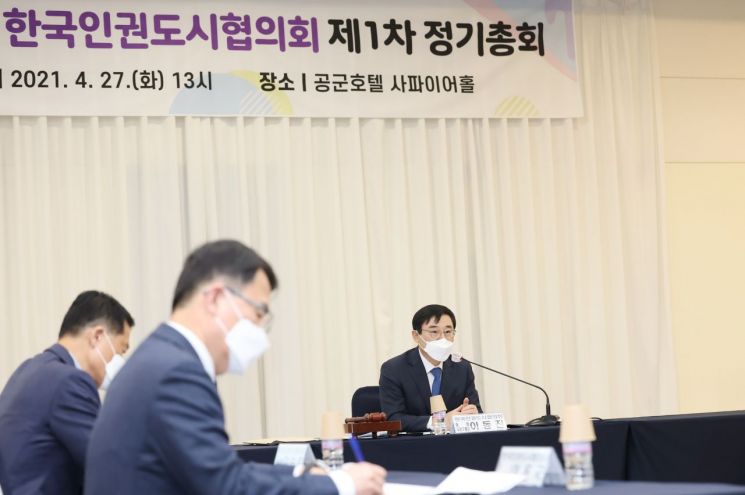
The Korean Human Rights Cities Council (Chairman Lee Dong-jin, Mayor of Dobong-gu) held the 1st regular general meeting of 2022 with heads of member cities of local governments nationwide via video conference on the 21st.
At this regular general meeting, commendations were given to those who contributed to human rights promotion at the regional level, reports on 2021 project implementation and settlement approval were made, approval of major business plans and budgets for 2022 was granted, and measures to revitalize council operations were discussed. It was resolved to strengthen the human rights guarantee system of local governments by enhancing solidarity and cooperation among member cities.
Lee Dong-jin, Mayor of Dobong-gu and chairman of the council, said regarding the enactment of the Basic Human Rights Policy Act currently under discussion in the National Assembly, “I ask member cities to actively participate in establishing ordinances, installing dedicated organizations, formulating basic plans, conducting human rights education, and spreading human rights culture as outlined in the draft Basic Human Rights Policy Act.”
Throughout 2021, the Korean Human Rights Cities Council carried out various joint cooperation projects to build a human rights foundation at the regional level, including supporting Myanmar’s democratization movement in line with global trends, attending the Gwangju World Human Rights Cities Forum, and publishing and distributing materials sharing human rights policies of member cities.
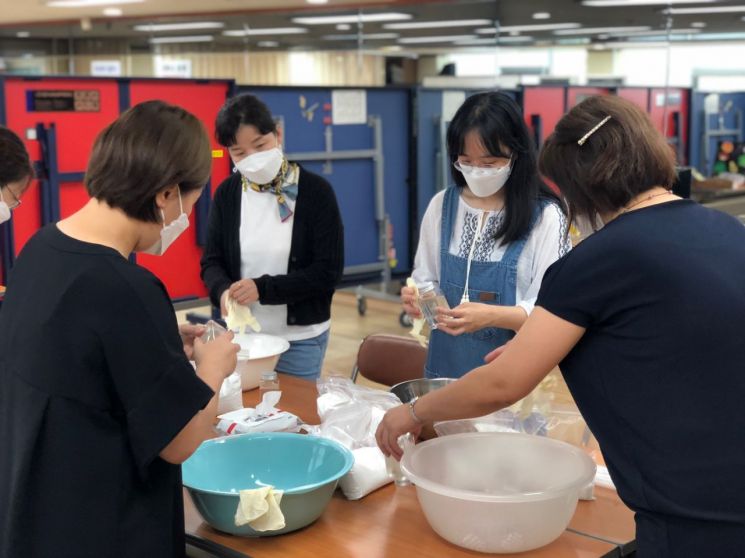
Gwangjin-gu (Mayor Kim Seon-gap) has been selected as a new lifelong learning city in the ‘2022 Regional Lifelong Education Activation Support Project’ hosted by the Ministry of Education and organized by the National Institute for Lifelong Education.
Gwangjin-gu has been striving to establish a lifelong learning foundation by promoting the construction of a lifelong learning center, establishing a mid- to long-term development plan for lifelong learning, and expanding lifelong learning spaces in daily life.
Also, by supporting local human resources through training learning managers and supporting clubs, placing lifelong educators, and increasing budgets, the district has worked hard to activate lifelong learning, resulting in its selection as a lifelong learning city.
The district will receive 90 million KRW in support as a lifelong learning city and plans to implement 10 projects including networking for lifelong education stakeholders, a metaverse online expo, a democratic citizenship school, and ‘Baesseulsin job’ (employment competency enhancement).
A ‘lifelong learning city’ is a project to form a learning community where residents can enjoy learning anytime they want to improve individual quality of life and the competitiveness of the entire city. It has been supported annually through public contests since 2001.
Kim Seon-gap, Mayor of Gwangjin-gu, said, “The selected project shares a common feature of a virtuous cycle model where lifelong learning graduates become instructors to solve local issues. We will do our best to create a learning ecosystem where anyone can learn anytime and anywhere, making Gwangjin a lifelong learning city that resonates with life.”
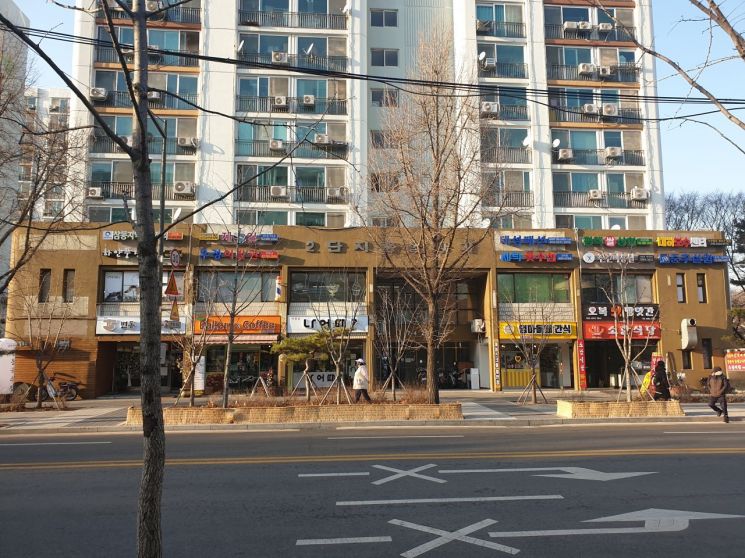
Gangbuk-gu (Mayor Park Gyeom-su) is improving old and dirty signboards into beautiful signboards that fit the local characteristics together with residents.
The district has been promoting the ‘Signboard Improvement Project’ since 2019 to create a clean street environment by improving disorderly illegal signboards into beautiful signboards that reflect local characteristics and dignity.
This year, the signboard improvement project will be conducted targeting about 146 businesses in the area from Dobong-ro 259 to 145. Residents will directly participate in the project.
First, a ‘Signboard Improvement Residents Committee’ will be formed, consisting of building owners, store owners, and commercial association members. The committee, composed of about 10 members, will represent residents in the project area to decide on signboard design, autonomous maintenance, and management of signboards in the target area. Designs will be allowed within the scope not greatly deviating from the advertising guidelines and will be designed reflecting residents’ opinions through a voluntary agreement system.
The project will proceed on the principle of ‘one signboard per business,’ but businesses located at road curves or with roads facing the front or back of the building may install one additional signboard. Businesses currently using illegal horizontal signboards must replace them with supported horizontal signboards, and all illegal signboards in use will be removed upon replacement.
The project cost is 300 million KRW in total. Support amounts for signboard replacement will be 2.5 million KRW per business for horizontal signboards using walls and 500,000 KRW per business for protruding or freestanding signboards, according to detailed criteria. More information is available on the Gangbuk-gu Office website.
Until last year, the district improved signboards of 265 stores in areas including Solsaem-ro 197-243, Deokneung-ro 2-32, Insu-bong-ro 96-157, Hwagesa-gil 5-29, Hancheon-ro 105-gil 7-33, Wolgye-ro 37-gil 71-145, and Hancheon-ro 109-gil 13-53.
Park Gyeom-su, Mayor of Gangbuk-gu, said, “This project will improve the urban aesthetics around Mia Station in Gangbuk-gu. We will actively reflect residents’ opinions and work hand in hand with residents to transform Gangbuk-gu.”
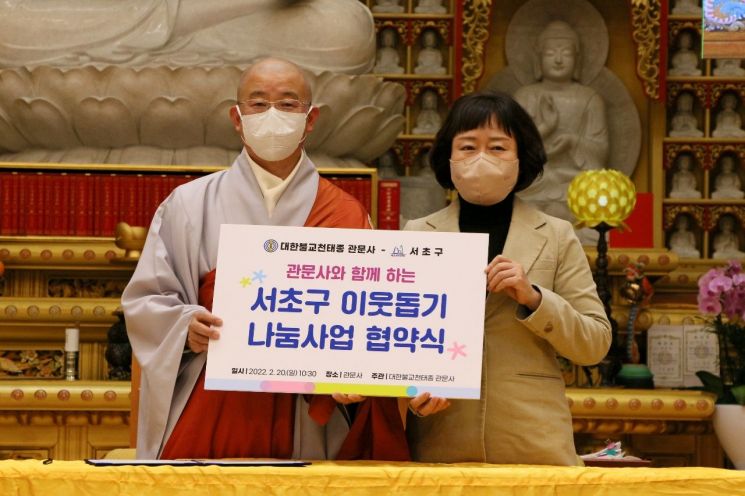
Seocho-gu signed a Memorandum of Understanding (MOU) for the ‘Neighbor Helping Sharing Project’ with Daehan Buddhism Cheontaejong Gwanmunsa Temple on the 20th at the temple’s 4th floor Okbulbojeon to help low-income welfare households in the area become self-reliant and overcome crises and to build a culture of sharing in the community.
Under this agreement, Gwanmunsa Temple will donate a portion of the proceeds from its offerings to the Seocho-gu Social Welfare Community Chest as a regular monthly donation. The district plans to use the donated funds to discover and support welfare recipients facing economic difficulties.
Gwanmunsa Temple, established in October 1998, is the largest single temple complex in East Asia. It has been conducting various volunteer and propagation activities centered on Gangnam and Seocho areas and has carried out various activities for neighbors in the community. Notably, in 2013, it donated 16.8 million KRW for kimchi support to neighbors in need, and in 2020 and 2021, it donated 1 million KRW each for the Warm Winter Campaign, showing continuous interest in welfare recipients.
The district plans to support basic livelihood security recipients, elderly living alone, disabled persons, and single-parent families with approximately 1.25 billion KRW raised through the 2022 Hope Ondol Warm Winter Campaign.
Seo Kyung-ran, Director of the Resident Life Bureau of Seocho-gu Office, said, “We appreciate the interest shown to neighbors in need despite difficult circumstances and will continue to create a local environment where sharing culture spreads and social care can be practiced.”
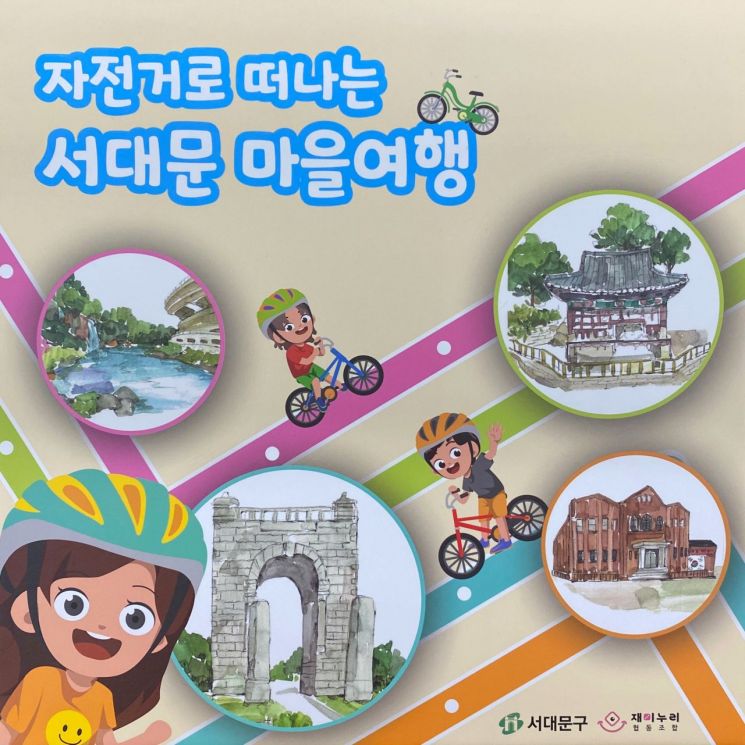
Seodaemun-gu (Mayor Moon Seok-jin) produced a board game tool called ‘Seodaemun Village Trip by Bicycle’ to increase children’s interest and understanding of the local area.
Since October last year, the district formed a team of elementary school teachers and experts to explore ways for 3rd-grade elementary students to easily and familiarly experience local cultural heritage and landmarks during social studies classes on the theme of ‘village.’
After several discussions, they developed a board game tool that connects local landmarks such as Ansan (鞍山) Beacon Mound, Independence Gate and Independence Park, Seodaemun Prison History Hall, Seodaemun Natural History Museum, and Hongjecheon artificial waterfall with small sticks.
Additionally, related videos and manuals were separately produced so that students can understand the locations, features, and meanings of landmarks while playing the board game, and teachers will be able to use these materials during classes.
The district plans to distribute this board game tool to all 3rd-grade classrooms in local elementary schools for the new semester.
Mayor Moon Seok-jin said, “I hope that the ‘Seodaemun Village Trip by Bicycle’ board game will increase children’s knowledge and pride in our local area.”
Previously, since 2019, the district has supported the development of local textbooks linked to the 3rd-grade elementary school curriculum through the Innovation Education District project and has produced and provided related workbooks (supplementary materials) to schools.
This year, departing from the existing form, the district developed this board game to further enhance students’ interest.
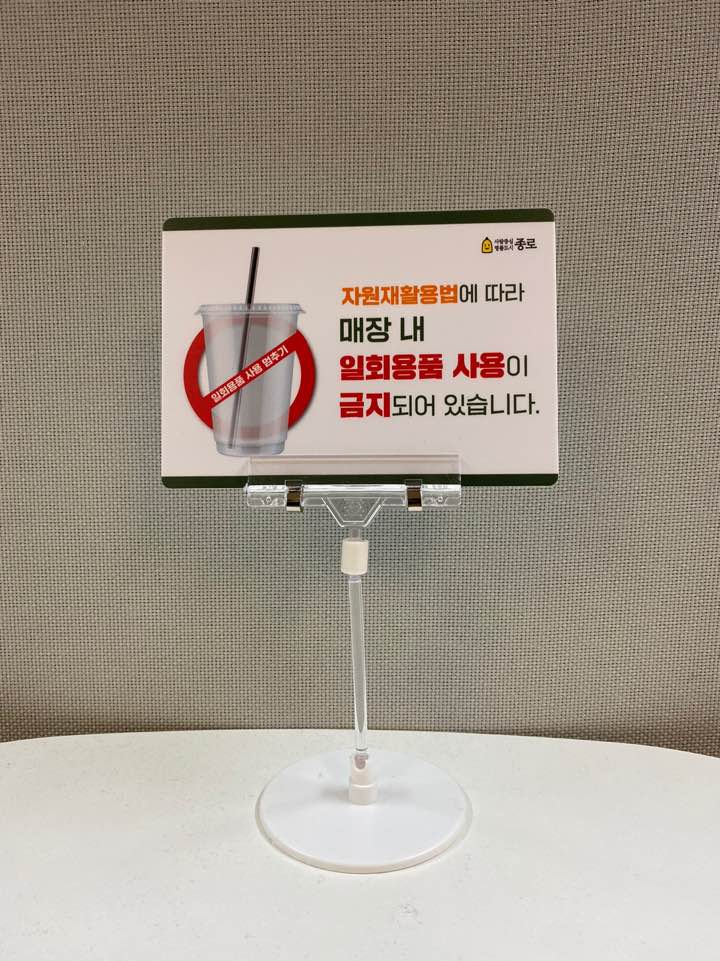
Jongno-gu will promote the ban on single-use items at 1,200 food service establishments such as cafes in the district from February to the end of March.
This is to prepare for the ban on the use of single-use items inside food service establishments, scheduled to take effect on April 1.
Previously, the Ministry of Environment temporarily permitted the use of single-use items in food service businesses such as general restaurants, snack bars, and bakeries to prevent the spread of COVID-19.
However, with the revision of the notice, food service businesses have been removed from the list of exempted industries, and under the Act on the Promotion of Saving and Recycling of Resources and the Food Sanitation Act, the use of single-use plastic cups, plates, forks, knives, toothpicks, wooden chopsticks, and other single-use items inside stores will be prohibited.
The district has formed a permanent inspection team to help early settlement of the system, providing guidance notices and promotional stands to target businesses. It also informs that from April, violators may be fined from 100,000 KRW up to 2 million KRW depending on the size of the business.
From November 24 this year, single-use plastic straws will also be added to the list of prohibited items, and the free provision of single-use plastic shopping bags in bakeries and retail businesses (including general retail) will also be banned. However, paper bags or shopping bags can be provided free of charge.
Meanwhile, Jongno-gu has carried out various related projects to raise awareness about indiscriminate use of single-use items and to create a sustainable healthy city. Representative examples include promoting a ‘single-use item-free public office’ project, replacing umbrella vinyl covers at entrances on rainy days with rainwater removers and rainwater brushes, and encouraging the use of personal cups instead of disposable cups in offices.
A district official said, “The increase in single-use item use causes serious resource waste and environmental pollution. To suppress unnecessary use, it is essential for both business operators and residents to form a deep consensus, so we ask for active participation even if it is a little inconvenient.”
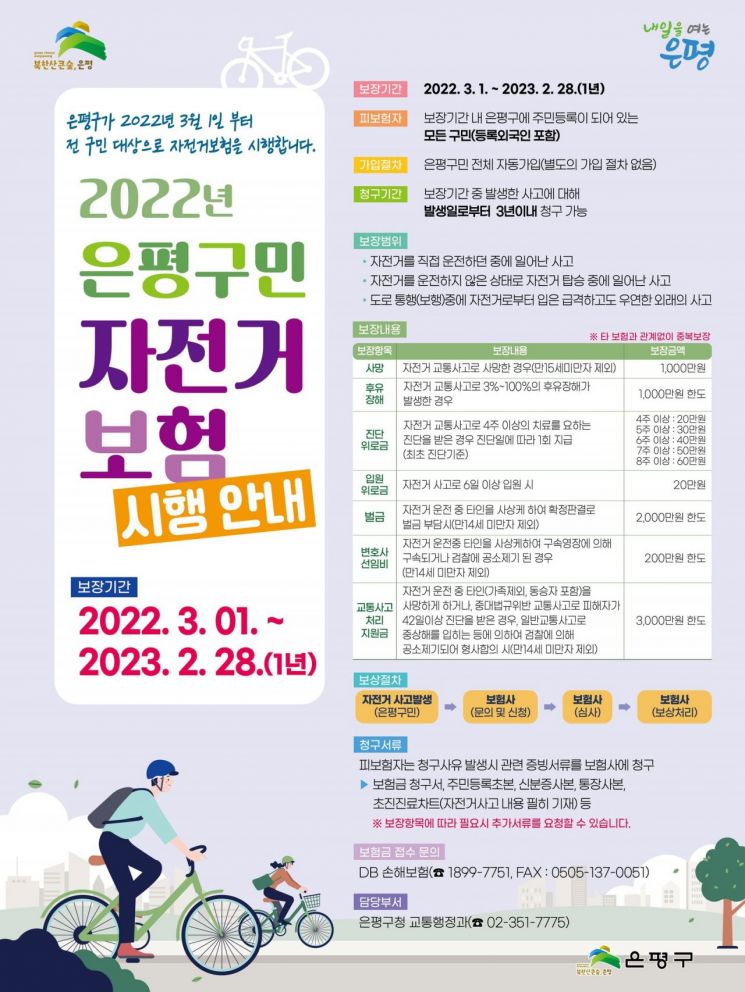
Eunpyeong-gu (Mayor Kim Mi-kyung) announced that it will implement bicycle insurance enrollment for all residents starting in March.
This policy was prepared to protect residents from bicycle accidents as the number of residents using bicycles, an eco-friendly means of transportation, increases.
From now on, Eunpyeong-gu residents can receive insurance coverage for bicycle accidents. Coverage includes ▲accidents occurring while directly riding a bicycle ▲accidents occurring while riding a bicycle without driving it ▲sudden and accidental external accidents caused by a bicycle while walking or passing on the road.
The insurance coverage period applies from March 1 to February 28, 2023. Claims can be filed within three years from the date of the accident occurring during the coverage period.
Residents registered in Eunpyeong-gu (including registered foreigners) will be automatically enrolled without separate procedures, and enrollment and cancellation will be automatically processed with moves in and out.
There are seven coverage items in total, and insurance benefits can be received for accidents occurring while using a bicycle anywhere nationwide. Overlapping payments with other insurances are possible.
The coverage details are ▲death 10 million KRW (excluding those under 15 years old) ▲disability up to 10 million KRW ▲diagnosis lump sum 200,000 to 600,000 KRW (diagnosis of 4 to 8 weeks or more) ▲hospitalization consolation money 200,000 KRW (hospitalization of 6 days or more) ▲fines up to 20 million KRW (excluding those under 14 years old) ▲lawyer fees up to 2 million KRW (excluding those under 14 years old) ▲traffic accident handling support up to 30 million KRW (excluding those under 14 years old).
For insurance claim-related matters, contact DB Insurance, and for other inquiries, contact the Traffic Administration Division of Eunpyeong-gu Office.
A district official said, “We hope that bicycle insurance enrollment will alleviate residents’ economic burdens and provide practical relief in case of bicycle accidents. We will take the lead in establishing policies to create a safe environment so that Eunpyeong-gu residents can use bicycles, an eco-friendly transportation means, with peace of mind.”
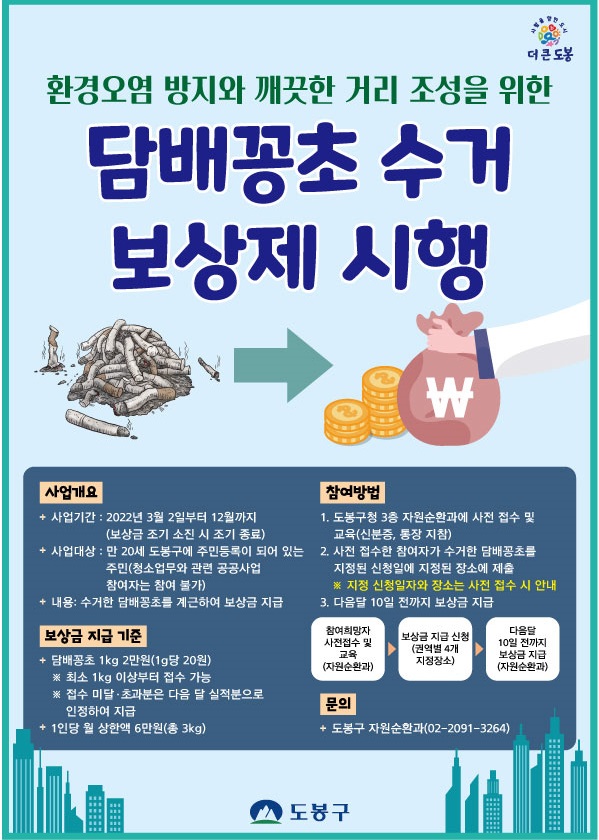
Dobong-gu (Mayor Lee Dong-jin) will implement a cigarette butt collection reward system starting March 2022.
The cigarette butt collection reward system is a project that pays residents a reward based on the weight of cigarette butts they voluntarily collect from the streets. Residents of Dobong-gu aged 20 or older can participate, but those involved in public work related to cleaning or alley cleaning guardians cannot participate.
The reward payment standard is 20,000 KRW per 1kg (20 KRW per 1g), and rewards are paid only when at least 1kg is submitted. The monthly maximum amount an individual can receive is 60,000 KRW (3kg per person). If less than 1kg or more than 3kg is submitted, it will be carried over and combined with the next month’s collection for payment.
Residents wishing to participate must visit the Dobong-gu Office Resource Circulation Division with their ID and bankbook to register and receive training before applying for rewards.
Reward applications can be made by bringing collected cigarette butts and ID to designated locations on the second and fourth Wednesdays of each month. However, in March, due to the presidential election schedule, applications can be made on the third Wednesday (March 16, Ssangmun Station Exit 2) and the fifth Wednesday (March 30, Banghak Station Exit 2).
Submission locations for cigarette butts are Ssangmun Station Exit 2, Banghak Station Exit 2, Chang-dong Station Exit 1, and Dobong Station Exit 1. Since submission days differ by station, applicants must check the prior notice before visiting.
Collected cigarette butts must be dry. Wet or contaminated butts, or those collected in large quantities from non-street areas such as smoking zones or trash bins, will not be accepted. Rewards will be deposited into the applicant’s account by the 10th of the following month based on the application date. Proxy applications are not allowed.
Meanwhile, cigarette butts discarded indiscriminately on the streets not only spoil cleanliness but also cause environmental pollution as microplastics from the filter parts flow into the ocean through rainwater drains and sewers, disrupting aquatic ecosystems.
Mayor Lee Dong-jin of Dobong-gu said, “Through this collection reward system, we expect a twofold effect of residents solving the cigarette butt litter problem that harms urban cleanliness and preventing marine environmental pollution.”
© The Asia Business Daily(www.asiae.co.kr). All rights reserved.
![Clutching a Stolen Dior Bag, Saying "I Hate Being Poor but Real"... The Grotesque Con of a "Human Knockoff" [Slate]](https://cwcontent.asiae.co.kr/asiaresize/183/2026021902243444107_1771435474.jpg)


















