NSSC Finalizes Approval of 'Nuclear Power Plant Preliminary Decommissioning Plan'
Decommissioning Cost Estimated at 751.5 Billion KRW per Unit
'Anti-Nuclear' Figure Appointed as Head of Affiliated Foundation
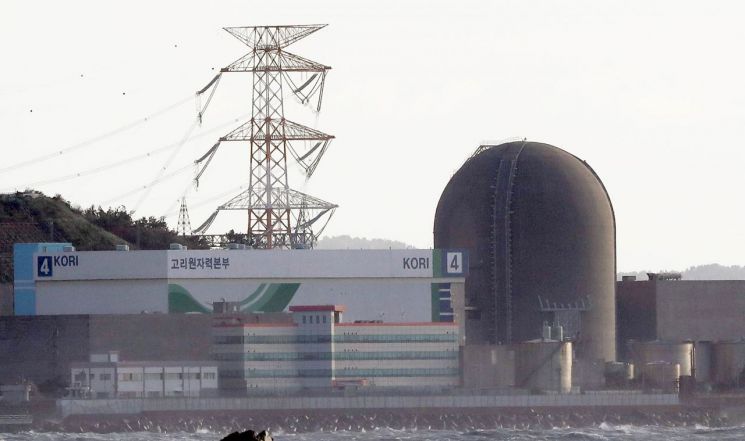
[Asia Economy Sejong=Reporter Lee Jun-hyung] The government is accelerating its nuclear phase-out policy by approving preliminary decommissioning plans for 28 nuclear power plants under construction and operation in South Korea.
According to related ministries on the 12th, the Nuclear Safety and Security Commission (NSSC) held the 153rd NSSC meeting the day before and deliberated and resolved four agenda items. One of the final approved agenda items was the "Approval of Preliminary Decommissioning Plans for Power Reactors and Related Facilities under Construction or Operation" submitted by Korea Hydro & Nuclear Power (KHNP). The plan includes the decommissioning of 28 nuclear power plants under construction and operation domestically, including Kori, Wolseong, and Hanul nuclear power plants.
Previously, the government mandated the submission of preliminary decommissioning plans by KHNP and others through the "2nd Comprehensive Nuclear Safety Plan" announced at the end of 2016. This was based on the judgment that domestic nuclear power plant decommissioning could accelerate starting with the permanent shutdown of Kori Unit 1 in 2017.
Accordingly, KHNP submitted preliminary decommissioning plans for 28 nuclear power plants under construction and operation to the NSSC in 2017. The preliminary decommissioning plans included decommissioning strategies and methods, as well as the organization and personnel to carry out the decommissioning project, and plans to secure decommissioning costs. The Korea Institute of Nuclear Safety conducted a preliminary review of the plans until February last year. The NSSC reviewed the preliminary decommissioning plans five times starting from August last year.
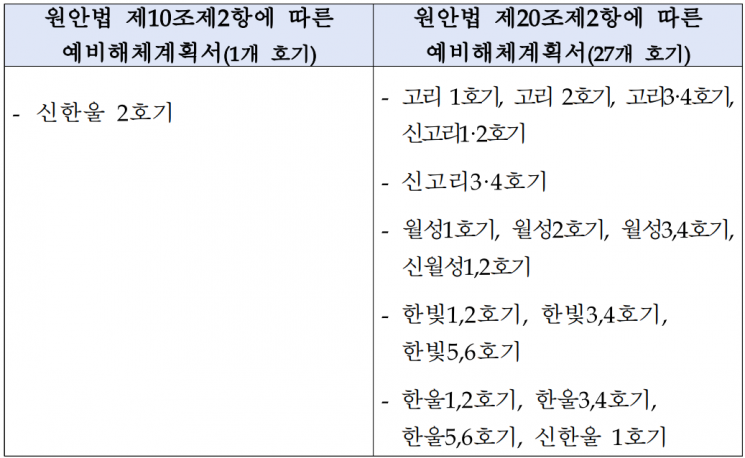 The 28 domestic nuclear power plants subject to the preliminary decommissioning plan submitted by Korea Hydro & Nuclear Power to the Nuclear Safety and Security Commission.
 [Photo by Nuclear Safety and Security Commission]
The decommissioning of nuclear power plants is expected to require more than 21 trillion won in costs. According to the NSSC, the estimated decommissioning cost for a standard domestic nuclear power plant is 751.5 billion won per unit. Considering that the preliminary decommissioning plans submitted by KHNP cover 28 nuclear power plants, the total required decommissioning cost amounts to approximately 21.042 trillion won.
This decision by the NSSC is expected to strengthen the government's nuclear phase-out policy stance. Since the preliminary decommissioning plans, which concretely include decommissioning measures for virtually all domestic nuclear power plants, have been finally approved, it is analyzed that the decommissioning work can also accelerate.
The NSSC also plans to resume the decommissioning review of Kori Unit 1. The review was indefinitely postponed in September last year due to the lack of a spent nuclear fuel management plan. In response, KHNP revised and supplemented the final decommissioning plan for Kori Unit 1, and the Korea Institute of Nuclear Safety gave an "appropriate" opinion on the plan last month.
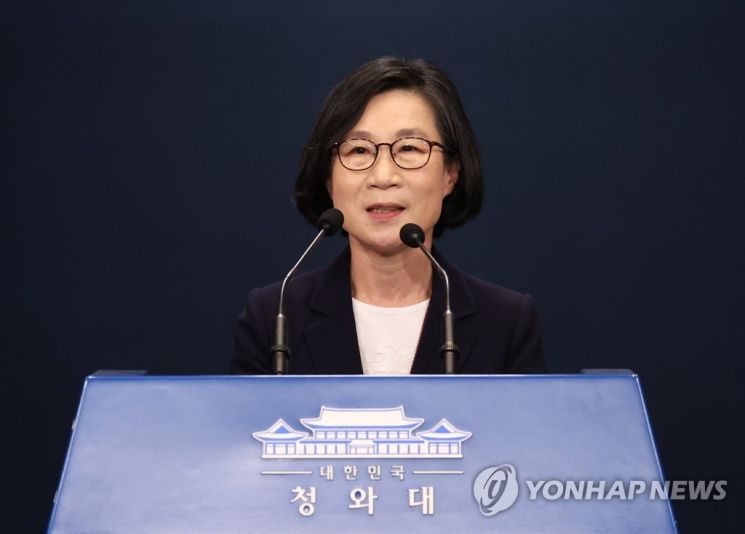
Meanwhile, the Nuclear Safety Foundation under the NSSC recently appointed Kim Je-nam, a former Blue House Senior Secretary for Civil Society Affairs known for his nuclear phase-out stance, as chairman. Chairman Kim is recognized as a leading nuclear phase-out figure, having served as the secretary-general of the civic group Green Korea United. After the inauguration of the Moon Jae-in administration, he served as the Presidential Secretariat's Climate and Environment Secretary and was promoted to Senior Secretary for Civil Society before retiring in May last year.
Kim Hye-jung, former chairman of the Nuclear Safety Foundation and former secretary-general of the Korea Federation for Environmental Movements, is also regarded as a nuclear phase-out figure alongside Chairman Kim. Thus, nuclear phase-out figures have consecutively taken the chairmanship of the Nuclear Safety Foundation. Some critics argue that this appointment is a "parachute appointment" that fails to consider the foundation's characteristics.
© The Asia Business Daily(www.asiae.co.kr). All rights reserved.
![Clutching a Stolen Dior Bag, Saying "I Hate Being Poor but Real"... The Grotesque Con of a "Human Knockoff" [Slate]](https://cwcontent.asiae.co.kr/asiaresize/183/2026021902243444107_1771435474.jpg)


















