Decrease in Multi-Ownership Index of Collective Buildings
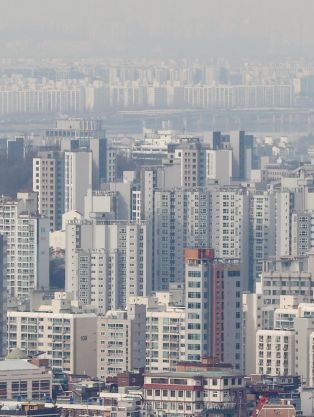
"All three officetels belong to the same owner. They have been managing multiple properties and living off the monthly rent, but the landlord recently said they need to reduce the number of listings."
(A representative from a real estate agency in Mapo-gu)
Multi-home rental business owners, who had been steadfastly enduring government tax pressures and being treated as corrupt entities, are now contemplating exit strategies as the impact of interest rate hikes becomes more apparent. Compared to single-home owner-occupiers, rental business owners face larger and more significant loan amounts, making them more quickly and strongly exposed to interest rate increases. The representative from agency A explained, "Even during the heavy capital gains tax and comprehensive real estate tax hikes two years ago, rental business owners remained largely unmoved, but since the end of last year, we have been receiving inquiries about sales more frequently," adding, "It seems they are adjusting their listings early due to excessive interest burdens." He continued, "For owner-occupiers with mortgage loans, a 1 percentage point increase in interest rates means paying just a few tens of thousands of won more per month, but for rental business owners, even a 0.25 percentage point increase can raise interest expenses by hundreds of thousands of won monthly depending on the number of rental properties."
Most rental business owners purchase real estate not through typical mortgage loans but through business loans, and cover the loan interest by collecting monthly rent from tenants. Business loans allow for a higher loan-to-value ratio (LTV) compared to mortgage loans, maximizing leverage, but this also means greater risk from interest rate fluctuations. Moreover, unlike mortgage loans where principal and interest are repaid simultaneously, rental business loans require only interest payments with the loan extended annually. Even with fixed interest rates, the impact of increased rates is directly felt after one year.
In this trend, the proportion of multi-homeowners is also sharply declining. According to the Court Registry Information Plaza, the ‘Multiple Ownership Index for Collective Buildings’ recorded 16.12 in December last year, a decrease of about 2.5% compared to the previous year. This index represents the ratio of owners holding two or more units among all collective building owners. A lower index value indicates a decrease in the proportion of people owning multiple collective buildings (such as apartments, row houses, multi-family houses, subdivided commercial spaces, officetels, etc.).
However, even if multi-homeowners and rental business owners feel burdened by rising interest rates, it is expected to be difficult for them to put a large number of properties on the market. This is because the top capital gains tax rate was raised to 82.5% (including local taxes) starting June last year. Seojin-hyung, president of the Korea Real Estate Society and professor at Gyeongin Women's University, said, "In a situation where 80% of the profit must be paid as tax, it is not easy to dump properties just because of interest burdens," adding, "There is also a considerable possibility that interest costs will be passed on to tenants." Therefore, it is difficult to expect a supply effect triggered by multi-homeowners and rental business owners due to interest rate hikes.
Many of the properties that multi-homeowners put on the market are often in less popular provincial areas rather than key metropolitan locations. Even when reluctantly listing properties, the trend is to choose gifting over sales. According to the Korea Real Estate Board, the proportion of gifts in the Seoul housing market steadily increased last year: 7.8% in September, 10.8% in October, 11.4% in November, and 14.6% in December.
© The Asia Business Daily(www.asiae.co.kr). All rights reserved.

















