January up 3.6% year-on-year... Near-month prices also rise 3%, highest in 10 years
OECD December inflation rate 6.6%... Impact of energy price increase and supply chain issues
[Asia Economy Sejong=Reporters Kwon Haeyoung, Lee Hyunwoo, Son Seonhee] With rising oil prices and dining-out costs, South Korea's consumer prices in January recorded a 3% range increase for the fourth consecutive month. This marks the first time since February 2012 that inflation has sustained a 3% range rise for four months in a row. Core inflation, which reflects the underlying trend of prices, also climbed into the 3% range for the first time in 10 years. Notably, amid global energy price hikes and supply chain disruptions, inflation rates among OECD member countries have reached their highest levels in 30 years, spreading inflation concerns worldwide.
Statistics Korea announced on the 4th that the Consumer Price Index (CPI) for January this year stood at 104.69, up 3.6% compared to the same month last year. This follows increases of 3.2% in October, 3.8% in November, and 3.7% in December last year, marking four consecutive months of inflation in the 3% range. The last time inflation stayed above 3% for four straight months was nearly 10 years ago, from September 2010 to February 2012, when it recorded 18 consecutive months of 3% or higher increases.
Core inflation, which excludes seasonal or temporary supply shortages such as agricultural products and petroleum, also rose 3.0% year-on-year. This is the highest level in 10 years since January 2012 (3.1%).
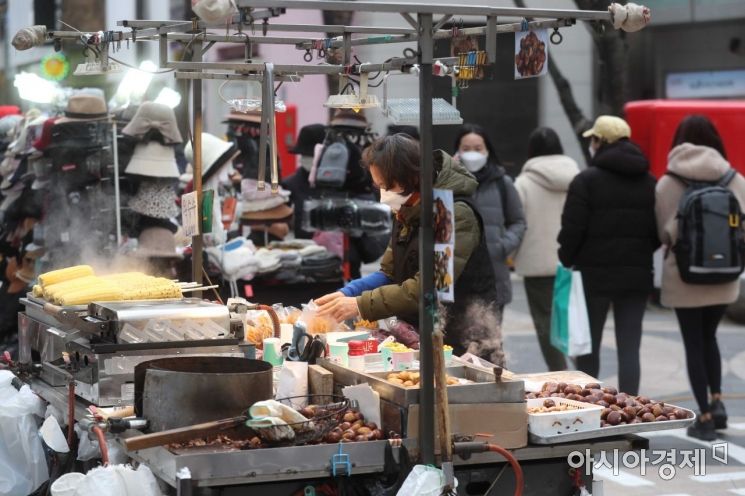
Prices continued to rise mainly in petroleum products, processed foods, industrial goods, and agricultural and livestock products, while dining-out prices surged, leading to mid-3% inflation. By category, service prices increased 2.9% year-on-year. Among these, rent rose 2.1%, marking the largest increase in 6 years and 1 month since December 2015 (2.5%), and dining-out prices soared 5.5%, the biggest jump in 12 years and 7 months since June 2009 (5.9%). Industrial products rose 4.2%, and agricultural, livestock, and fishery products increased 6.3%. Electricity, gas, and water charges also rose 2.9% due to the October 2021 increase in electricity fuel cost adjustment rates and some local governments' adjustments to water rates.
This broad inflationary trend centered on core inflation items extending into the service sector reflects a global pattern.
On the 3rd (local time), the OECD announced that inflation among its member countries reached 6.6% year-on-year in December last year, the highest since July 1991. This was attributed to overall rises in energy and food prices and compounded supply chain issues intensified by the COVID-19 pandemic. Particularly, Turkey's inflation surged to 36.1%, significantly raising the average inflation rate among all member countries. Excluding Turkey, the OECD member countries' inflation rate was 5.6%, up 0.3 percentage points from the previous month (5.3%). For the entire year of 2021, the OECD member countries' average annual inflation rate was 4.0%, a sharp increase from 1.4% the previous year, marking the highest level since 2000. Global food prices also rose to record levels. The UN Food and Agriculture Organization (FAO) announced that the world food price index (FFPI) for last month was 135.7, the highest since the 2011 'Arab Spring' crisis that caused a sharp spike in international food prices.
The concern is that recent rises in international oil prices, global supply chain disruptions, and the Ukraine tensions could further fuel inflation, especially in international energy prices. The government held the first meeting of the 'Ukraine Crisis Emergency Response Task Force (TF)' on the same day to urgently assess the potential domestic impact. Lee Eokwon, First Vice Minister of Strategy and Finance, stated, "There is a constant possibility that the impact of global uncertainties such as rising energy prices and supply chain disruptions due to the Ukraine crisis will expand. Under the serious recognition that domestic and international price conditions are challenging, we will thoroughly prepare for potential instability in international raw material prices and supply and demand caused by the Ukraine crisis."
© The Asia Business Daily(www.asiae.co.kr). All rights reserved.

















