Criticism Mounts as Seoul's Central Lanes and Street-side Bus Stops Become Garbage Dumps with No Action Taken
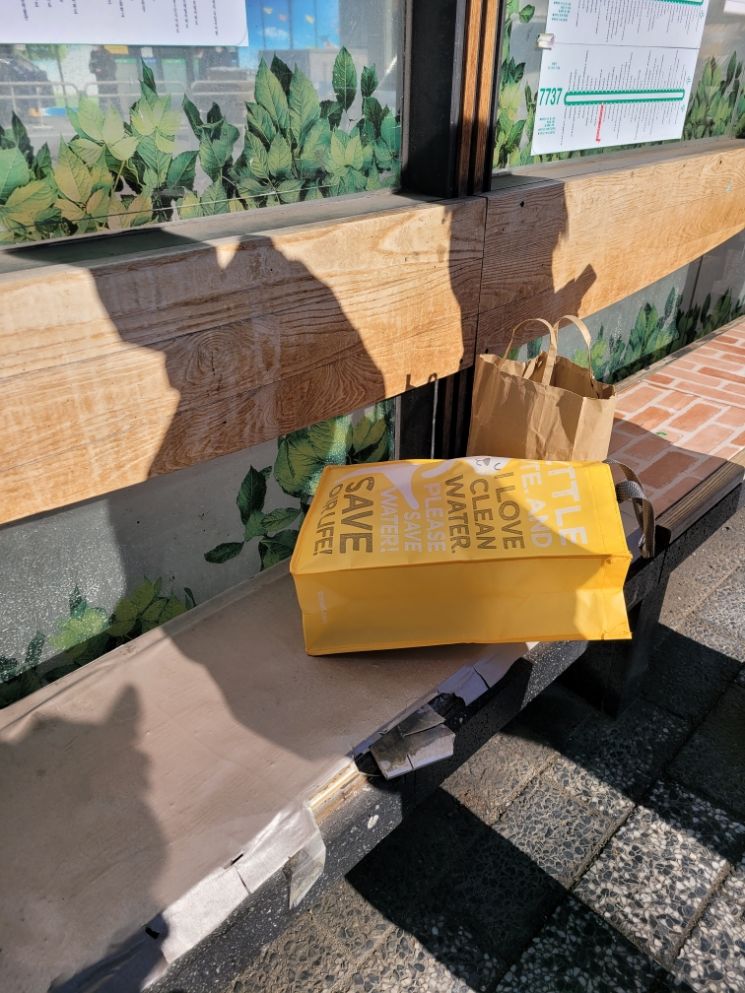 Shinchon Five-way Intersection found by the reporter on the 3rd. The central bus stop at Hyundai Department Store. Not only is trash left unattended, but the floor tiles of the benches are falling off, showing poor maintenance.
[Asia Economy Reporter Park Jong-il] “Look at this bus stop. What is this, a garbage dump? The management is so poor it looks like a rural bus stop.”
On the afternoon of the 3rd, Mr. Lee, a Seoul citizen met at Sinchon Five-way Intersection and Hyundai Department Store bus stops, said this to the reporter.
The management of Seoul’s central lane bus stops is in a terrible state, drawing strong criticism.
Especially, the bus stops around Sinchon Station, a representative sub-center of Seoul, are managed to this extent, intensifying citizens’ dissatisfaction.
Seoul has 390 central lane bus stops (Yanghwa·Sinchon-ro, Sinbanpo·Dongjak-daero, Cheonho-daero, Tongil-ro) and about 3,000 roadside bus stops.
However, since the existing maintenance contractor’s contract expired on July 31 last year, no maintenance contractor has been decided for seven months as of February 3, resulting in neglect and such conditions.
In particular, about 50 central lane stops and 500 roadside stops have been abandoned and turned into eyesores, causing considerable inconvenience to users.
This situation is completely contrary to Seoul’s policy direction to promote public transportation, increasing citizens’ dissatisfaction.
Until last year, central lane and roadside bus stops were operated by private contractors who installed and maintained them in exchange for advertising revenue.
However, there were deficiencies in the contract with company B, the previous permit holder, and in 2008, the Board of Audit and Inspection and the Seoul Metropolitan Council pointed out the inappropriateness of the direct contract.
Also, the bus stop greening project carried out in 2020 to reduce fine dust and improve urban landscape was launched by company C, but less than two years later, it has been left neglected with only weeds growing.
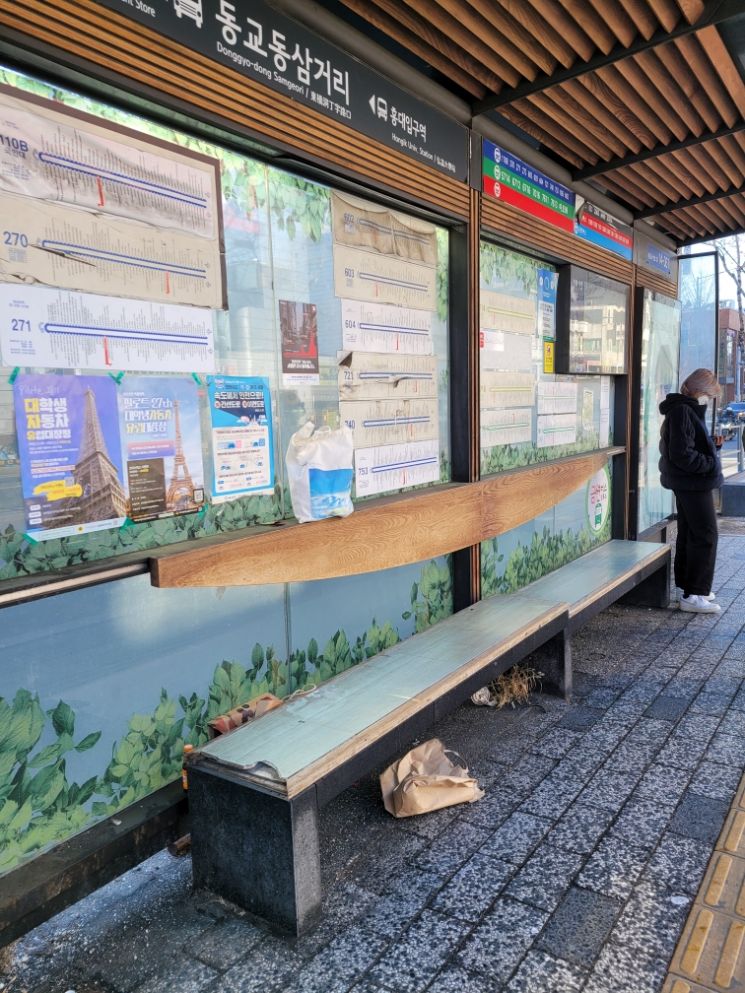
Along with this, trash and illegal advertisements have been left scattered throughout the bus stops, and benches have become dilapidated with tiles falling off, turning them into eyesores.
Mr. Kim, a citizen met at Donggyo-dong Samgeori bus stop, said, “Until a few days ago, the bus stop was full of discarded trash, but maybe because of the Lunar New Year holiday, the Mapo District Office cleaned it, so there is only a little trash now,” adding, “Is it acceptable to treat Seoul citizens who use the bus like this?” in an agitated tone.
An official said, “Bus stops operated by Seoul’s autonomous districts like Seongdong-gu have been installed as smart shelters, keeping the interior warm in winter and equipped with advanced facilities, but the central lane bus stops operated by Seoul City are in such a state that Mayor Oh Se-hoon’s slogan of ‘Global Top 5 Transportation City’ sounds hollow,” criticizing Seoul city officials.
Regarding this criticism, a Seoul City Bus Policy Division official said, “We are aware of the situation. We intended to announce a maintenance contractor selection last month for the safety and convenience of citizens, but the content was insufficient, so we plan to announce it next week.”
It seems difficult for Seoul City to simply maintain these central lane bus stops as the facilities are aging.
Not only the benches but also the steel structures are worn out, and a complete replacement with new facilities appears necessary.
Meanwhile, unlike these central lane bus stops, the nearby Hongdae Entrance Station central bus stop has been developed into a state-of-the-art smart shelter, attracting attention by showing a completely different appearance from the two central bus stops.
© The Asia Business Daily(www.asiae.co.kr). All rights reserved.


















