Profitability Decline Inevitable in Aviation and Steel Industries

[Asia Economy Reporters Oh Hyung-gil, Yoo Hyun-seok, Jung Dong-hoon] The rise in raw material prices has been significant since the beginning of the year. International oil prices have surged to their highest level in seven years due to global economic rebound expectations and escalating tensions in Ukraine, while prices of major mineral resources have also fluctuated, triggering alarms in the industrial sector.
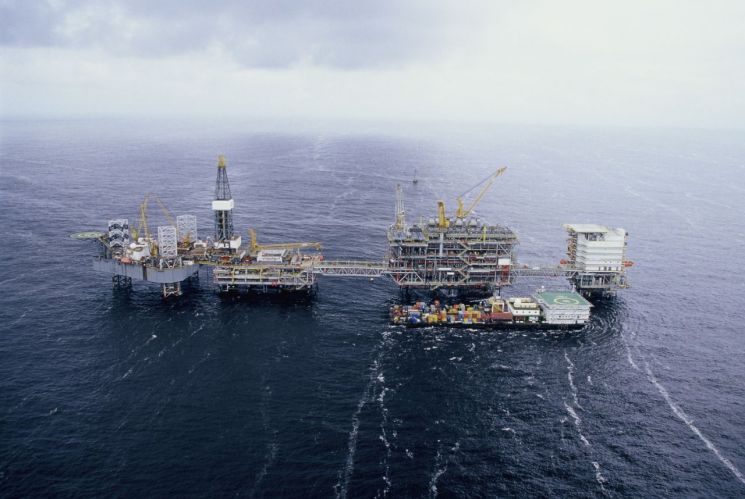
On the 2nd (local time) at the New York Mercantile Exchange, March West Texas Intermediate (WTI) crude oil closed at $88.26 per barrel, up $0.06 (0.07%) from the previous trading day. This is the highest level in about seven years since October 2014. At the London ICE Futures Exchange, March Brent crude oil briefly threatened the $90 per barrel mark during the session, closing at $89.59 per barrel, up $0.43 (0.48%) from the previous day.
The spot price of Dubai crude oil, which accounts for a large portion of domestic imports (based on the Singapore Exchange), continued its high-level march, recording $87.58 per barrel as of the 28th of last month. LNG prices also more than doubled compared to a year ago, reaching 1,088,024.12 KRW per ton in January.
Geopolitical risks such as Russia’s threat to attack Ukraine and drone attacks on oil facilities in the United Arab Emirates (UAE) have driven international oil prices upward. Notably, despite OPEC Plus (OPEC+) confirming its policy to maintain oil production increases, prices continue to soar.
"Major industries likely to be broadly affected for a considerable period"
Domestic companies are growing increasingly concerned as the rise in international raw material prices emerges as a new challenge following the spread of the COVID-19 Omicron variant and supply chain disruptions.
In particular, the airline industry, where fuel costs account for up to 30% of fixed expenses, faces mounting cost burdens as international oil prices soar. Korean Air’s fuel expenses reached approximately 1.2109 trillion KRW by the third quarter of last year, nearly matching the total fuel costs of 1.2473 trillion KRW for the entire previous year, highlighting the growing burden.
Low-cost carriers (LCCs) are even more worried. While major airlines can somewhat offset fuel costs through their thriving cargo business, LCCs, which primarily focus on passenger transport, inevitably face heavier burdens.
However, some forecasts suggest the impact may not be significant yet. Nam Min-sik, a researcher at Ebest Investment & Securities, explained, "Fuel costs for major airlines are rising, but the increase in cargo freight rates is higher, so profitability is not declining. For LCCs, the burden could increase if overseas travel resumes, but currently, passenger numbers are low, so the impact is limited."
Shipbuilding, which has been securing new orders since the start of the year, as well as major domestic export companies in the automobile and home appliance sectors, are also unlikely to benefit easily from the recent exchange rate gains due to rising raw material prices. The increase in oil prices raises cost burdens, affecting profitability.
A shipbuilding industry official said, "Iron ore prices are rising again following last year, increasing the likelihood of downward rigidity in the sales prices of steel plates. Since steel plate prices are already high, price stabilization for mutual coexistence is necessary."
The steel industry is expected to suffer even greater damage due to rising raw material prices. Fixed costs increase when oil prices rise because fuel cost adjustments are reflected in electricity rates.
Moreover, iron ore prices are also climbing, worsening the situation. The rise in iron ore prices continues amid expectations of recovering steel demand in China. Iron ore prices increased from $114.26 per ton in December last year to $128.6 per ton in January this year. Compared to previous years when prices hovered around the $80 per ton level, this is nearly a threefold increase.
A steel industry official said, "We are monitoring the price increases of factors that directly affect profitability, such as electricity and scrap metal prices. Blast furnaces that use coal as an energy source are expected to face cost pressure as coal prices are directly linked."
Professor Lee Jeong-hee of the Department of Economics at Chung-Ang University said, "Import prices affect consumer prices with about a one-month lag, so domestic prices will also rise further. Since the rise in raw material prices is a global phenomenon, it is difficult for only Korea to respond, and it will have broad and prolonged impacts on major industries such as steel, automobile, and battery sectors."
© The Asia Business Daily(www.asiae.co.kr). All rights reserved.
![Clutching a Stolen Dior Bag, Saying "I Hate Being Poor but Real"... The Grotesque Con of a "Human Knockoff" [Slate]](https://cwcontent.asiae.co.kr/asiaresize/183/2026021902243444107_1771435474.jpg)

















