The forecast that the economically active population aged 15 and over will begin to decline after 2025, one year earlier than initially expected, indicates that the labor supply shortage caused by low birth rates and aging has worsened further. Although the total economically active population has maintained an increasing trend due to extended retirement age and expanded female labor market participation, the continued slowdown in population growth suggests that the timing of labor supply reduction is approaching more rapidly.
As the population cliff caused by low birth rates rapidly reduces the working-age population, leading to a vicious cycle of declining economic productivity, there is an urgent need for effective measures to resolve this issue. In particular, the rapid structural changes in the labor market inevitably lead to an increase in involuntary unemployment and income polarization, highlighting the necessity for the government to strengthen employment service support.
According to the Ministry of Employment and Labor’s “2020?2030 Mid- to Long-Term Labor Supply and Demand Outlook” released on the 3rd, the proportion of young people in South Korea’s working-age population is expected to decline sharply due to low birth rates and aging, while the proportion of middle-aged and older workers will increase significantly. A ministry official explained, “The decrease in the economically active population was anticipated in previous forecasts, but the timing of the decline has advanced by one year,” adding, “This means the reduction in labor supply has become visible.”
Consequently, the employment growth rate is also expected to slow down. The number of employed persons aged 15 and over is projected to increase by 984,000 by 2030, showing a clear slowdown compared to the increases of 2.86 million from 2000 to 2010 and 2.872 million from 2010 to 2020. The employment rate is also forecasted to peak at 61.0% in 2025 and then decline, as the proportion of older workers rises sharply.
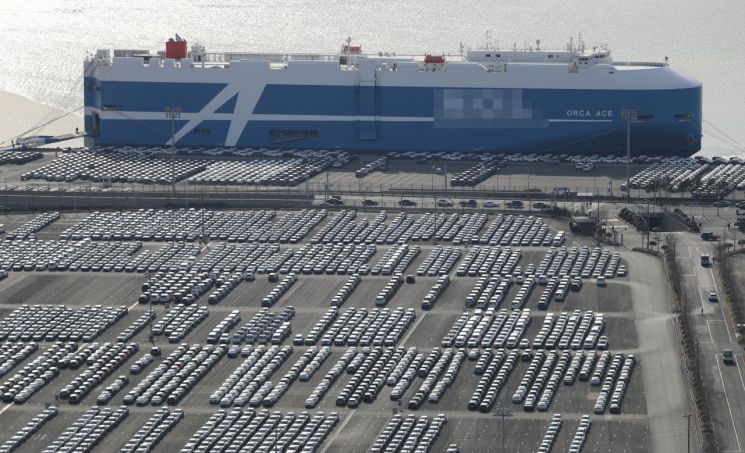
The ministry anticipates that polarization in employment across industries and occupations will deepen as the labor population shrinks. In fact, while employment in the service sector is expected to increase by 1.131 million by 2030, employment in manufacturing is projected to shift to a decline. Within manufacturing, employment in the large-scale automobile and trailer industry is expected to decrease by 88,000, which is likely to have a significant impact on the industry.
On the other hand, employment is predicted to increase in high-skilled professional roles, service jobs, simple labor, and clerical positions. A ministry official stated, “Employment among professionals is expected to grow mainly in health, social welfare, and professional science-related occupations,” but added, “Employment in sales positions will continue to decline due to aging and the shift to non-face-to-face services, and employment in machine assembly is also expected to decrease due to automation.”
If digital innovation accelerates, employment changes are likely to speed up further. In this case, the number of employed persons in high-skilled occupations with low job replacement risk will increase significantly, while the growth in low-skilled occupations will sharply decrease.
With a major structural transformation in labor by industry and occupation anticipated, there are calls for the government to prepare countermeasures. On the supply side, improvements in labor utilization such as expanding economic activity participation among the non-economically active population are required, while on the demand side, proactive responses to industrial and occupational transitions due to technological innovation through job mobility support are necessary.
A ministry official explained, “It is necessary to establish support systems such as job linkage, vocational skill development, and job matching in response to labor mobility,” adding, “While strengthening social safety nets to eliminate blind spots in social insurance that guarantee livelihoods during unemployment and retirement, efforts to nurture human capital from a mid- to long-term perspective are also needed.”
© The Asia Business Daily(www.asiae.co.kr). All rights reserved.

















