[Seoul District News] Yangcheon-gu Selected as the Only Finalist in Seoul for the Ministry of Land, Infrastructure and Transport's Small and Medium City Smart City Development Project, Securing 2 Billion KRW in National Funding, Establishing Solutions to Improve Traffic and Safety Issues in Yangcheon-gu Academy Area through Smart Technology ... Jung-gu Sindang-dong 333-38 Area 87 Plots Land Readjustment ... Gangbuk-gu Showcases Various Media Art on Uicheon Stream Walkway Providing Attractions for Residents ... Gangbuk-gu Operates COVID-19 Dedicated Integrated Call Center ... Gangseo-gu Announces '2022 Citizen-led Urban Greening Resident Proposal Project' Contest ... Eunpyeong-gu Provides Disaster Assistance to COVID-19 Affected Groups
[Asia Economy Reporter Park Jong-il] Yangcheon-gu (Mayor Kim Soo-young) announced that it has been the only district in Seoul to be finally selected in the Ministry of Land, Infrastructure and Transport's 'Small and Medium-sized City Smart City Development Project' contest, securing 2 billion KRW in national funding.
The Small and Medium-sized City Smart City Development Project is a program that supports finding solutions to urban problems through smart technology.
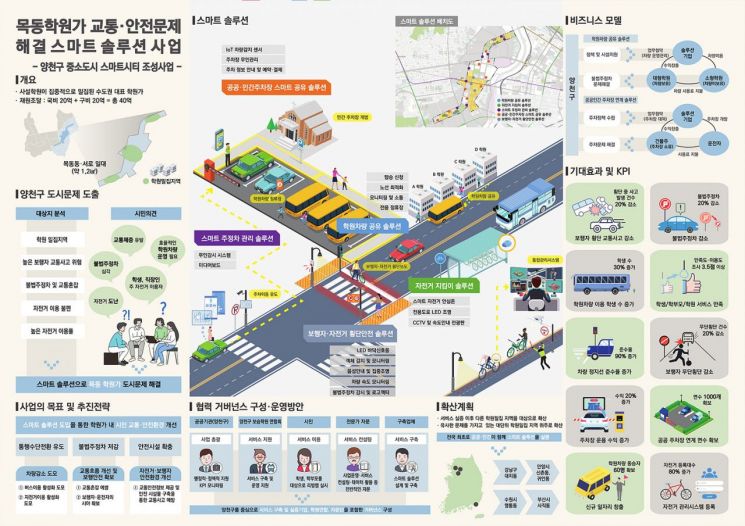
Based on its capabilities developed through various resident-experience-oriented smart projects, the district established a project plan and proposed a smart solution model in the fields of transportation and safety through the establishment of public-private governance, achieving the remarkable feat of being the only autonomous district in Seoul selected in this contest.
With this selection, the district will receive 2 billion KRW in national funding and promote the construction of solutions to improve the traffic and safety environment in the local academy district over one year, with a total budget of 4 billion KRW.
The smart solutions to be built by Yangcheon-gu are broadly categorized into five: ▲academy vehicle sharing ▲smart parking management ▲public and private parking lot smart sharing ▲bicycle guardian ▲pedestrian and bicycle crossing safety.
First, the academy vehicle sharing solution shares academy vehicles within the academy-dense area, reduces parents' vehicle operation by designing optimal routes based on operation data, and creates academy vehicle stops to provide a safe boarding environment.
The smart parking management solution recognizes the license plates of illegally parked vehicles and issues warnings via text messages and LED electronic boards, providing information on nearby shared parking lots to induce vehicle relocation.
The shortage of parking spaces will be addressed by linking public and private parking lots through the public-private parking lot smart sharing solution, increasing parking capacity within the target area.
The bicycle guardian solution operates an integrated management system based on sensors to prevent theft, establishing a smart bicycle safe zone that supports safe operation and management of bicycles.
The pedestrian and bicycle crossing safety solution provides real-time information on vehicles and pedestrians, preventing traffic violations by vehicles and supporting safe crossing for pedestrians and bicycles.
The district plans to strengthen cooperative governance operations and secure momentum for project promotion through consultations with related organizations and departments for each project, accelerating the creation of a citizen-centered smart city.
Kim Soo-young, Mayor of Yangcheon-gu, said, "We will focus administrative power to successfully promote this Small and Medium-sized City Smart City Development Project and transform Yangcheon-gu into a future city leading the smart sector."
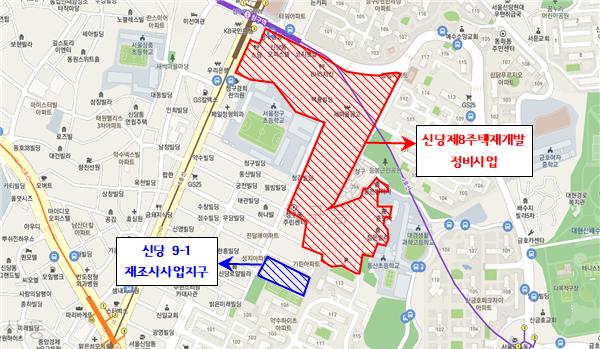
Jung-gu (Mayor Seo Yang-ho) is set to actively promote the cadastral re-survey project for 87 plots in Sindang 9-1 District (around 333-38 Sindang-dong).
The project has become tangible as the district submitted the application for project area designation to Seoul City on the 26th of last month.
The cadastral re-survey project aims to protect residents' property rights by correcting discrepancies between the actual land occupancy status and the registered cadastral records through re-surveying.
The Sindang 9-1 District area has remained a cadastral mismatch zone until recently due to buildings constructed after the Korean War armistice that did not align with cadastral boundaries. This caused inconvenience for residents in exercising land ownership rights, and land use and development requiring landowners' consent were practically impossible.
To resolve these inconveniences, the district formed a cadastral re-survey T/F team and began establishing detailed plans for the project last year.
Designation of the re-survey project area requires consent from more than two-thirds of landowners. Before asking for consent, the district held resident briefings for landowners and stakeholders within the project area last year to ensure they fully understood the project and its necessity. For residents unable to attend, a 'customized consultation reservation system' was operated, continuously communicating to gain consent.
An official from the Land Management Division of Jung-gu Office stated, "Once the project area designation is confirmed by the end of this month, we plan to finalize boundaries through boundary surveys, cadastral re-survey measurements, and owner agreements, followed by subsequent procedures such as adjustment payment calculations, aiming to complete registration organization by the end of this year."
To facilitate smooth project progress, the district opened an 'Online Communication Channel for Cadastral Re-survey Residents (Band)' on Naver on January 21. This will provide real-time updates on project progress to residents and serve as a communication space among landowners.
Seo Yang-ho, Mayor of Jung-gu, said, "Annual litigation costs of about 400 billion KRW arise from land boundary disputes. This cadastral re-survey project is expected to resolve boundary disputes among neighbors and enhance land use value. We will continuously listen to residents' opinions during the project and reflect them as much as possible."
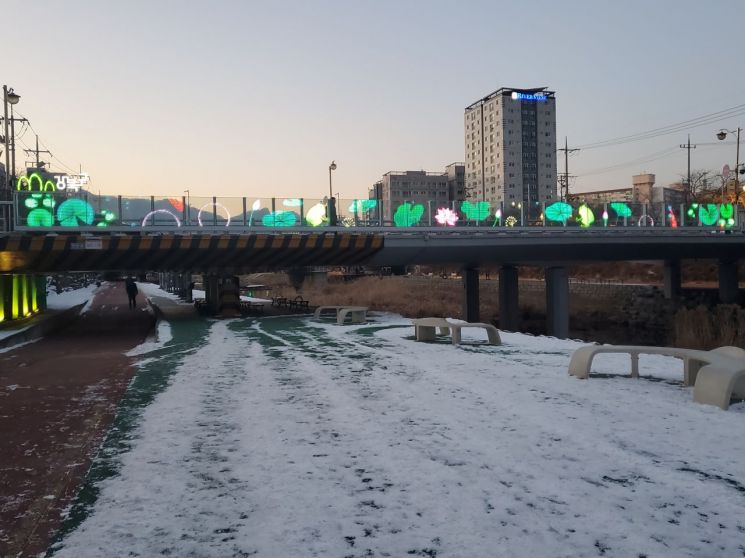
Gangbuk-gu (Mayor Park Kyum-soo) installed media glass on Beonchanggyo Bridge as part of the Uicheon Cultural and Arts Street creation project.
The media glass, installed on the railings of Beonchanggyo Bridge and operational since the 25th of last month, broadcasts various artworks from sunset until 10 p.m. When darkness falls, it presents media art works harmonizing with the surrounding scenery, establishing a special space where nature and art coexist.
Deck step lighting was also installed on the wooden deck of the nearby Uicheon stream walking trail, providing a distinctive illuminated walking path for residents strolling along Uicheon.
Park Kyum-soo, Mayor of Gangbuk-gu, said, "I hope this media glass installation offers some comfort to residents weary from the prolonged COVID-19 pandemic."

Gangbuk-gu (Mayor Park Kyum-soo) will operate a dedicated integrated call center for COVID-19 response from February 3 to June 30.
With the recent increase in inquiries related to COVID-19 prevention guidelines and home treatment, the district announced it will operate the dedicated integrated call center from 9 a.m. to 9 p.m. to provide prompt and accurate guidance.
To prevent the spread of COVID-19, the district operates screening clinics, supports home treatment, and monitors vaccine adverse reactions, but different departments handle these services, making it difficult to provide quick information to residents.
The newly established call center will deploy 13 integrated counselors to resolve these inconveniences. Through the integrated call center, residents can receive comprehensive information at once, including ▲screening clinic operating hours ▲changes in prevention guidelines ▲support available during home treatment and self-quarantine.
For any COVID-19 related inquiries, residents can call the integrated call center.
Park Kyum-soo, Mayor of Gangbuk-gu, said, "We will provide faster and more accurate guidance on COVID-19 related questions through the dedicated integrated call center and continue to strive to offer higher quality administrative services to residents."
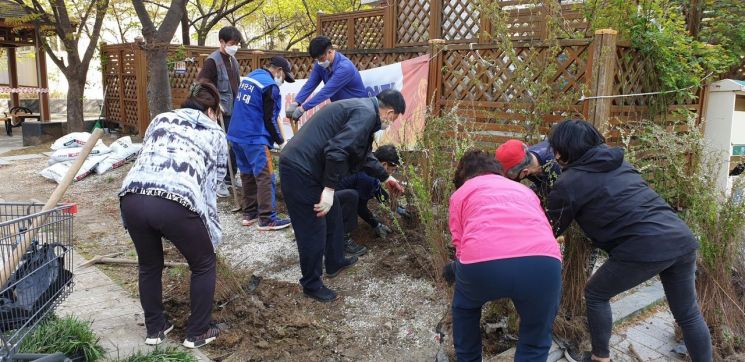
Gangseo-gu, Seoul (Mayor Roh Hyun-song) is embarking on creating a green city together with residents.
The district announced it is conducting a contest for the '2022 Citizen-led Urban Greening Resident Proposal Project' until the 11th. The purpose is to establish a culture where residents plant and nurture flowers and trees in their daily lives.
The urban greening resident proposal project supports residents who form communities of five or more people to actively participate in the entire process from selecting greening sites to greening and post-management.
The project is divided into two categories: 'Greening Material Support' which provides flowers, trees, fertilizers, and other materials needed for greening projects, and 'Subsidy Support' which provides material costs and project operation expenses to communities wishing to carry out greening projects.
The support scale is up to 2 million KRW per site for the greening material support category, and from a minimum of 5 million KRW to a maximum of 15 million KRW per site for the subsidy support category.
Applicants can apply for only one category, and those applying for the subsidy support category must secure at least 10% of the subsidy amount as self-funding.
Applicants must be communities of five or more residents living in Gangseo-gu. Those whose workplace or school is in Gangseo-gu or who conduct greening activities within Gangseo-gu can also apply. However, the representative proposer must be a resident of Gangseo-gu.
Residents wishing to participate should apply by 6 p.m. on the 11th via email or mail to the Parks and Greenery Division of Gangseo-gu Office.
Detailed information and application forms can be found on the Gangseo-gu website under 'Gangseo News - Notices/News.' Support targets and amounts will be decided comprehensively based on necessity, public interest, and voluntary resident participation, with results announced on March 8 on the Seoul City website.
An official said, "We hope the small seeds of this contest project will bloom into beautiful green spaces where residents can come together. We ask for residents' active interest and participation in this project to expand green living spaces."
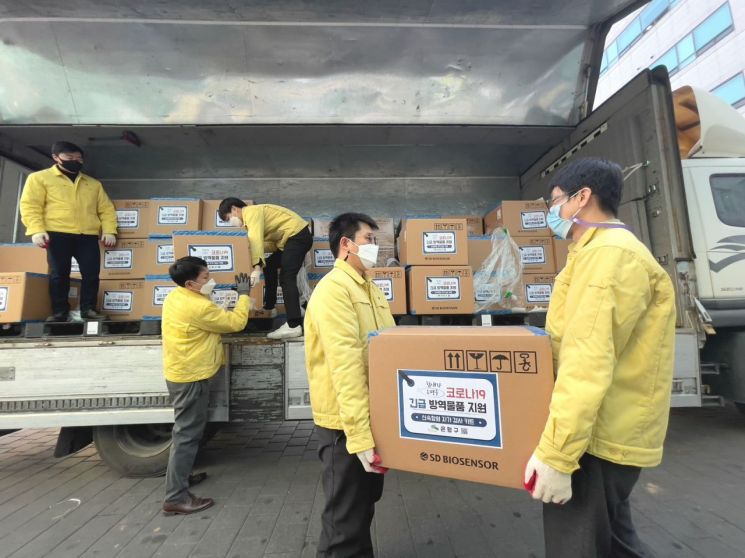
Eunpyeong-gu (Mayor Kim Mi-kyung) announced it will provide approximately 3.5 billion KRW in disaster relief funds to vulnerable groups suffering economic difficulties due to the prolonged COVID-19 pandemic.
With the postponement of phased daily recovery and the reimplementation of social distancing, local economic difficulties have continued, and the district decided to provide disaster relief funds fully funded by the district to strengthen the social safety net.
The district will identify blind spots among vulnerable groups excluded from government and Seoul City disaster relief funds and provide more thorough and substantial support. The support targets are 5,671 individuals and 1,690 facilities affected by COVID-19.
By category, support includes ▲500,000 KRW employment support for unemployed youth ▲500,000 KRW for closed small business owners ▲1 million KRW for kindergartens ▲1 million KRW for local children's centers ▲1 million KRW for daycare centers ▲up to 1 million KRW for elderly care facilities ▲10 million KRW for village bus companies, among others.
Although included in government and Seoul City support targets, additional support measures have been prepared for places requiring response due to cumulative damage considering the special nature of quarantine.
Support includes ▲400,000 KRW for taxi drivers ▲support for quarantine supplies for vulnerable facilities such as religious facilities, nursing homes, daycare centers, facilities for the disabled, and elderly welfare facilities.
The district began distributing disaster relief funds to daycare centers and elderly care facilities among additional support targets on January 28, with plans to promptly provide funds to other targets following detailed criteria determination.
Application methods and periods for disaster relief funds will be announced later on the district website.
Additionally, the district will distribute 'rapid antigen self-test kits' to 38,000 children aged 12 and under, including daycare, kindergarten, and elementary school students.
This measure aims to block the early spread of Omicron and protect children, a vulnerable group, to establish a safe childcare environment.
An official said, "Despite difficult financial conditions due to prolonged quarantine, we have tried to support where it is most needed. We hope the disaster relief funds will help overcome the difficult times caused by COVID-19. We will continue to do our best to ensure no one is left out of support for COVID-19 damage."
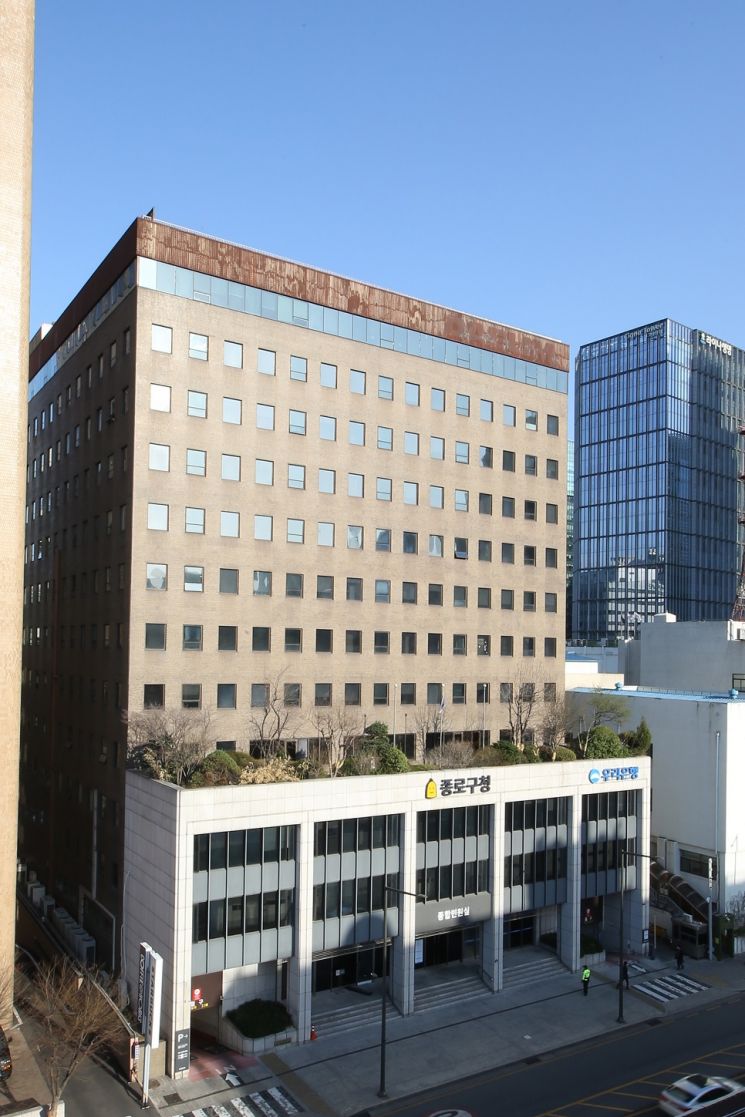
Jongno-gu will implement the 'Illegal Mobile Advertising Collection Reward System' starting in March, paying a certain amount to residents who remove illegal banners or posters, and is recruiting residents to participate in cleanup activities.
The Illegal Mobile Advertising Collection Reward System aims to create a pleasant street environment by cleaning up various illegal advertisements that not only spoil the urban landscape but also threaten pedestrian safety, while contributing to local job creation.
Since residents directly participate in cleanup, rapid collection activities are possible even on weekends, holidays, or at night, expected to be effective in blind spots and habitual illegal mobile advertising areas.
The district plans to pay participants rewards based on collection performance: 1,000 to 2,000 KRW per banner depending on type, up to 3 million KRW per person per month, and 100 to 200 KRW per poster within a monthly maximum of 400,000 KRW.
Participants must be Jongno-gu residents aged 19 or older (limited to one person per household), with priority given to vulnerable residents.
The district will recruit a total of 30 participants from February 7 to 18 through local community centers or the Urban Design Division of the district office. Results will be individually notified in February.
Selected participants must attend safety education in February covering safety rules, work methods, cleanup targets and scope, and reward payment conditions. Those who complete the education will receive an enforcement officer ID and be enrolled in group insurance to prepare for possible safety accidents.
For more details on recruitment for the Illegal Mobile Advertising Collection Reward System, contact the Advertising Cleanup Team in the Urban Design Division.
Last year, Jongno-gu also conducted the reward system, selecting 22 enforcement officers and cleaning about 240,000 illegal banners and posters, improving the urban landscape.
An official said, "Since residents familiar with the area directly participate in cleanup, illegal banners and posters in blind spots within the district can be thoroughly removed, and rapid cleanup is possible even on holidays. We will continue to strive to secure pedestrian safety and create a pleasant living environment."
© The Asia Business Daily(www.asiae.co.kr). All rights reserved.



















