Interview with Seok Jeong-ho, CEO of MindsAI, a Non-Face-to-Face Mental Health Analysis Company
Extracting and Analyzing Stress Hormone Cortisol from Saliva to Improve Depression Screening Accuracy
"A Colleague Passed Away from Depression, Started Research to Prevent Suicide"
Two Mental Health Software Products, Industry-First Simultaneous Approval for Diagnosis and Treatment Clinical Trials by MFDS
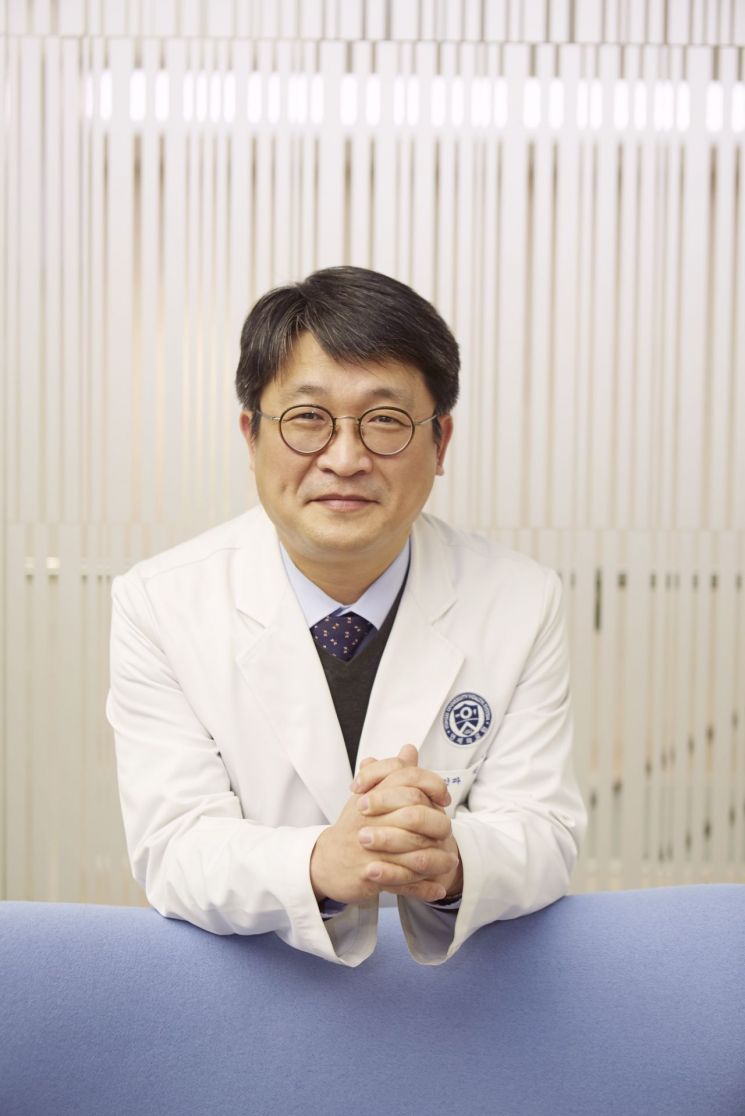 Professor Seok Jeong-ho of the Department of Psychiatry at Yonsei University Gangnam Severance Hospital, who has started a direct non-face-to-face mental health analysis company for the expanding non-face-to-face culture due to COVID-19 and the increasing number of depression patients, explains that analyzing stress hormones in saliva can overcome the limitations of in-person consultations and improve the accuracy of depression diagnosis.
[Asia Economy Reporter Kim Heeyoon] The prolonged COVID-19 pandemic has pushed one in five citizens into a state of depression risk. According to the “2021 COVID-19 National Mental Health Survey” released by the Ministry of Health and Welfare, the proportion of people at risk of depression in the fourth quarter of last year was 18.9%. In the first quarter, it recorded the highest rate at 22.8%. The Ministry analyzed that “the prolonged COVID-19 situation and continued social distancing measures likely had an impact.”
Although the number of depression patients is increasing, the process leading to actual treatment remains difficult. Professor Seok Jeongho of the Department of Psychiatry at Yonsei University Gangnam Severance Hospital diagnosed, “Patients want detailed explanations from doctors, and doctors also want quality consultations with patients, but due to lack of time and low consultation fees, treatment mainly proceeds with medication. Introducing digital technology can enable more efficient treatment.”
To solve these issues experienced during clinical practice, Professor Seok founded the mental health service startup “MindsAI,” which utilizes biomarker technology and artificial intelligence (AI). The company’s core technology enhances diagnostic accuracy by adding biomarker-based diagnosis to the existing psychological assessments that determine conditions ranging from mild depression, which interferes with daily life, to severe depression with high suicide risk, all within the spectrum of depression that has “a thousand faces.”
Generally, biomarkers are indicators that can detect changes inside the body using proteins, DNA, RNA, metabolites, etc. MindsAI uses salivary hormone levels for diagnosis. Regarding the psychological evaluation software “MindsNavi,” Professor Seok explained, “We remotely collect and measure cortisol, a stress hormone in saliva, and comprehensively evaluate the analyzed biological markers. Based on stress hormone analysis combined with patient psychological data, we improve diagnostic accuracy and assist doctors by showing objective figures to patients who blame themselves for their depression, helping them escape stigma.”
MindsNavi comprehensively evaluates psychological questionnaires and biological markers analyzed from salivary hormone levels, then presents results in four stages: Good (Green), Borderline (Yellow), Caution (Orange), and Suspected Disease (Red). This has been recognized for improving the accuracy of screening subtypes of depression with high suicide risk.
The company is also developing “Healing Forest,” an emotional disorder treatment software using virtual reality (VR) programs to reduce suicide risk and treat depression. Professor Seok said, “Healing Forest conducts self-assessments using VR based on theories such as overcoming childhood trauma, suicide impulse control, mind-reading theory, and dialectical behavior therapy for patients with major depressive disorder. Through this, education and training programs are conducted together in VR to support emotional disorder assessment and personalized treatment.”
Based on expertise in psychological evaluation and depression treatment, MindsAI received approval from the Ministry of Food and Drug Safety at the end of last year for clinical trial plans evaluating the efficacy and safety of both programs. This is the first case in Korea where diagnostic and treatment programs were simultaneously approved for clinical trials among digital medical devices. Earlier in August last year, the company attracted seed investment from Stonebridge Ventures, Bluepoint Partners, and others, recognizing the potential of its non-face-to-face depression diagnosis technology. Professor Seok emphasized, “When I was a first-year resident, two close friends passed away due to depression. I wondered if I could have prevented their deaths had I recognized their psychological states earlier, which led me to research depression. As the number of depression patients increases due to the prolonged COVID-19 pandemic, I will continue research and development combining non-face-to-face diagnosis, counseling, and AI technology to improve diagnostic accuracy and contribute to suicide prevention.”
© The Asia Business Daily(www.asiae.co.kr). All rights reserved.

















