Last Year's Export Amount $2.713 Billion... 60% Increase YoY
Ulsan Buk-gu, Leading Since 2017, Drops to 2nd Place
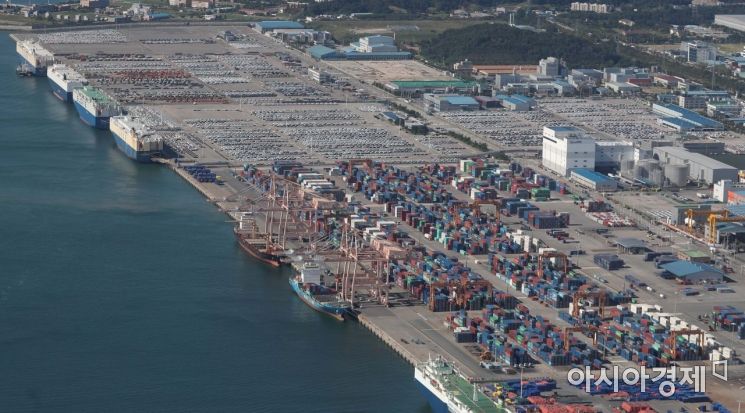
[Asia Economy Reporter Choi Dae-yeol] Last year, the city that exported the most electric vehicles in South Korea was Hwaseong, Gyeonggi Province. Kia's main electric vehicle models, the Niro and the first dedicated platform EV6, are produced at Hwaseong Plant 2 and Plant 3, respectively.
With a significant increase in export volumes to European countries including the UK, as well as a rise in exports to the United States, Hwaseong has become the largest electric vehicle export base in South Korea. Ulsan Buk-gu, which had held the top spot for four consecutive years since 2017 backed by Hyundai Motor's factory, dropped to second place.
According to the export-import status by local governments compiled by the Korea International Trade Association on the 31st, Hwaseong's electric vehicle (based on MTI 4-digit code) export value last year was $2.713 billion, the highest among domestic local governments, representing about a 60% increase compared to the previous year. The export value of Ulsan Buk-gu, ranked second, was $2.65 billion, up 42% during the same period. Hyundai Motor's Ulsan plant produces and exports overseas models such as Kona EV and Ioniq 5 (Plant 1), Genesis GV60 (Plant 2), and Ioniq electric vehicles (Plant 3).
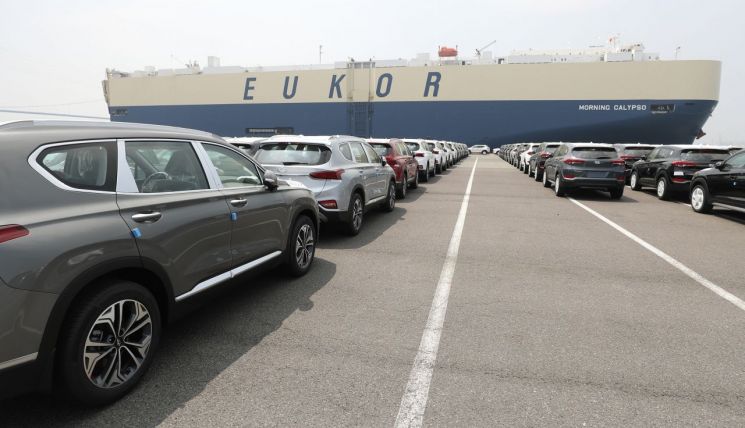
Kia Hwaseong Plant and Hyundai Motor Ulsan Plant are traditional frontline bases for automobile exports, shipping vehicles directly overseas after production. The electric vehicle export values from these two regions account for 95% of South Korea's total electric vehicle exports. The third largest export region was Seo-gu, Gwangju, where the Kia Soul EV is manufactured. Last year's export value was $241 million, showing a noticeable gap compared to the first and second places.
In 2015 and 2016, when there were fewer electric vehicle models, Kia Gwangju Plant's export value accounted for most of the country's electric vehicle exports. However, from 2017, as Hyundai's exports increased, Ulsan Buk-gu emerged as the largest electric vehicle export region. Ulsan Buk-gu maintained the top spot from 2017 to 2020 but lost first place to Hwaseong last year.

South Korea's overall automobile exports have experienced some fluctuations due to factors such as COVID-19 and overseas production by domestic companies, but electric vehicle exports have surged annually. Domestic electric vehicle export value was just over $300 million in 2016, but five years later, last year, it rose approximately 18 times to $5.649 billion.
The volume of exports to Europe, where demand for electric vehicles is rapidly increasing, has grown significantly. By country, the largest export volume was to the UK, followed by Germany. The United States, which has been actively promoting electric vehicle adoption since President Joe Biden took office last year, ranked third. This year's electric vehicle export performance is expected to depend on how well new models such as the Ioniq 5 and EV6, which began full-scale overseas sales in the second half of last year, perform in Europe and the US.
Unlike major countries where not only central governments but also local governments are actively competing to attract next-generation mobility production facilities such as electric vehicle and battery plants, there is no significant movement domestically. Rather, the gap in opinions between companies and labor unions makes it difficult to convert existing internal combustion engine plants' facilities.
© The Asia Business Daily(www.asiae.co.kr). All rights reserved.

![User Who Sold Erroneously Deposited Bitcoins to Repay Debt and Fund Entertainment... What Did the Supreme Court Decide in 2021? [Legal Issue Check]](https://cwcontent.asiae.co.kr/asiaresize/183/2026020910431234020_1770601391.png)