Find Designated Hospitals for Expert Rapid Antigen Tests
Negative Results Lead to General Prescriptions, Positive Results Require PCR Tests
Oral Treatments and Home Care Also Available at Local Clinics
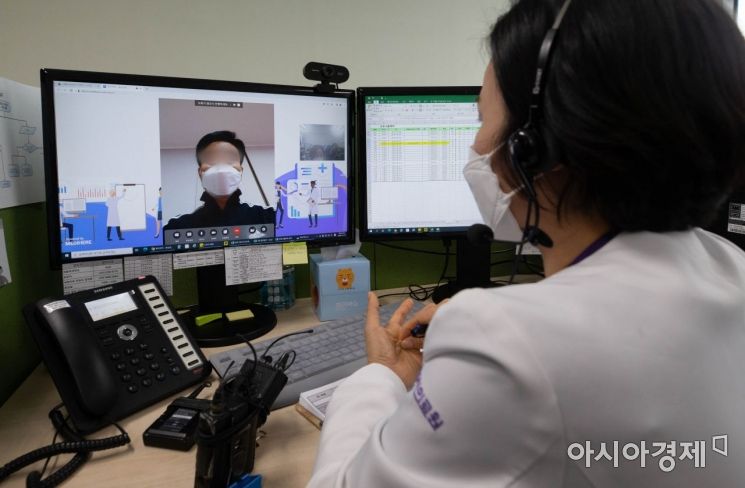 On the afternoon of the 19th, medical staff at the Home Treatment Situation Room of Seongnam Medical Center in Seongnam-si, Gyeonggi Province, are conducting non-face-to-face consultations with COVID-19 home treatment patients. If the medical staff determine that Paxlovid administration is necessary through the non-face-to-face consultation, they can prescribe it to the patient. Pharmacies receiving the prescription then prepare the medication and deliver it to the patient. 2022.01.19 Photo by Joint Press Corps
[Asia Economy Reporter Lee Gwan-ju] Starting from the 3rd of next month, immediately after the Lunar New Year holiday, COVID-19 treatment medical institutions will be expanded to include local clinics. The government plans to operate initially focusing on 413 nationwide respiratory-specialized clinics and gradually expand the participation of local clinics and hospitals. The Korean Medical Association has also announced its intention to encourage at least 1,000 medical institutions to participate in COVID-19 diagnosis and treatment.
Until now, if COVID-19 was suspected, individuals visited screening clinics set up at local public health centers to undergo polymerase chain reaction (PCR) testing, and if tested positive, they received treatment either through home care or were transferred to residential treatment centers or dedicated hospitals based on health authorities' decisions. The core change is to shift this system so that local clinics take the lead in diagnosis, treatment, and prescription based on professional rapid antigen tests (RAT). This transition centers COVID-19 diagnosis and treatment around local clinics in response to the Omicron variant's widespread outbreak.
Suspected patients showing COVID-19 symptoms can visit designated hospitals to receive professional rapid antigen tests. It is recommended to wear a KF94 mask when visiting medical institutions, travel by private car rather than public transportation whenever possible, and minimize conversation. Upon arrival at the hospital, body temperature is measured, respiratory symptoms are checked, and then registration is completed. If the hospital has separate waiting areas divided by partitions for respiratory/fever patients and general patients, patients should wait in the designated area; if physical separation is difficult, patients should maintain distance while waiting.
If medical staff determine that a COVID-19 test is necessary, the suspected patient will undergo a rapid antigen test. If there is a separate specimen collection room, the test is conducted there; otherwise, it is performed in a ventilated and disinfected examination room. Medical staff must wear four types of personal protective equipment, and if the test result is positive or respiratory droplets from the patient are present, the equipment must be disposed of.
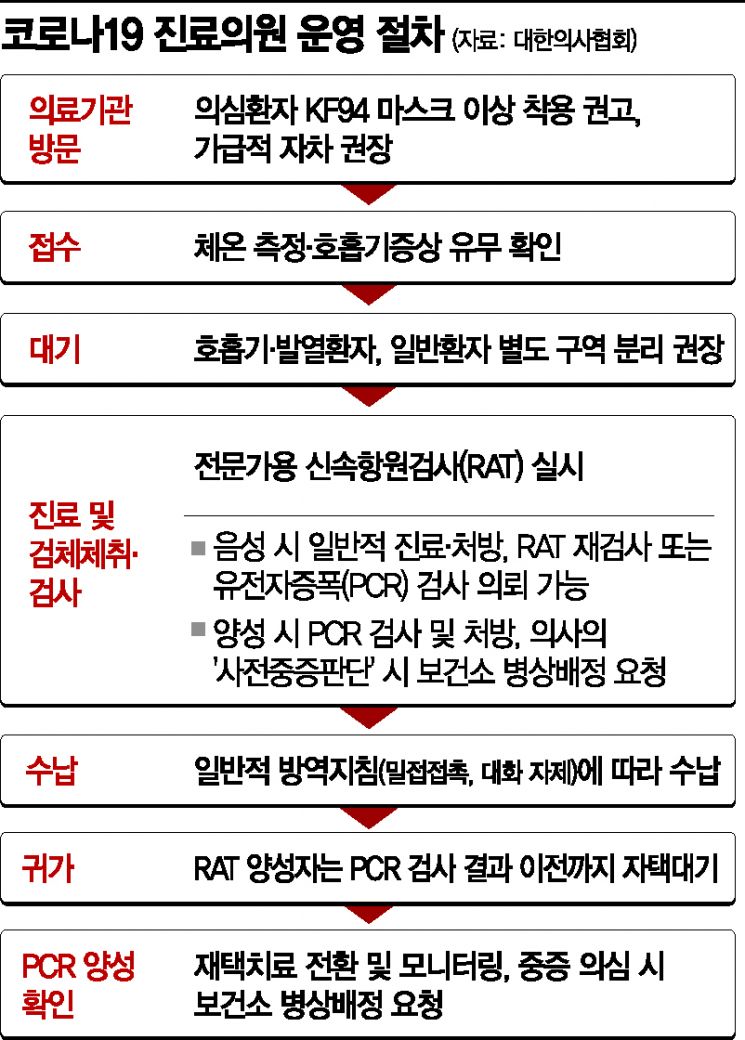
Patients wait separately until the test results are available, which usually takes 15 to 30 minutes. If the result is negative, patients receive prescriptions following standard procedures and return home. However, medical staff may recommend retesting or, in exceptional cases, request a polymerase chain reaction (PCR) test.
If the result is positive, a PCR test must be taken. If self-testing is possible, it is done at the medical institution; otherwise, testing is conducted at screening clinics or similar facilities. If the PCR test also returns positive, patients receive oral antiviral treatment and undergo home care, or if severe symptoms are suspected, they can request bed allocation from the public health center for transfer. Medical institutions disinfect surfaces in areas where positive patients stayed and ventilate for a certain period to prevent further infection risks.
Patients who test positive on the rapid antigen test should avoid using public transportation, minimize close contact with others, refrain from conversation, and comply with quarantine guidelines when returning home. They must also remain at home until PCR test results are available. Home care is conducted at the hospital where diagnosis and prescription were made. For low-risk general management patients, once-daily telephone monitoring is permitted.
However, since not all hospitals provide COVID-19 diagnosis and treatment, patients must confirm in advance whether the hospital is designated. Lists of respiratory-specialized clinics and designated clinics and hospitals can be checked from the 2nd of next month on the Health Insurance Review & Assessment Service website, the 'Coronavirus-19 website,' and portal site maps.
© The Asia Business Daily(www.asiae.co.kr). All rights reserved.
![User Who Sold Erroneously Deposited Bitcoins to Repay Debt and Fund Entertainment... What Did the Supreme Court Decide in 2021? [Legal Issue Check]](https://cwcontent.asiae.co.kr/asiaresize/183/2026020910431234020_1770601391.png)