'Yundojang' Honorary Holder Recognized "Acknowledging Past Activities and Contributions"
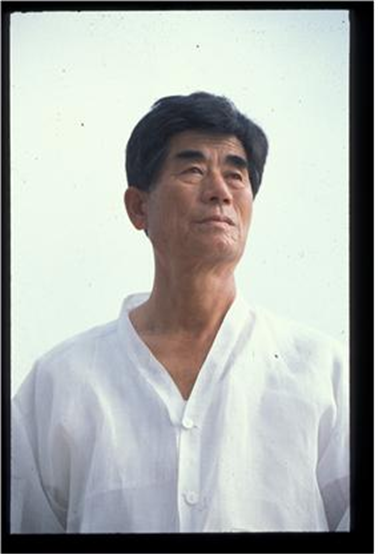
Kim Jong-dae (88), who has been making the traditional compass 'Yundo (輪圖)', has been recognized as an honorary holder. On the 28th, the Cultural Heritage Administration announced that Kim, the holder of the national intangible cultural asset 'Yundojang', has been acknowledged as an honorary holder. Kim devoted his life to the transmission and dissemination of Yundojang by passing down the techniques inherited from his father. A Cultural Heritage Administration official stated, "Due to his advanced age, it has become difficult to produce precise works and actively transmit the craft," adding, "We want to honor his past activities and contributions."
Yundo is a traditional scientific instrument reflecting Eastern cosmology and worldview, including astronomy and the theory of yin-yang and the five elements. It is estimated to have been used since the Three Kingdoms period, when astronomy was highly developed. It became widely distributed from the Joseon Dynasty. It was mainly used by sailors, travelers, farmers, and geomancers (jigwan, 地官) who sought directions for houses or burial sites.
Yundo is divided into 1 to 36 layers according to concentric circles around the central magnetic needle (jachim, 磁針). Each layer is arranged by combining yin-yang, the five elements, and the eight trigrams. The most commonly used form was the 7 to 9-layer flat iron plate (pyeongcheol, 平鐵), which is a wide and flat compass without special decorations. During the Joseon Dynasty, a 2 to 3-layer compass called seonchu (扇錘), a portable compass attached to a summer fan, was also used.
The most typical form, pyeongcheol, is made through several processes including shaping, determining the center and number of layers, engraving characters, applying ink, refining the central circle, applying powdered jade, coating with cinnabar (jusa, 朱砂, red stone powder), and making the needle. The core technique is engraving (gakja, 刻字), which requires a high level of concentration.
Kim was recognized as the holder of 'Yundojang' in 1996 for his authenticity in the use of materials and tools in each process, as well as his excellent craftsmanship and completeness. In particular, his work engraving characters on jujube wood and carving steel to make needles that are then placed on the compass was praised for its delicacy and precision. His son, Kim Hee-su, who inherited these skills, was recognized as a holder last month and is actively carrying on the tradition.
© The Asia Business Daily(www.asiae.co.kr). All rights reserved.

![User Who Sold Erroneously Deposited Bitcoins to Repay Debt and Fund Entertainment... What Did the Supreme Court Decide in 2021? [Legal Issue Check]](https://cwcontent.asiae.co.kr/asiaresize/183/2026020910431234020_1770601391.png)














