2021 Annual Total Industry Production Up 4.8% and Facility Investment Up 9%
Recovery This Year Uncertain Due to Omicron Spread, US Tightening, and Ukraine Crisis
[Asia Economy Sejong=Reporter Kwon Haeyoung] Despite the impact of COVID-19, last year’s annual total industrial production increased by 5%, and facility investment rose by 9%. Consumption also grew significantly, achieving a 'triple increase'?simultaneous growth in industrial production, consumption, and investment?for the first time in four years since 2017. However, with the spread of the COVID-19 variant Omicron, tightening monetary policies in major countries, and economic uncertainties caused by the Ukraine crisis, it remains uncertain whether this recovery trend will continue this year.
According to the 'December 2021 and Annual Industrial Activity Trends' released by Statistics Korea on the 28th, the annual total industrial production index for 2021 was 112.5, up 4.8% compared to the previous year. Although it recorded a negative growth for the first time since statistics began a year earlier, it rebounded due to economic recovery, showing the largest increase in 11 years since 2010 (6.5%).
Supported by semiconductors and machinery equipment, manufacturing production increased by 6.9%, driving total industrial production. Service industry production also rose by 4.3% year-on-year, with finance and insurance, wholesale and retail sectors maintaining growth, and face-to-face industries improving due to expanded vaccination efforts, resulting in increases across all sectors. The average operating rate of manufacturing was 74.3%, up 4.3% from the previous year.
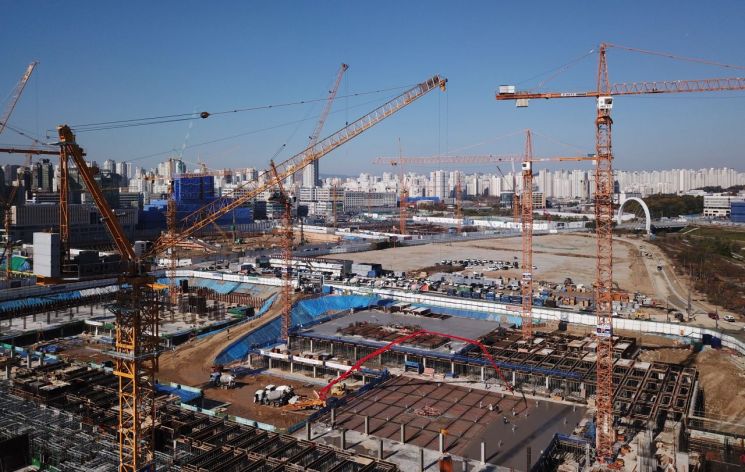
Facility investment increased by 9% year-on-year, driven by increased investment in machinery such as special industrial machinery. Construction performance declined by 4.9% due to decreased construction achievements. Retail sales, which indicate consumption trends, also rose by 5.5%, marking the largest increase since 2010 (6.7%). This was attributed to increased outdoor activities and outings following expanded vaccination, leading to higher sales of shoes, bags, and clothing.
Oh Woonseon, Director of Economic Trend Statistics at Statistics Korea, explained, "The simultaneous increase in industrial production, consumption, and investment is not merely a base effect from the deteriorated indicators in 2020 due to COVID-19, but rather reflects a strong economic recovery last year."
The problem is that the economic outlook for this year is not optimistic. The coincident index cyclical component, which indicates the current economy, rose by 0.7 points to 102.1, but the leading index cyclical component, which predicts future economic conditions, fell by 0.2 points to 101.2, continuing a decline for six consecutive months since July.
Hong Namki, Deputy Prime Minister and Minister of Economy and Finance, posted on his Facebook on the same day, stating, "While concerns about domestic demand persist due to social distancing and the spread of Omicron, externally, uncertainties continue with heightened geopolitical tensions such as Russia-Ukraine and accelerated tightening of monetary policies in major countries." He diagnosed, "The Business Survey Index (BSI) fell significantly for the first time in four months, and financial market volatility has greatly expanded, making difficult conditions visible in sentiment and leading indicators." He emphasized, "The government will closely monitor related trends to ensure the rapid and strong recovery of our economy continues, do its best to stabilize quarantine measures, and focus on proactively managing domestic and external risks."
© The Asia Business Daily(www.asiae.co.kr). All rights reserved.
![User Who Sold Erroneously Deposited Bitcoins to Repay Debt and Fund Entertainment... What Did the Supreme Court Decide in 2021? [Legal Issue Check]](https://cwcontent.asiae.co.kr/asiaresize/183/2026020910431234020_1770601391.png)