As COVID-19 Increases Self-Employed Business Closures,
'Startup Consulting' Scams Resurge
From Key Money Undervaluation to Upfront Commission Demands
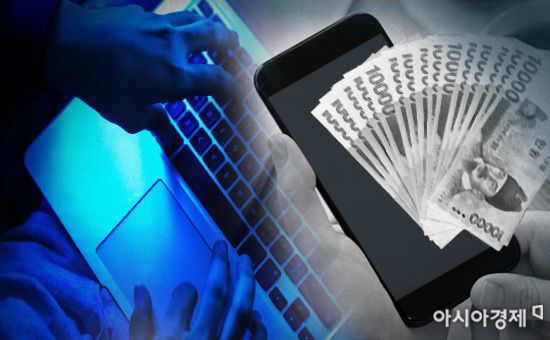
[Asia Economy Reporter Song Seung-yoon] "Boss, you’re looking into transferring your store, right?"
Lee Jun-mo (35, pseudonym), who runs a Japanese-style bar in Seomyeon, Busan, put his store up for sale after struggling with decreased sales due to COVID-19. Lee posted ads for transferring his business on real estate and self-employed online communities, and one day he received a call from a company claiming to be a ‘startup consulting’ firm.
They persuaded him to entrust them with all the tasks related to transferring the store, promising to sell his store at a price higher than the original key money. Their condition was that if they succeeded in raising the key money, the company would take a portion of the difference. They also said that Lee had to pay 10% of the contract deposit as a fee in exchange for selling the store within three months. Wanting to dispose of the store as soon as possible to minimize losses, Lee was tempted by this offer. However, after hanging up and searching online, he soon realized that such calls were fraudulent. Similar cases of victims who lost money after making payments following such calls flooded self-employed online communities.
Startup consulting scams that double-victimize self-employed people struggling with the prolonged COVID-19 pandemic are spreading again.
A few years ago, it was common to approach prospective entrepreneurs with low-cost, high-profit fake listings, falsely presenting expected sales and required capital, then selling the store. There were also cases where the seller and the scammer colluded to inflate the key money and, upon successful sale, the scammer took a portion of the inflated key money as a success fee. It was also common to receive fees from both sides or to deceive the seller by undercutting the key money and pocketing the difference. This was possible because the methods for calculating key money varied and there were no related regulations. Recently, as more people look to transfer their stores due to COVID-19, cases have emerged where scammers take advance payments and then disappear or ignore the clients.
A former employee of a startup consulting company said, "The first thing we do when we come to work in the morning is to call each store marked on the map and urge them to sell their stores," adding, "The structure is such that the scammer profits only if they extract money in some way, so they operate with the mindset of ‘just catch one person.’"
A representative of the self-employed community ‘Apeunikka Sajangida’ (Because It Hurts, You’re the Boss), which has 900,000 members, said, "We block such operators through keyword searches to prevent damage in the cafe, but many approach individuals after seeing listings posted by self-employed people," and advised, "Since similar damage cases have been increasing recently, it is especially important to be cautious if you receive suspicious contacts first."
© The Asia Business Daily(www.asiae.co.kr). All rights reserved.
![User Who Sold Erroneously Deposited Bitcoins to Repay Debt and Fund Entertainment... What Did the Supreme Court Decide in 2021? [Legal Issue Check]](https://cwcontent.asiae.co.kr/asiaresize/183/2026020910431234020_1770601391.png)















