Increase in Nationwide Weekly Average Gasoline Prices 10 Weeks After Fuel Tax Cut
Rising International Oil Prices... Demand Up, Supply Disruptions
Daily Prices Reach 1700 Won Range from Seoul to Jeju
Seoul Gasoline at 1720 Won... 20 Won Increase from Previous Week
 Due to the rise in international oil prices, gasoline prices at gas stations in Seoul have increased for the fourth consecutive week on the 17th, with prices exceeding 2,000 won at a gas station in the city. Photo by Dongju Yoon doso7@
[Asia Economy Reporter Hwang Yoon-joo] Due to the unstable international situation, international oil prices have surged, weakening the impact of the fuel tax reduction measures. Domestic gasoline prices have turned upward after 10 weeks, rising back to the 1,700 won range not only in Seoul but also in Jeju. There are concerns that if international oil prices continue to rise, the fuel tax reduction benefits could be offset, increasing the burden on the low-income economy.
According to the Korea National Oil Corporation’s oil price information service OPINET as of 9 a.m. on the 24th, the gasoline price in Jeju was recorded at 1,710 won. This is the first time in 49 days since December 7 last year (1,709.3 won). Among the 17 cities and provinces nationwide, only Jeju and Seoul have recorded gasoline prices in the 1,700 won range. In particular, Seoul’s price rose by 20 won compared to last week (10 a.m. on the 17th), reaching 1,720 won.
The weekly average price trend has also changed. Last week (the third week of January), the nationwide average gasoline price at gas stations was 1,632.0 won. It turned upward 10 weeks after the fuel tax reduction was implemented on November 12 last year. The weekly average price in Seoul had continuously declined from 1,885.3 won before the fuel tax cut but rebounded to 1,690.7 won after 9 weeks. Last week, it reached 1,703.7 won, marking the first time among major cities to hit the 1,700 won range.
The upward trend in gasoline prices is expected to continue for the time being. Market experts have raised their forecast for international oil prices this year from the previous $60?90 to $70?95 per barrel, influenced by increased demand and supply disruptions.
Kim So-hyun, a researcher at Daishin Securities, analyzed, "While concerns over Omicron have eased and economic activities have resumed, increasing crude oil demand, supply disruptions and geopolitical risks have acted as upward factors. Although the Omicron variant has a high infection rate, it is less severe, and its economic impact is limited, so the decrease in crude oil demand is expected to be limited."
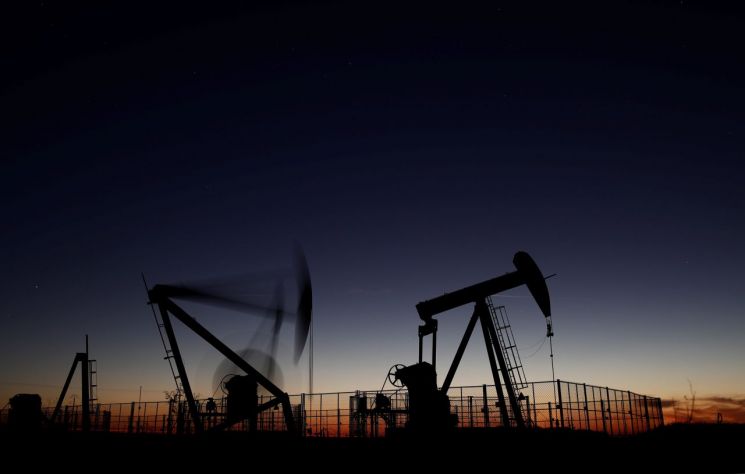
In fact, the International Energy Agency (IEA) and the U.S. Energy Information Administration (EIA) have judged the impact of Omicron to be more limited than expected and have raised their crude oil demand forecasts for this year by 200,000 barrels per day and 60,000 barrels per day, respectively.
Crude oil supply has fallen short of expectations. According to the IEA, OPEC+ crude oil production increased by only 250,000 barrels per day in December. OPEC+ is producing 790,000 barrels per day less than originally planned. This is because Nigeria, Angola, Malaysia, and Russia failed to meet their target production volumes.
Geopolitical risks are also cited as a cause of supply disruptions. Shim Soo-bin, a researcher at Kiwoom Securities, explained, "Amid the reemergence of tight supply and demand conditions, concerns over crude oil supply disruptions have increased due to tensions between Russia and Ukraine and attacks on oil facilities in the United Arab Emirates by Yemen’s Houthi rebels." He added, "The persistence of geopolitical risks and the expectation that crude oil supply and demand conditions will not change significantly in the first quarter are factors that increase additional upward pressure on oil prices."
As oil prices are expected to continue rising, there are concerns that the burden on the low-income economy will increase further when the fuel tax reduction measure ends on April 30.
© The Asia Business Daily(www.asiae.co.kr). All rights reserved.

![User Who Sold Erroneously Deposited Bitcoins to Repay Debt and Fund Entertainment... What Did the Supreme Court Decide in 2021? [Legal Issue Check]](https://cwcontent.asiae.co.kr/asiaresize/183/2026020910431234020_1770601391.png)