Korea Federation of SMEs to Hold Meeting with Manufacturers on 24th
Urges Joint Efforts by Government, National Assembly, and Workers
"Exemption Clauses Needed if No Intentional or Gross Negligence"
"Focus Only on Employer Punishment... Obligations Must Be Specified"
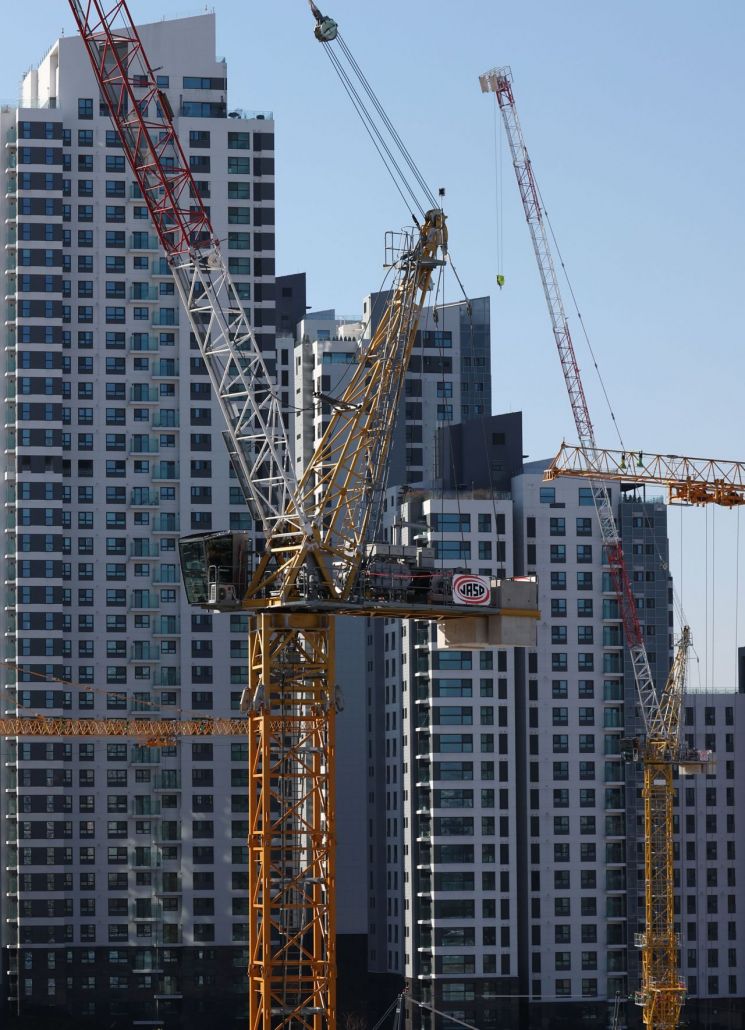
"We also want to receive industrial accident prevention consulting and hire specialized personnel like large corporations. However, after going through the COVID-19 tunnel, the reality of barely maintaining even our current jobs due to increased loans is by no means easy."
On the morning of the 24th, three days before the enforcement of the Serious Accidents Punishment Act, the Korea Federation of Small and Medium Business (Kbiz) held an on-site meeting at a manufacturing company located in Cheonan, Chungnam. Starting from the 27th, the Serious Accidents Punishment Act will apply to workplaces with 50 or more regular employees. This meeting was organized to convey the voices of small and medium-sized enterprises (SMEs) feeling confusion and anxiety, and to urge joint efforts from the government, the National Assembly, and workers.
The SME sector expressed that above all, the legal obligations for business owners are ambiguous, causing many SMEs to struggle with preparations. Lee Hoseok, co-chairman of the Labor and Workforce Committee at Kbiz, stated in an appeal, "Even now, SMEs are frustrated because they do not know what and how to do, trembling with anxiety that they could become lawbreakers at any time." He added, "The level of punishment is the highest in the world, but in a reality where no one can confidently say they can fully comply with the law, SMEs inevitably become intimidated."
The SME sector appealed to the government to support budgets for facility improvements and hiring specialized personnel for industrial accident prevention. They requested the National Assembly to establish provisions that exempt business owners from liability if there is no intentional or gross negligence. They also urged workers to actively cooperate on-site to create a safe workplace by adhering to safety rules.
Joo Bowon, co-chairman of the Labor and Workforce Committee, also argued on-site for easing the punishment level for business owners and specifying the mandatory obligations. He pointed out, "Industrial accidents are an area where causal relationships are difficult to clearly establish, but the Serious Accidents Punishment Act focuses excessively on punishing business owners, including a minimum imprisonment term of one year."
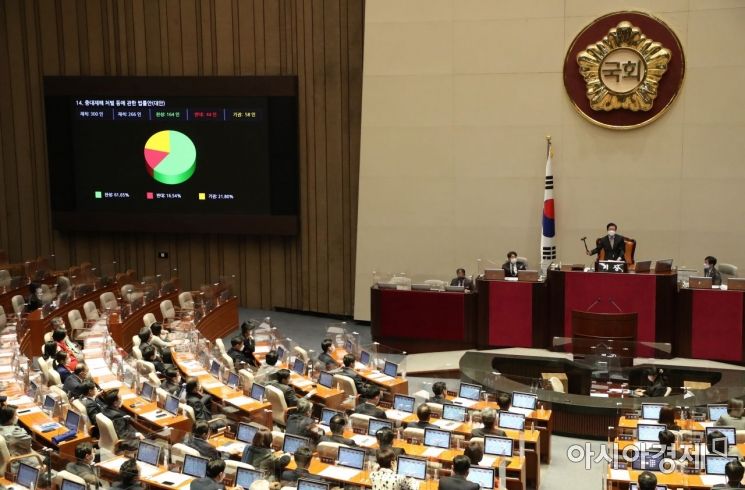 On the 8th, the Serious Accidents Punishment Act was passed at the National Assembly plenary session. Photo by Jinhyung Kang aymsdream@
He continued, "To minimize excessive anxiety and uncertainty on-site and to realize the legislative intent of preventing industrial accidents, the punishment level for business owners should be eased and the obligations should be specified." Representatives of industry-specific unions and associations explained the side effects that would arise if the Serious Accidents Punishment Act is forcibly applied to SME workplaces without sufficient preparation and supplementation.
Jung Hanseong, chairman of the Korea Fastener Industry Cooperative, said, "60 to 70% of accidents occur because workers do not follow safety rules despite the employer taking sufficient measures," adding, "To prevent industrial accidents and reduce their numbers, the employer and workers must solve problems with a shared sense of responsibility." He also insisted that an exemption clause for business owners should be established if corrective actions ordered by the government are properly implemented.
Kim Changwoong, president of the Korea Construction Machinery Maintenance Association, stated, "The construction machinery maintenance industry cannot find young workers even if they want to," and argued, "Unless this problem is resolved, even if business owners fulfill their obligations, accidents caused by accelerating aging cannot be prevented."
Lee Taehee, head of the Smart Job Division at Kbiz, said, "Although the Serious Accidents Punishment Act is a law with strong criminal penalties such as minimum imprisonment terms, the lack of provisions for exemption in cases without intentional or gross negligence is an objective problem pointed out by experts." He emphasized, "Active recognition of efforts to fulfill obligations is necessary when the safety management system is established using government consulting and other resources."
Meanwhile, a survey conducted by Kbiz last month showed that 53.7% of small and medium manufacturing businesses with 50 or more employees answered that compliance with the Serious Accidents Punishment Act by the enforcement date is impossible. The main reasons cited were 'difficult-to-understand business owner obligations' and 'insufficient dedicated industrial safety personnel.'
© The Asia Business Daily(www.asiae.co.kr). All rights reserved.