Subsidy 100% Eligibility Changed from 'Under 60 Million KRW' to 'Under 55 Million KRW'
[Asia Economy Reporter Yu Je-hoon] As the government finalized the scale and payment limits of eco-friendly vehicle subsidies to be provided this year, the fortunes of electric vehicle models are diverging.
According to the industry on the 23rd, the government recently lowered the subsidy support ceiling by segment through the "2022 Electric Vehicle Subsidy Processing Guidelines Revision." Vehicles priced under 55 million KRW will receive 100% of the subsidy, those priced between 55 million KRW and under 85 million KRW will receive 50%, and vehicles priced over 85 million KRW will not receive any subsidy. The total subsidy amount has also been reduced. The maximum subsidy for passenger car models has decreased to 7 million KRW from 8 million KRW last year.
Instead of subsidies being reduced, the distribution target has been greatly expanded. The passenger car distribution target, which was around 75,000 units last year, has more than doubled to 164,500 units this year. The strategy is to lead the popularization of subsidized electric vehicle models by lowering the subsidy ceiling while increasing the distribution target.
The issue is that this may cause fortunes to diverge among models. Due to the nature of electric vehicles, which still have higher prices compared to conventional internal combustion engine vehicles, the presence or absence of subsidies inevitably has a direct impact on sales volume.
For example, the Genesis GV60 starts at 59.9 million KRW, so according to this year's standards, its subsidy is likely to be cut in half. Similarly, the Mercedes-Benz EQA, which was launched last year at 59.9 million KRW to match the subsidy, will inevitably face subsidy reductions without price adjustments.
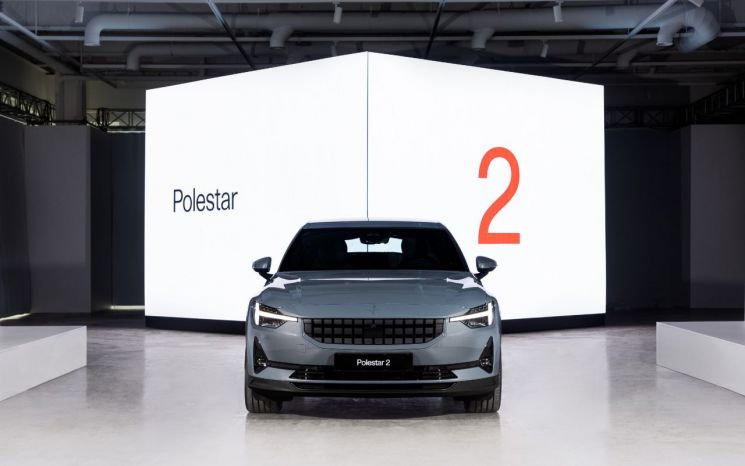
There are also models that could benefit from this. The Polestar 2, recently launched domestically by Volvo’s subsidiary Polestar, starts at 54.9 million KRW, making it advantageous in terms of subsidies. Vehicles with base prices in the 40 million KRW range, such as the Renault Zoe and Korea GM’s Bolt EV and EUV, are also likely to benefit relatively.
The key lies in the pricing policies of other models scheduled for release this year. With the accelerating pace of electrification, automakers plan to launch about 20 electric vehicles this year, including the Ioniq 6 (Hyundai), Niro EV (Kia), EQE (Mercedes-Benz), and i4 (BMW). An industry insider said, "With the reduction of the electric vehicle subsidy ceiling and shorter segments, each manufacturer’s concerns will inevitably deepen. Premium brands will accept this to maintain their image, but general brands, which are more affected by subsidies, are expected to see a gap emerge between mass-market and premium brands."
© The Asia Business Daily(www.asiae.co.kr). All rights reserved.

![User Who Sold Erroneously Deposited Bitcoins to Repay Debt and Fund Entertainment... What Did the Supreme Court Decide in 2021? [Legal Issue Check]](https://cwcontent.asiae.co.kr/asiaresize/183/2026020910431234020_1770601391.png)














